- Poly Cotton —What It Is and Why It Exists
- A Brief Origin Story
- Where You’ll Meet It Daily
- Blend Ratios & What They Actually Change
- How Ratios Affect Feel and Care
- How Poly Cotton Is Made (From Fibre to Finish)
- Properties That Matter in Everyday Life
- Pros and Cons of Poly Cotton
- Poly Cotton vs. Other Fabrics
- Use-Case Playbook: Where It Shines
- Buying and Caring for Poly Cotton
- Comfort, Care, and Where We Can Help
Poly cotton is a fabric created by blending natural cotton fibres with synthetic polyester fibres. Cotton imparts softness, comfort, and breathability, whereas polyester imparts strength, wrinkle-resistance, and durability. When combined, they create an all-rounder-type material that you find everywhere, from uniforms, sheets, T-shirts, table cloths, to arts and crafts. So, if they were to ask you, What is Poly Cotton Fabric? The short and sweet answer is that it is a fabric that equates the silent comfort with practicality.

Poly Cotton —What It Is and Why It Exists
Simple Definition (Cotton x Polyester = Balanced Performance)
Poly-cotton is a true two-fibre cloth. Cotton fabrics are breathable and comfortable, but they shrink when washed, and repeated washing will ruin any cotton fabric. Polyester fabrics feel harsher and less breathable in terms of comfort, but they stand the test of wear and retain shape. A blend of these two makes an earnest fabric: such fabric wears well with less demanding maintenance.
A Brief Origin Story
This blend wasn’t born out of fashion trends—it came out of practicality. Manufacturers wanted fabrics that consumers didn’t have to iron for half an hour every morning. (Because who has time for that before coffee?) Poly cotton provided an answer by giving durability without sacrificing comfort.
Where You’ll Meet It Daily
Look in your closet, your laundry basket, or even the hotel down the street—you’ll find poly cotton everywhere. From school uniforms and work shirts to crisp pillowcases and tablecloths, it’s the fabric that works overtime while staying out of the spotlight.
Blend Ratios & What They Actually Change
Popular Ratios at a Glance
- 50/50: Balanced durability and softness.
- 65/35 (cotton-heavy): Softer, more breathable, often preferred for casual clothing.
- 80/20 (poly-heavy): Stronger, wrinkle-resistant, better colour retention.
How Ratios Affect Feel and Care
The greater the percentage of cotton, the lighter the fabric feels and is softer to touch, but needs TLC. Polyester connotes a stronger kind of fabric that dries fast, lasts well, and might not breathe. Think of it like modifying a recipe, adding a dash of sugar or an extra pinch of spice, dyes the whole taste of that particular dish.
How Poly Cotton Is Made (From Fibre to Finish)
Spinning and Blending
Cotton and polyester are fibres that are spun separately and then blended. Depending upon the requirement for the fabric performance, the manufacturers may select any one of several methods, such as by means of an intimate blend or core-spun yarn.
Fabric Construction
- Woven Poly Cotton: Durable options like percale or twill, often used in sheets and workwear.
- Knit Poly Cotton: Stretchy and flexible, perfect for T-shirts, polos, and sportswear.
From wrinkle resistance to anti-pilling finishes, these final treatments make the fabric softer, longer lasting, and better suited to its purpose.
Properties That Matter in Everyday Life
Hand feel and Comfort
Poly cotton feels softer than polyester alone and has a natural drape, making it comfortable for daily wear.
Breathability and Moisture Control
Cotton breathes and absorbs moisture, whereas polyester dries moisture quickly. And thus, both properties render poly cotton suitable for summer wear and sweaty gym sessions.
Durability and Shape Retention
Thanks to polyester, the fabric holds up against wear and tear, resists shrinking, and keeps its shape wash after wash.
Wrinkle and Colour Resistance
Fewer wrinkles mean less ironing—always a win. Plus, polyester helps colours stay vibrant longer.
Pros and Cons of Poly Cotton
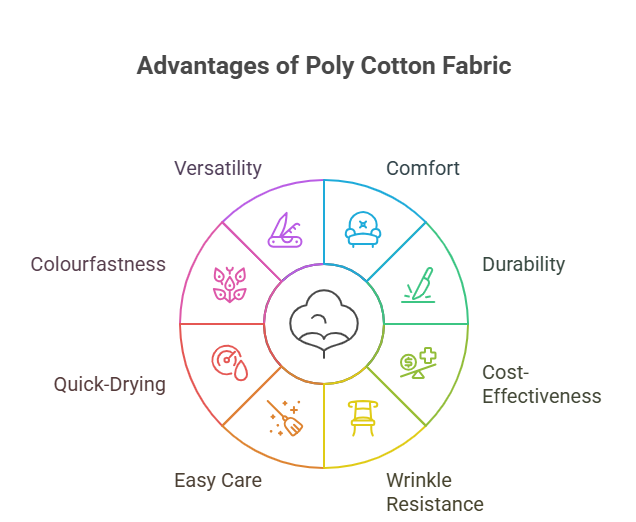
Advantages
- Comfortable yet durable
- Budget-friendly compared to 100% cotton
- Wrinkle-resistant and easy to care for
- Quick-drying and colourfast
- Versatile applications across clothing, bedding, and more
Limitations
- Not as breathable as pure cotton in high-heat situations
- Attracts lint and static more than natural fibres
- Polyester content raises sustainability concerns
Poly Cotton vs. Other Fabrics
Poly Cotton vs. Cotton
Pure cotton wins on natural softness and eco-friendliness, but it wrinkles easily and can shrink. Poly cotton gives you durability with fewer laundry headaches.
Poly Cotton vs. Polyester
Polyester alone is strong, but it can feel less comfortable. Blending it with cotton softens the feel while keeping the strength.
Poly Cotton vs. Stretch Blends
Some fabrics may use elastane for extra stretch. Poly cotton does not have any natural stretch unless knit, but it does provide a certain amount of stretchability as opposed to stiff polyesters.
Use-Case Playbook: Where It Shines
- Apparel: T-shirts, polos, uniforms, scrubs, and activewear.
- Bedding: Cotton linens that include bedsheets, pillowcases, and duvet covers—prized in hotels and hospitals.
- Workwear: Clothing and apparel that are tough and rugged, i.e., for an employee who needs to look presentable every day.
- Crafts and decoration: Tablecloths, bunting, and lightweight upholstery.
If you’ve ever wondered halfway through folding laundry, “Why does this shirt always look decent?”—the answer is usually poly cotton.
Buying and Caring for Poly Cotton
Buying Tips
- Check the blend ratio—higher cotton means more softness, higher polyester means more durability.
- Touch the fabric—does it feel smooth, or does it have surface fuzz?
- For bedding, look at weave and GSM instead of just thread count.
Care Guidelines
- Wash in cool to warm water with a gentle detergent.
- Tumble dry on low or line dry for best results.
- Iron at low to medium heat if needed, but most poly cotton doesn’t demand it.
- Avoid high heat to prevent shrinkage or damage.
Comfort, Care, and Where We Can Help
So, What Is Poly Cotton Fabric? That blend gives you the comforts of cotton and the frigid-fastness of polyester, thereby lending just a bit of ease to your life, whether it be getting dressed for work, setting up the dinner table, or finally going to bed. In some applications, it may not suit well; nevertheless, it is considered by many to be one of the most practical fabrics.
And speaking of practicality, if you’re shopping for warmth in bulk, our company specialises in fleece blankets wholesale. For over 21 years, we’ve provided first-quality, non-pilling fleece blankets and jackets in all sizes and colours, with custom embroidery available. Whether you’re outfitting a charity drive, supplying a hospital, or preparing for a corporate event, we’ve got the cosy, durable, and affordable fleece solutions you need.
 Peachfurblog | Wholesale & Bulk Blankets
Leave a comment