Quick Answer: What Is Fleece Material Made Of?
Fleece is a soft, lightweight, and warm synthetic fabric, usually made of polyester, which is a man-made fiber or plastic (polyethylene terephthalate or PET). The fabrication techniques of fleece such as knitting, brushing, and shearing yield a plush texture that resembles wool rather than being weighed down with a hefty price tag.
It is the warm, long-lasting, and water-repellent qualities that give an opportunity to fleece to be used for clothing, throws, and fleece blankets wholesale. Whether it is considered winter wear that wins over the hearts of many or cheaper bulk blankets for use around the house, fleece remains a very good choice for the modern consumers due to its practicality, comfort, and eco-friendliness.
Now let’s dive deeper.
The Magic of Fleece
Have you ever wrapped yourself up in a warm blanket on a cold night or slipped on a hoodie-soft hug? Then, you were enjoying the fleece. Have you ever wondered what fleece material is actually made of? In spite of feeling woolly, fleece is not obtained from sheep or any other animal. It is a modern, engineered fabric to enhance ease and provide warmth.
Wholesale fleece blankets are in demand, more so by retailers, event managers, and hospitality businesses. Why is that? Because fleece is cheap to sew up into an article of clothing or a blanket yet so functional that it tops the list of almighty textiles. From a short history of synthetic fabric to an overview of applications in fashion and home furnishings, we shall see what really makes fleece so special.
1. What exactly is fleece material?
Fleece is a soft synthetic fibre that offers some warmth, while remaining cool and breathable. It so happens that the name “fleece” reminds one of wool, but they are two different materials. Traditional wool of course comes from animal coats, while current fleece is man-made — mostly from polyester fibers, though some variations resort to cotton or recycled plastics.
Fleece is a fabric that came up in the late 1970s as a lighter and cheaper alternative to wool. The idea was to manufacture a fabric that not only gave warmth like wool but was easy to wash and dry in a hurry. This invention revolutionized the whole textile industry, and presently, fleece jackets and fleece blankets wholesale collections found in homes, hospitals, and hotels across the globe.
2. Composition: What Is Fleece Material Made Of?
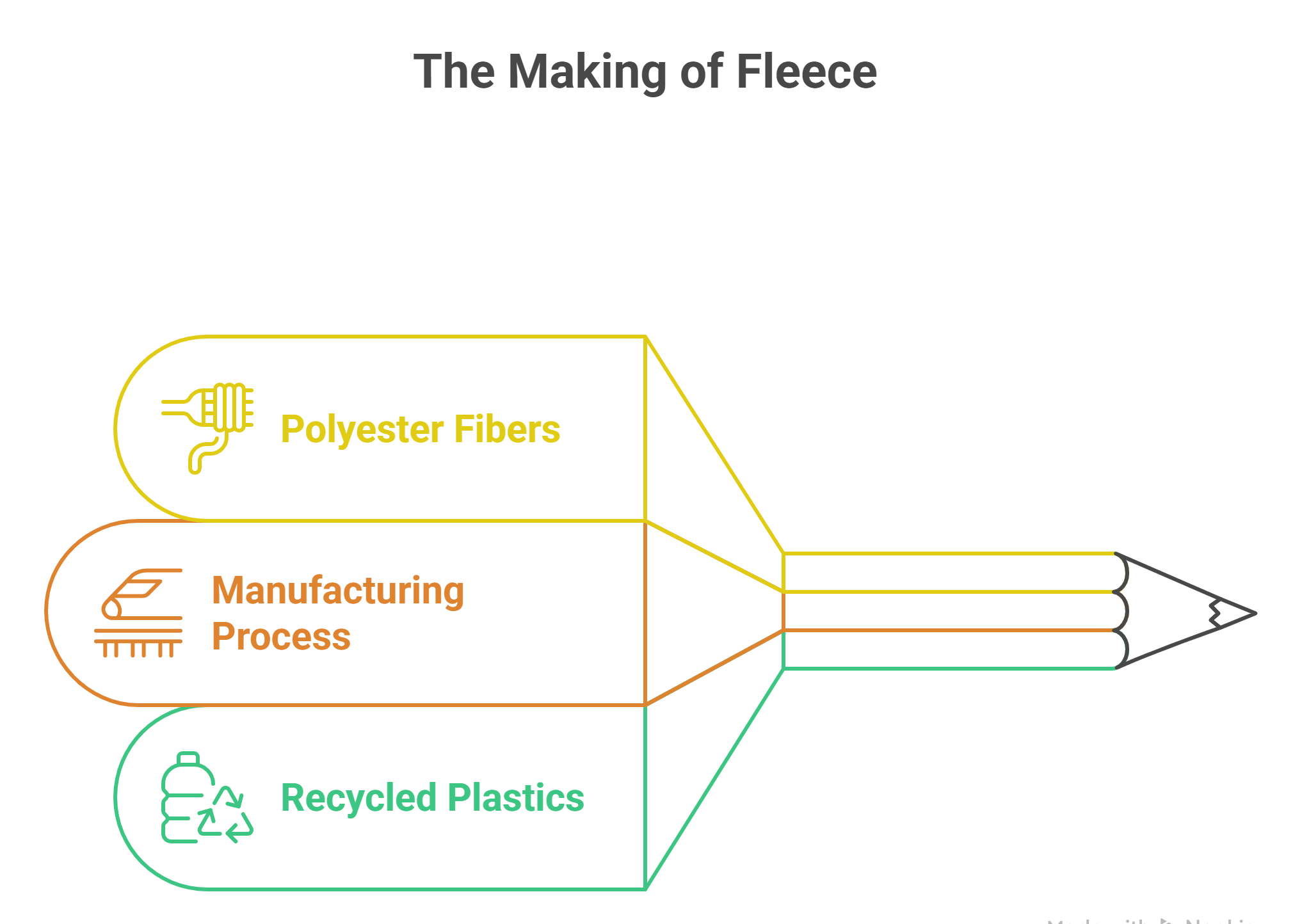
At its core, fleece is primarily made from a synthetic fiber known as polyester. Polyester is a food of petroleum origin. These plastic pellets are melted and spun into long, fine fibers, which are then knitted into cloth. The cloth is then brushed on one or both sides, providing the characteristic soft and fluffy feel we associate with fleece.
Present-day technology has further diversified fleece production, beyond petroleum-based polyester. Thus, many manufacturers are now choosing to go green and make fleece out of recycled plastics such as water bottles. Green-fleece varieties pan out the same way thermally and comfort-wise but with an added bonus of being good to Mother Earth.
Common Materials Used in Fleece Production:
- Polyester: The most prominent synthetic fibers in most fleece fabrics.
- Cotton Blends: Some fleece types have polyester mixed with cotton to increase softness.
- Recycled PET: Environmentally-friendly fleece made of recycled plastic bottles.
- Spandex or Lycra: Sometimes added for stretchability.
This combination provides the fleece with the softness, strength, and thermal efficiency to withstand multiple washes.
3. The Manufacturing Process: From Plastic to Plush Fabric
The journey from raw plastic to warm European fleece is fascinating and highly technical. Here is how it usually unfolds:
Step 1: Melting and Extrusion
Polyester pellets are heated into a molten thick liquid, so thick that molded droplets exit through tiny holes to form very fine threads — a process not unlike spinning silk.
Step 2: Knitting
The fibers are knit together into large sheets of fabric. The way the knitting is done determines the density of the fleece and how much it will stretch.
Step 3: Brushing
The fabric is brushed with fine metal brushes that raise the fibers to create a soft fluffy surface that traps air for insulation.
Step 4: Shearing and Finishing
Finishing involves clipping raised fibers to a uniform length to provide smoothness and avoid pilling. Dyes, water repellants, or flame retardants may be imparted.
A unique balance between engineering and creative flair gives fleece its feel — light yet warm, and soft yet durable.
4. Fleece Material Types
The fleece fabric isn’t a one-size-fits-all product. Fleece types vary depending on its use, such as athletic wear and fleece blankets wholesale.
a. Polar Fleece
It is the most common fleece fabric with its thick, warm feel perfect for cold seasons. Hence, it is used for winter jackets and heavy blankets.
b. Microfleece
It is a thin, soft type of fleece fabric used for light clothing and baby wear. It keeps you warm without adding bulk.
c. Coral fleece
Raised to the extremely plush level, coral fleece finds use in bathrobes, throws, and expensive blankets.
d. Sherpa Fleece
This wooly name replicates the woolly look and feel on one side, which makes it suitable for linings, outerwear, and cozy bedding.
e. Anti-Pill Fleece
Anti-pill treatment to prevent fiber balling with time; hence this smooth-looking fleece stays smooth-looking even after multiple washes.
This fleece type is however different and suits one climate or need better than others on account of its softness, breathability, and insulation.
5. With Reason Fleece Became A Global Favourite
The harmony of practical benefits and adaptability accounts for the growing popularity of fleece. It offers fixings of comfort, utility, and low price, of which very few clothing materials are endowed.
Advantages of Fleece:
- Lightweight warmth by way of insulation.
- Quick to dry, good for outdoorswear, and continuous washing.
- Durable and long lasting, it does not shrink or stretch.
- Reasonably priced, especially when bought in wholesale fleece blankets.
- Hypoallergenic: In contrast to wool, it does not trigger any irritation to the sensitive skin.
- Easy Care: It is machine washable and holds wrinkle resistance.
This makes fleece fitting well into industries from haute couture and hospitality to sportswear and promotional merchandise.
6. Fleece and Wholesale
One of the greatest contributors for keeping fleece afloat is the wholesale market. Retailers, non-profit organizations, and associations buy fleece blankets in wholesale quantities for giveaways, fundraisers, and massive events. Also, fleece blankets maintain their popularity in hospitals, shelters, and hotels just because of the maintainability and comfort it offers.
Buying fleece in bulk could be economically beneficial in many ways:
- Cost-Efficiency: Lower cost per unit/function for businesses and distributors.
- Consistency: Same quality and color through big quantity.
- Customization: Logos, embroidery, or tags can be added to promote the company.
- Versatility: Wholesale fleece blankets might be the perfect gifting choice for employees, charity drives, and retail resale.
Eco-conscious buyers would also consider wholesale fleece blankets; those made from recycled materials bring an eminent sustainability factor to an otherwise very versatile product.
7. Is Fleece Eco-Friendly?
Although traditional polyester fleece is petroleum-based, the industry has made tremendous steps toward greener bookkeeping. Many manufacturers nowadays use recycled polyester (rPET) from post-consumer plastic bottles, diverting waste from landfills and oceans.
But the microplastic pollution theory remains hotly debated: tiny fibers get washed away with fleece, yet innovations such as closed-loop recycling, microfilter washing bags, and biodegradable fleece fibers have all done their bit to minimize that.
In brief, fleece is a moving target — initially a petroleum product that is fast turning into a sustainable textile with a global environmental conservation undertone.
8. Caring for Fleece: Maintenance Tips
Keeping fleece products at their best means:
- Use cold water when washing with gentle detergent.
- Avoid fabric softeners, which can coat the fibers and thereby reduce softness.
- Air dry or tumble dry on low heat so as to prevent the fiber mass from being compressed.
- Never iron, as heat will affect the fibers.
Proper care will extend the lifespan of your fleece clothing and blankets, ensuring the softness throughout their use.
The Final Thoughts
From being a mere alternative to wool to becoming an international textile phenomenon, fleece has secured its status as a comfort necessity. The transition from petroleum-based toward eco-conscious production is a lesson of how modern technology has enabled comfort in a sustainable manner.
Fleece, in the truest sense, is always about warmth-with-a-purpose, be it for bundling up chilly evenings or for fleece blankets sold wholesale for bulk demand. Softness, utility, and price make it popular across various industries, such as fashion, fitness, hospitality, and home décor.
Thus, whether you tuck yourself in with a soft blanket or put on a thick fleece hoodie, you will realize what makes fleece so special- it’s comfort-first, engineered warmth.
 Peachfurblog | Wholesale & Bulk Blankets
Leave a comment