Quick Answer: What Fabric for Tie Blankets?
When deciding what fabric for tie blankets, the best choice is fleece. It’s soft, warm, easy to work with, and doesn’t fray when cut—making it perfect for crafting no-sew tie blankets. Fleece comes in two main types: anti-pill and blizzard fleece.
Both are cozy, durable, and available in endless patterns and colors. Whether you’re creating blankets for gifts, donations, or resale, fleece offers excellent value and versatility. If you’re planning larger projects, consider buying fleece blankets wholesale or fleece blankets bulk for consistent quality and cost savings.
Now let’s dive deeper.
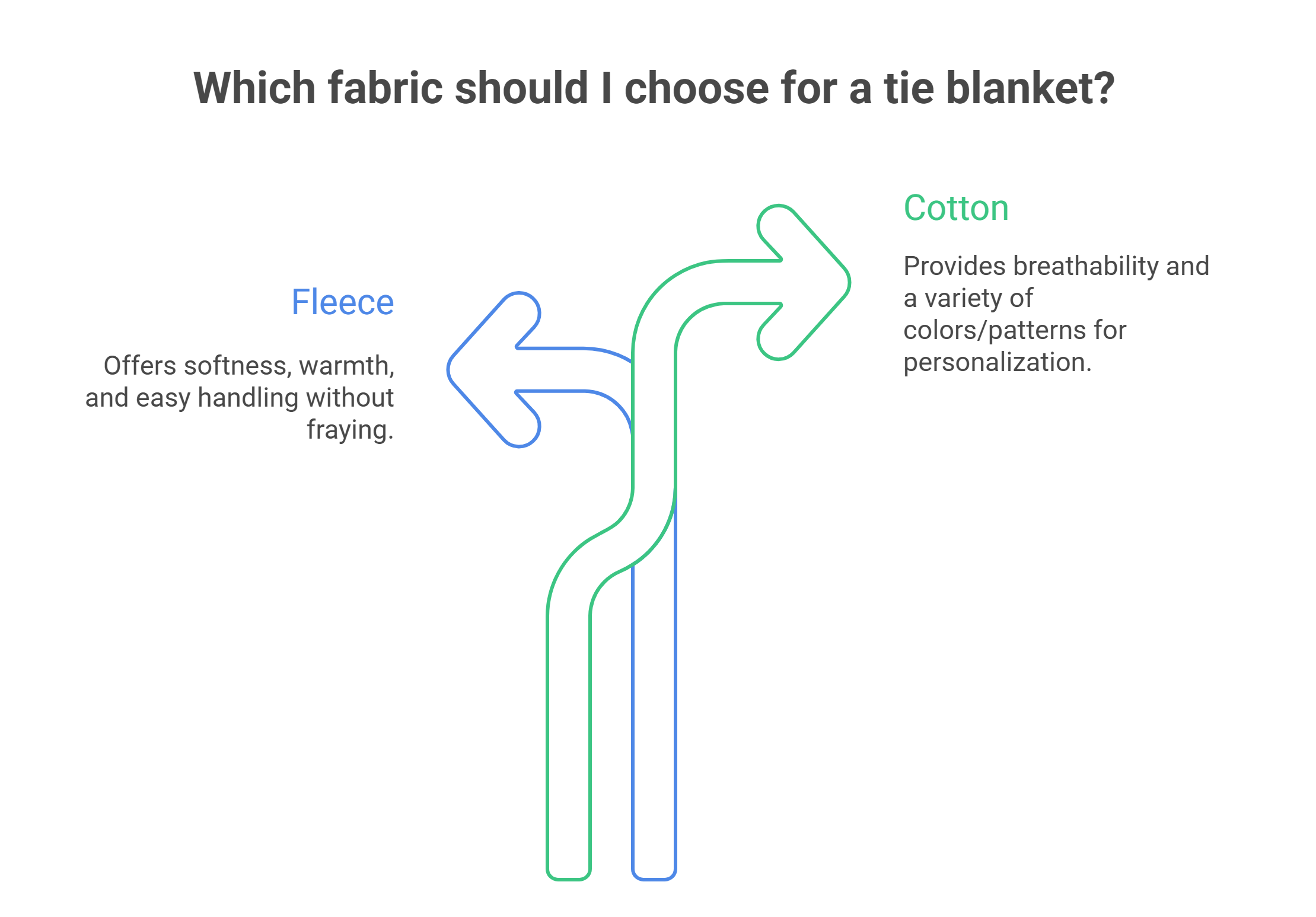
Why Fabric Choice Matters for Tie Blankets?
Tie blankets have become one of the most popular DIY projects, blending simplicity with comfort. They’re an easy, no-sew way to make a cozy, personalized blanket that can serve as a heartfelt gift, a home décor item, or even a fundraiser craft. However, the secret to a perfect tie blanket lies in the fabric you choose.
Choosing the wrong material can result in frayed edges, uneven knots, or a blanket that doesn’t hold up over time. On the other hand, the right fabric ensures softness, warmth, and durability—key features for any blanket meant to comfort and last.
1. Understanding the Basics: What Is a Tie Blanket?
A tie blanket is a double-layered fabric blanket made without sewing. Instead of stitching, the edges of two pieces of fabric are cut into strips and tied together to create a knotted fringe border. This gives the blanket a charming, handcrafted look.
Because no sewing is required, these blankets are ideal for people of all ages—including beginners, kids, and crafters. They’re perfect for holiday gifts, baby showers, or even team fundraisers.
However, the project’s success heavily depends on one thing—the fabric’s texture, flexibility, and edge behavior when cut.
2. The Ideal Fabric: Fleece and Its Benefits
When people ask “what fabric for tie blankets,” the universal answer among crafters and manufacturers alike is fleece.
Why Fleece Works Best?
Fleece is a synthetic fabric made from polyester fibers. It’s known for being:
- Soft and plush: Provides a comforting texture ideal for snuggling.
- Warm yet lightweight: Retains body heat without feeling heavy.
- No fraying edges: Fleece doesn’t unravel when cut, making it perfect for no-sew projects.
- Stretch-resistant: Holds its shape even after multiple washes.
- Easy to clean: Machine washable and fast drying.
These qualities make fleece not only practical but also cost-effective—especially when purchased in larger quantities.
3. Different Types of Fleece for Tie Blankets
Not all fleece is the same. Choosing the right type ensures your blanket feels luxurious and lasts for years.
a. Anti-Pill Fleece
Anti-pill fleece is treated to resist pilling—the small fabric balls that form after repeated use or washing. It maintains a smooth surface, keeping your blanket looking newer for longer. This type is slightly more expensive but ideal for gifts or long-term use.
b. Blizzard Fleece
Blizzard fleece is thicker and heavier, offering maximum warmth. It’s great for winter blankets or outdoor use. It has a slightly firmer feel, which makes the ties strong and durable.
c. Micro Fleece
Microfleece is thinner and lighter, perfect for baby blankets or lightweight comforters. While not as warm as blizzard fleece, it’s soft, breathable, and great for layering.
d. Coral Fleece (Luxury Option)
This ultra-soft version feels like velvet or plush. It’s often used for high-end throws and luxury tie blankets. However, it’s more delicate to cut and tie, so it requires extra care.
4. Alternative Fabrics: What to Avoid and Why?
While fleece reigns supreme, some crafters experiment with other fabrics. Here’s why most alternatives fall short:
- Cotton: Frays easily, requiring stitching.
- Flannel: Though soft, it tends to fray and doesn’t have enough stretch for sturdy knots.
- Wool: Too heavy and itchy for most users.
- Minky or Sherpa: Feels luxurious but sheds fibers when cut and is hard to tie.
For durability, cost-efficiency, and ease, fleece remains the top choice for tie blankets.
5. How to Choose the Right Fleece Fabric?
When shopping for fleece, consider these key points:
a. Fabric Weight
Measured in GSM (grams per square meter), fleece comes in different thicknesses. For tie blankets, aim for medium to heavy weights—between 200–300 GSM—for the best warmth and tie stability.
b. Stretch and Drape
Choose fleece that has minimal stretch. Overly stretchy fabrics make it hard to cut even strips and tie consistent knots.
c. Patterns and Colors
Fleece comes in endless designs—from solid colors to fun prints like sports themes, cartoons, or seasonal motifs. You can pair a patterned fleece with a solid color to create contrast and personality.
d. Size and Cutting Room
Buy fabric that’s at least 2 yards long for each layer of the blanket. Remember, you’ll lose some fabric around the edges when cutting fringe for ties.
6. Step-by-Step: Making a Perfect Fleece Tie Blanket
Here’s a simple overview to help you get started:
- Choose two fleece fabrics: One patterned and one solid often look great together.
- Lay them flat: Smooth out wrinkles and align edges.
- Trim the edges: Remove rough or uneven sides.
- Cut out corners: Usually 4-inch squares from each corner.
- Cut strips: About 1-inch wide and 4 inches long around all sides.
- Tie knots: Securely tie each pair of top and bottom strips together in double knots.
And just like that, you’ve created a cozy, no-sew fleece blanket!
7. The Cost Advantage of Buying in Bulk
If you’re making tie blankets for schools, charities, or businesses, buying fleece blankets wholesale is the most efficient choice.
Wholesale suppliers offer fabric at reduced rates per yard, allowing you to save significantly compared to retail prices. This is especially useful for:
- Nonprofits and donation drives
- School projects or craft clubs
- Small businesses reselling handmade blankets
Bulk orders often come with consistent fabric quality and color options that are hard to find in small fabric stores.
8. Why Fleece Blankets Are a Long-Term Investment?
Fleece isn’t just convenient for crafting; it’s also a reliable product for both personal and commercial use. Fleece blankets are durable, easy to wash, and retain their softness for years.
This makes them ideal for giveaways, fundraisers, or branded merchandise. Many small businesses buy fleece blankets bulk to customize with embroidery or printed logos for marketing campaigns.
Whether you’re crafting at home or scaling up production, fleece remains one of the most cost-effective materials for comfort and warmth.
9. Caring for Fleece Tie Blankets
To ensure your handmade blanket stays soft and vibrant:
- Wash in cold water to preserve fibers and prevent shrinking.
- Avoid fabric softeners as they can reduce softness over time.
- Tumble dry on low heat or air dry for longevity.
- Do not iron—the heat can melt the synthetic fibers.
These simple care steps can extend the life and beauty of your fleece blanket for years.
Final Thoughts
When it comes to what fabric for tie blankets, fleece stands out as the ultimate choice—combining warmth, durability, and ease of use. Whether you’re crafting for fun, profit, or charity, it delivers consistent results with minimal effort.
From anti-pill to blizzard fleece, there’s an option for every style and season. And if you’re making multiple blankets, buying fleece blankets wholesale or fleece blankets bulk ensures better value and uniform quality for all your projects.
In the end, a fleece tie blanket isn’t just a piece of fabric—it’s a symbol of warmth, creativity, and care.
 Peachfurblog | Wholesale & Bulk Blankets
Leave a comment