Quick Answer: What Is Fleece Fabric Used For?
Fleece fabric is a soft, lightweight, and insulating material commonly used for making cozy clothing, blankets, and accessories. Known for its warmth without added weight, it’s ideal for jackets, hoodies, throws, and even pet bedding.
Its moisture-wicking and quick-drying properties make it perfect for both indoor comfort and outdoor adventures. Whether for personal use or large-scale production, fleece fabric remains a versatile choice across industries — from fashion to home decor — due to its comfort, durability, and affordability.
Now let’s dive deeper.
1.Understanding Fleece Fabric: What Makes It So Popular?
Fleece fabric is a synthetic textile, usually made from polyester fibers, though some variants include blends with cotton, rayon, or spandex for added texture and flexibility. What makes fleece special is its brushed surface that traps air, creating insulation while keeping the fabric lightweight.
It mimics the warmth of wool but without the heaviness or itchiness. Additionally, fleece is:
- Warm yet breathable
- Soft to the touch
- Easy to wash and quick to dry
- Durable and wrinkle-resistant
These properties make fleece an all-season favorite — comfortable enough for winter wear and versatile enough for use in lighter layers during transitional weather.
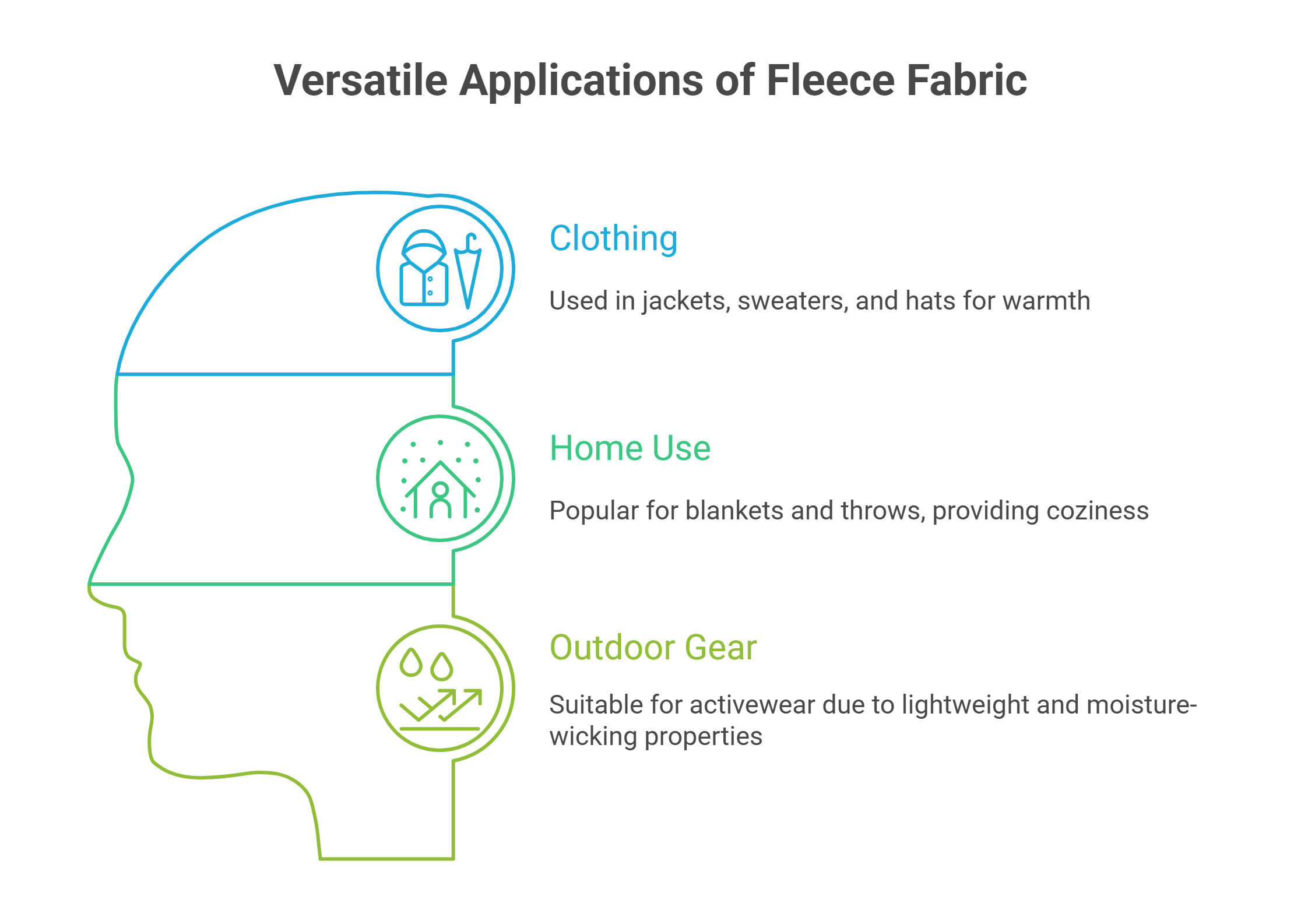
2. Common Uses of Fleece Fabric
Fleece is one of the most adaptable materials in textile manufacturing. From apparel to home goods, it appears in countless forms across our daily lives.
a. Clothing and Outerwear
Fleece became a global phenomenon in the 1980s when outdoor brands began using it as a thermal layer. Today, you’ll find fleece in:
- Jackets and hoodies: Retains heat without bulk.
- Sweatshirts and pullovers: Perfect for layering in cold weather.
- Sportswear: Ideal for hikers, runners, and campers due to its breathability.
- Children’s wear: Lightweight warmth without irritation to the skin.
- Sleepwear: Keeps you cozy without overheating.
Fleece garments are especially popular among those seeking comfort and practicality, blending style with functionality.
b. Home Textiles and Decor
One of the most beloved applications of fleece is in home furnishings. Its softness and warmth make it a natural choice for blankets, throws, and bedding accessories.
- Fleece blankets have become household essentials, known for their cozy texture and vibrant designs.
- Cushion covers and sofa throws use fleece for decorative and comfort purposes.
- Baby blankets made from fleece provide gentle warmth without triggering allergies.
Manufacturers often produce fleece blankets wholesale for hospitals, hotels, dormitories, and event giveaways due to their cost-effectiveness and universal appeal.
c. Accessories and Everyday Items
Fleece goes far beyond clothing and blankets — it’s also used in smaller accessories and lifestyle products, including:
- Scarves, gloves, and hats: Retains warmth while staying soft against the skin.
- Slippers and socks: Keeps feet warm during colder months.
- Pet beds and liners: Easy to clean, soft, and warm for pets.
- Picnic mats and travel throws: Portable, lightweight, and easy to fold.
The adaptability of fleece makes it suitable for nearly any product requiring warmth, softness, and resilience.
3. Fleece in Outdoor and Sports Gear
Fleece is a staple in outdoor gear because it offers superior insulation without trapping moisture. It’s ideal for active wearers who need warmth while maintaining breathability.
- Hiking and camping gear: Fleece jackets, liners, and sleeping bag interiors are essential for staying warm in the wild.
- Performance wear: Lightweight fleece helps athletes retain warmth during cooldowns.
- Base layers: Prevents sweat buildup, keeping the body dry and comfortable.
Its ability to wick moisture away from the body makes fleece particularly valuable for outdoor enthusiasts and travelers who experience varying weather conditions.
4. Medical and Institutional Applications
Beyond fashion and lifestyle, fleece fabric also finds uses in medical and institutional settings due to its hygienic, washable, and soft nature.
- Hospital blankets: Provide warmth and comfort for patients without heavy laundering needs.
- Veterinary clinics: Use fleece bedding for animal comfort and cleanliness.
- Elder care facilities: Use fleece lap blankets and robes for warmth and ease of maintenance.
Because it dries quickly and resists odor, fleece is often preferred in high-turnover environments.
5. Eco-Friendly Innovations in Fleece
One concern with synthetic fabrics like polyester fleece is environmental impact. However, recent advances have led to eco-friendly fleece made from recycled PET bottles.
This sustainable version maintains the same softness and warmth while reducing plastic waste — a win for both comfort and the planet.
Many manufacturers and fleece blanket wholesalers now proudly advertise their products as made from 100% recycled materials, appealing to eco-conscious consumers.
6. Why Businesses Choose Fleece for Bulk Production?
For businesses, fleece fabric offers several commercial advantages:
- Cost-Effective Manufacturing – Producing fleece products is relatively inexpensive compared to wool or cotton-based alternatives.
- Customization Options – Fleece takes dye easily, allowing vibrant prints, patterns, and branding.
- Mass Market Demand – From giveaways to retail shelves, fleece products sell consistently year-round.
- Durability – Even with frequent washing, fleece maintains its shape and color.
- Lightweight Shipping – Reduces costs in distribution and bulk orders.
This explains why companies, schools, nonprofits, and event organizers often purchase fleece blankets wholesale — to maximize value while offering a practical, universally loved item.

7. Caring for Fleece: Maintenance Tips
Fleece is known for being low-maintenance, but a few care tips help extend its lifespan:
- Wash in cold water: Prevents pilling and fiber damage.
- Avoid fabric softeners: They can coat the fibers and reduce softness.
- Air dry when possible: Keeps texture intact and saves energy.
- Avoid high heat ironing: Fleece can melt under extreme temperatures.
Proper care ensures that fleece stays plush, bright, and comfortable for years.
8. Comparing Fleece with Other Fabrics
To understand fleece’s versatility, it helps to compare it with other popular fabrics:
| Fabric Type | Warmth | Weight | Maintenance | Cost |
|---|---|---|---|---|
| Wool | Excellent | Heavy | Moderate | Expensive |
| Cotton | Moderate | Medium | Easy | Affordable |
| Fleece | Excellent | Light | Very Easy | Affordable |
| Flannel | Good | Medium | Easy | Moderate |
As the table shows, fleece offers an unbeatable combination of warmth, comfort, and affordability, making it ideal for both personal use and commercial production.
9. The Future of Fleece Fabric
With advancements in textile technology, the future of fleece looks promising. Innovations like anti-pill fleece, microfleece, and stretch fleece are making their way into modern designs.
Additionally, as sustainability becomes a major consumer focus, recycled fleece fabrics will likely dominate the market. Businesses and manufacturers that adapt to these trends early will continue to thrive, offering customers eco-conscious comfort and style.
Final Thoughts
From cozy winter jackets to soft home throws, fleece fabric’s versatility is unmatched. Its warmth, lightness, and durability make it a preferred material across fashion, sports, home décor, and industrial uses.
For companies looking to meet growing consumer demand for comfort-driven products, sourcing fleece blankets wholesale is both a smart and economical decision. And for those aiming to scale operations or supply seasonal merchandise, investing in fleece blankets bulk ensures quality, affordability, and consistent market appeal — a soft touch that brings warmth to every corner of modern life.
 Peachfurblog | Wholesale & Bulk Blankets
Leave a comment