- Why It Even Matters
- Start with Texture: Soft Isn’t Always Right
- Print Vibrancy: The Clear Giveaway for Patterned Fleece
- Look for Shine and Nap
- Check Fibre Length and “Folded Over” Texture
- The Curl Test: The Most Foolproof Technique
- Check the Selvage and Rolled Edge
- When Both Sides Look Identical
- Final Thoughts + About Us
If you’ve ever been struck staring at a piece of fleece, flipping it over and over in your hands the way you would examine an alien artefact, know that you are not alone. Fleece is one of those materials that feels great yet does not offer much of a clue about which side is right. For beginners, this can be very confusing; for more experienced sewists, this can still be very confusing on some days. Many people are trying to figure out how to tell the right side of fleece fabric, and with good cause, since the two sides often feel the same, and fleece does not have a very obvious “front” like printed cotton.
Years ago, when I made my very first fleece pillow, I confidently stitched the pieces together only to realise later that the “wrong” side was proudly facing out. My family was too polite to mention it, but the pillow definitely looked like it had forgotten to comb its hair. Ever since then, I promised myself I would learn every method possible to identify the right side of fleece—and today, I’m passing those methods on to you.
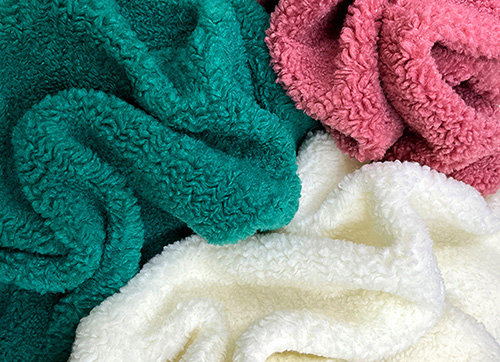
Why It Even Matters
You might wonder: “Does it really matter which side I use?”
Most of the time, yes.
The right side of fleece is richer, with a softer feel and better textural depth, topped with a smoother finish. Used in this way, it is meant to be seen. Wrong sides may not be incorrect for your project, but it will certainly show after making the garment. Also, if your design includes pieces that need to be stitched together, like a hoodie, a softie, or the other, matching the right sides will make a substantial improvement in quality of vision.
Start with Texture: Soft Isn’t Always Right
The most common method is feeling both sides of the fleece. While both sides are soft, the right side usually has a slightly more plush or “nubbly” surface. The wrong side tends to feel flatter and smoother. This difference is subtle, especially in solid colours, but once you compare the two sides with your fingertips, you’ll start noticing it.
Think of it like petting a long-haired cat: one direction feels smooth, and the other direction feels fluffy. The fleece right side has that extra little fluff factor.
Print Vibrancy: The Clear Giveaway for Patterned Fleece
If your fleece has patterns—like animal skins, florals, kids’ prints, or geometric designs—this is the easiest method of all.
- On the right side, the pattern looks bold, sharp, and bright.
- On the wrong side, it looks faded, slightly blurred, or dull.
Even beginners spot the difference instantly. The right side is your high-definition version, and the wrong side is the behind-the-scenes footage.
Look for Shine and Nap
The right side of fleece often has a subtle sheen when brought close to a light source, which is easily detected. In the main, the right side reflects more evenly and is smoother in appearance. When you rub your hands across the surface, the nap (the direction-wise lying fibres) feels smooth to the touch, and the fibre looks regular.
On the wrong side, the light disperses unevenly, giving a slightly duller appearance.
This trick feels especially satisfying—like discovering a hidden feature in a gadget you’ve owned for years.
Check Fibre Length and “Folded Over” Texture
Another reliable method involves comparing fibre length. The right side often has slightly longer fibres that seem to fold over themselves, creating a soft, cushioned texture. The wrong side looks a bit tighter and flatter.
This difference isn’t dramatic, but once you know what to look for, you’ll spot it quickly—even in solid fleece where colour cues aren’t available.
The Curl Test: The Most Foolproof Technique
If you forget every method above, remember this one. It works on almost every fleece type.
- Cut a small strip of fleece.
- Hold it by the width (cross-grain).
- Gently stretch it.
- Watch how the edge curls.
The fleece will curl toward the wrong side. So, the outside of that curl is your right side.
This test is simple, scientific, and, in my opinion, magical. The first time I learned it, I tested it on every fleece scrap I could find—though I did get odd looks for stretching fabric like I was checking for supernatural powers.
Check the Selvage and Rolled Edge
When you unroll it from the bolt, just notice how fleece acts, having been rolled with the correct surface out, most probably facing outwards. In all fairness, the fold that falls on the end naturally would almost certainly have the correct side of the fabric showing. It’s not a definitive rule, but coupled with the curl test, it’s a good clue.
When Both Sides Look Identical
Some fleeces, like blizzard fleece, double-sided fleece, or high-quality anti-pill fleece, really do look the same on both sides. In such cases:
- Use the curl test to choose a “right side.”
- Mark the wrong side with a piece of masking tape, a clip, or a small safety pin.
- Keep all pieces aligned consistently while cutting and sewing.
Even if both sides are usable, consistency is key to avoiding shading differences once your project is assembled.
Many beginners assume the softer side must be the right one. Not always true. Another common mistake is cutting all pieces first and figuring out the right side later, which usually leads to confusion or mismatched pieces. The safest approach? Identify the right side early and mark it.
Final Thoughts + About Us
Now, by learning the way to differentiate the proper side from the wrong one on a fleece fabric, all your projects are going to look cleaner, smoother, and much more professional. And when you are ready to start using an outfit made from high-quality material, then go ahead with the PeachFur fleece collection.
We deliver American-made fleece fabrics and fleece blankets on a wholesale basis. They are created for lastingness, softness, warmth, and beauty. We are very proud to help crafters and businesses have only the best in materials to enhance the creations of warm and stylish high-end selections.
 Peachfurblog | Wholesale & Bulk Blankets
Leave a comment