- A Fresh Look at What Eyelet Fabric Really Is
- How Eyelet Fabric Is Made: A Blend of Art and Engineering
- What Makes Eyelet Fabric Special?
- Types and Styles of Eyelet Fabric
- Where Eyelet Fabric Is Used
- How to Choose the Right Eyelet Fabric
- The Beauty of Eyelet Fabric
- About Us – PeachFur Fleece
If you have ever seen certain dresses with those small, tiny embroidered holes put into flower or geometric designs and some curtain materials that maintain airiness, allowing light to enter without losing their elegance, you have already encountered a most loved textile for the warm weather–eyelet material. However, this eyelet material is a matter of interest to many people, that what is Eyelet Fabric? Why does it enjoy such agelessness in a variety of clothes and decorations?
Some masters of the intricate are simply bored with perfection, as ventilation is filled into this summer lace affair. Eyelet fabric creates that perfect centre fold of beauty, comfort, and practicality. Let’s talk about its origins, how it is made, where it used to reside, and why designers and everyday creators reach for it year after year.
A Fresh Look at What Eyelet Fabric Really Is
Eyelet is easily marked by decorative holes on the fabric, where a pattern is established through stitching called eyelets. These small holes are either cut or punched around the material and subsequently turned under to allow the surrounding edges to be stitched neatly to avoid unravelling. The cover looks somewhat reminiscent of lace with a soft, airy feel, and a classy sense of style that can put some heat on when need be.
Eyelet fabric is lightweight and breathable because it has traditionally been made from cotton or linen, which makes it suitable for summer fashion. Its softness allows the movement of air, hence helping any person to dry up under the soaring sun. (Remember stepping outside on a sweltering day and everything feeling like a hot oven?)
How Eyelet Fabric Is Made: A Blend of Art and Engineering
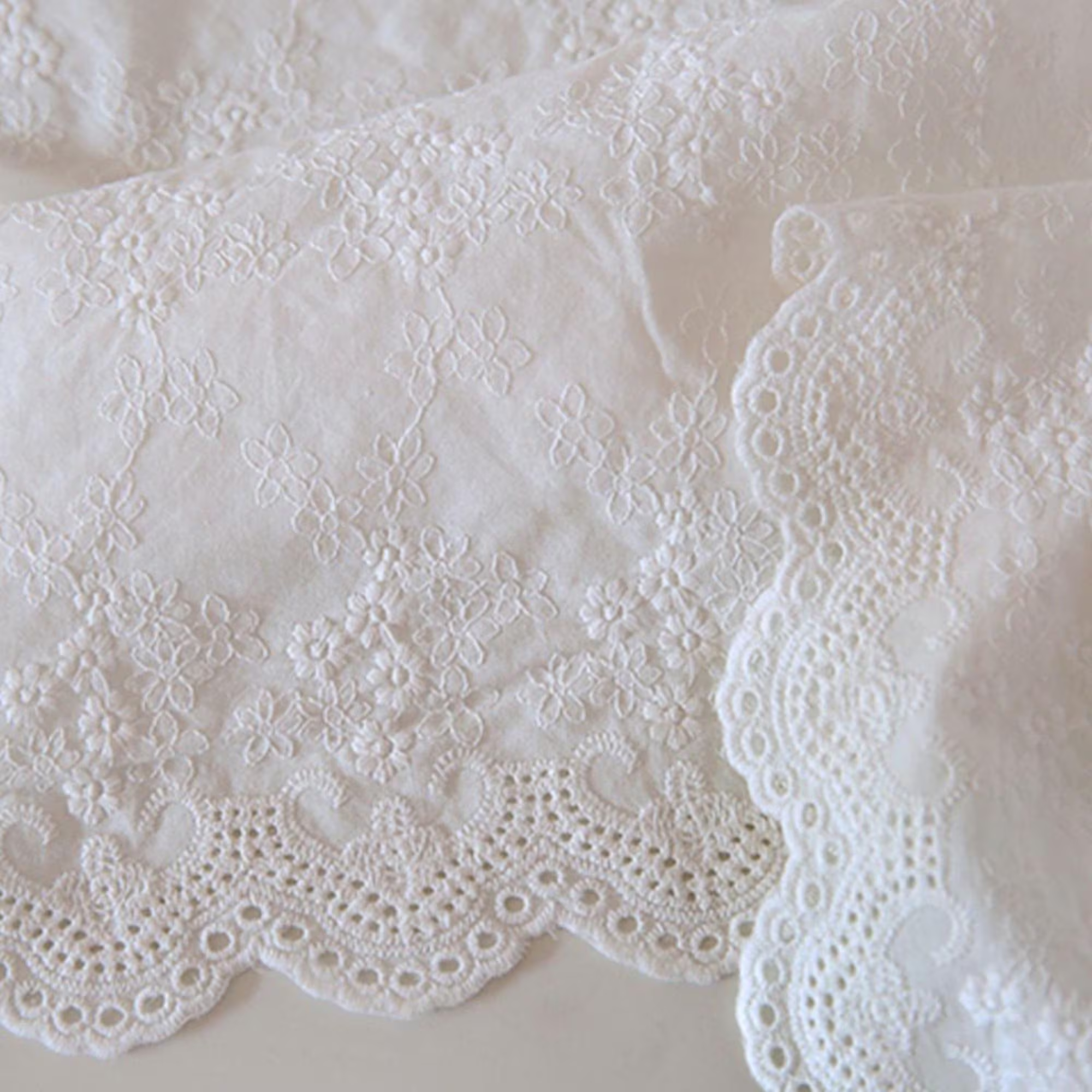
Although it looks delicate, eyelet fabric requires precise craftsmanship.
1. Creating the Cutwork
Small holes are cut or punched into a woven fabric in a controlled pattern. These can be circles, ovals, flowers, or more modern geometric shapes.
2. Reinforcing the Openings
Each hole is then stitched around with embroidery thread—often resembling a tiny buttonhole stitch. This keeps the fabric durable while adding decorative texture.
3. Forming the Pattern
Eyelets may appear all over the fabric or be arranged in borders or panels. Some fabrics even include scalloped edges that are perfect for hems and sleeves.
A more advanced process, such as embroidery machines, produces this type of fabric. And such advanced technology makes the end product much more blended than in the old days. Thanks to crying, it is great that we can have beautifully put-together fabrics without demanding that you manually embroider hundreds of mini holes. Unless you think of that as fun!
What Makes Eyelet Fabric Special?
Embroidered fabric is blessed with beauty, even though the structure is functional and aesthetic. Opposing these very small vents that allow the air to get inside in hot and humid climates is tantamount to adding vents of purpose, casting off all care for aesthetics. But due to its fine drape, the fabric has daintily, delightfully free-flowing grace, and it looks superb with romantic, whatever styles of skirts and dresses, and tops have been created.
Eyelet is also extremely versatile, looking vintage, romantic, modern or minimal, depending on the colour and pattern, and equally suited to a cute sundress or chic home décor. The embroidered edge around each opening appears delicate but gives its wearer durability, a testament to the fact that eyelet is much stronger than it looks, much like many of us carrying graciously through daily tasks of tedious to-do lists.
Types and Styles of Eyelet Fabric
- White work Classic: Often known as broderie Anglaise, this traditional eyelet stitch pattern in white or ivory is iconic and ageless in look.
- Border Eyelet: Features decorative edges and motifs along one side—perfect for hems and sleeves.
- All-over Eyelet: Patterns cover the entire fabric, offering even texture and detail.
- Modern Interpretations: Bold colours, large florals, and contemporary shapes bring freshness to a classic textile.
Where Eyelet Fabric Is Used
Eyelet fabric is the best-received fabric for warm-season styling, commonly utilised in apparel and home décor. In apparel, it is extensively adopted for summer dresses, blouses, skirts, children’s clothing, and robes with a view to providing the wearer with ease and a soft, feminine image. It makes an amazing adornment for cuffs, collars, and edges. Designers usually pile up eyelets over solid fabrics to flaunt the disparities between the two fabrics as well as to present dimension.
How to Choose the Right Eyelet Fabric
When selecting eyelet fabric, consider:
- Fibre content: Cotton for softness, blends for durability.
- Pattern density: Fewer holes for structure, more holes for maximum breathability.
- Colour: White and pastels offer a classic look; modern bold hues add personality.
- Weight: Lighter for clothing, mid-weight for décor.
Keeping these factors in mind ensures you choose the perfect eyelet for your project.
The Beauty of Eyelet Fabric
Knowing what is eyelet fabric will make you appreciate its fine craft and the ambitious productivity within it. It has breathability, charm, blendability and is simultaneously sensitive enough to enrich even the plainest garment or interior garment.
In project after project, eyelet continues to be a popular choice for warm-weather seasons. Regardless of whether you’re sewing for style, home, or creative projects, it never fails to bring both elegance and relaxation to anything it adorns.
About Us – PeachFur Fleece
PeachFur Fleece gladly assists designers, brands, charitable groups, and craft-makers with fleece blankets at wholesale in large quantities through soft blankets and materials to cater to gifting, branding, and seasonal warmth. Its fleece products are famous for their softness and are durable and designed for the clientele’s lovely, cosy experience, whether they are small-scale or long-range. Our goal is to allow you the freedom to beautifully fabricate and generously give away.
 Peachfurblog | Wholesale & Bulk Blankets
Leave a comment