- Introduction
- Understanding Fleece Before You Start Embroidery
- Materials You Need for Embroidering on Fleece
- Preparing Your Fleece Fabric
- Step-by-Step Guide: How to Embroider on Fleece
- Finishing Your Embroidered Fleece Project
- Conclusion
Many people do wonder how to embroider on fleece, mostly because it’s too soft, absorbent, or would not stretch. However, it is not just possible but somewhat easier to concentrate on one side of the embroidery on the fleece if few points (hammer punch and stripper for tearaway) are considered while Right Needle is stabilized suitably. The reason for such attention is that embroidery adds identity and charm to fleece items where once a simple fleece jacket would then get all dressed to the nines for a dressy Christmas party.

Introduction
Embroidery has always been an excellent way to turn a regular fabric into a personal style. Embroidery enhances any garment or accessory, from monogramming to floral to artistic designs. The good news, we can easily transform our own fleece. Despite its softness, stretchiness, and texture, fleece can become a pretty decorative fabric when embroidered.
Embroidering on fleece entails the potential for making shades of different clothing categories (blanks, jackets, hats, scarves, mittens, and even home decorations) its own itself. A fleece garment speaks alongside being trendy and remarkable; besides, it is worth giving as a gift for warmth and necessity. Must winter apparel be warm and comfy? But no one ever said it needs to bore you!
Understanding Fleece Before You Start Embroidery
To embroider successfully on fleece, it helps to understand the character of the fabric. Fleece has a “nap,” or soft surface pile, which gives it that beloved fluffy texture. This same fluffiness can also hide fine details in embroidery if not properly stabilised. Fleece also stretches, meaning the fabric needs support so the stitches don’t warp or disappear.
Different kinds of fleeces, like polar fleece, polyester fleece, sherpa, plush fleece, and microfleece, all have slightly varying behaviours, but these fabrics all take well to embroidery with a little bit of preparation. The right side of the fabric, which is silky and slight, happens to be the best surface for embroidered stitches in most cases. This side will prevent the stitch from looking bumpy and will ensure that the embroidery thrives in high-quality form.
Materials You Need for Embroidering on Fleece
The most important thing to bear in mind when tackling fleece with a view to stitching on it is the selection of materials. Underneath the fabric, the only way to keep fleece from stretching due to the pulling of fibres while stitching is through an adhesive-backed stabiliser. As backing stitches are neither visible nor felt when working with a very dense fleece, a water-soluble top layer will prevent stitch displacement, however overstuffed the area may be.
A ballpoint needle is the perfect tool because it has the capacity to gently wade into fabric instead of either tearing or piercing it. Embroidery floss actually adds strength to the embroidery design and makes the finished product wash-worthy, mainly polyesters in some of the projects. In a way, these are the jea behind the backstage while providing synergy to the act, because they may not be visible but form the basis on which the play is staged.
Preparing Your Fleece Fabric
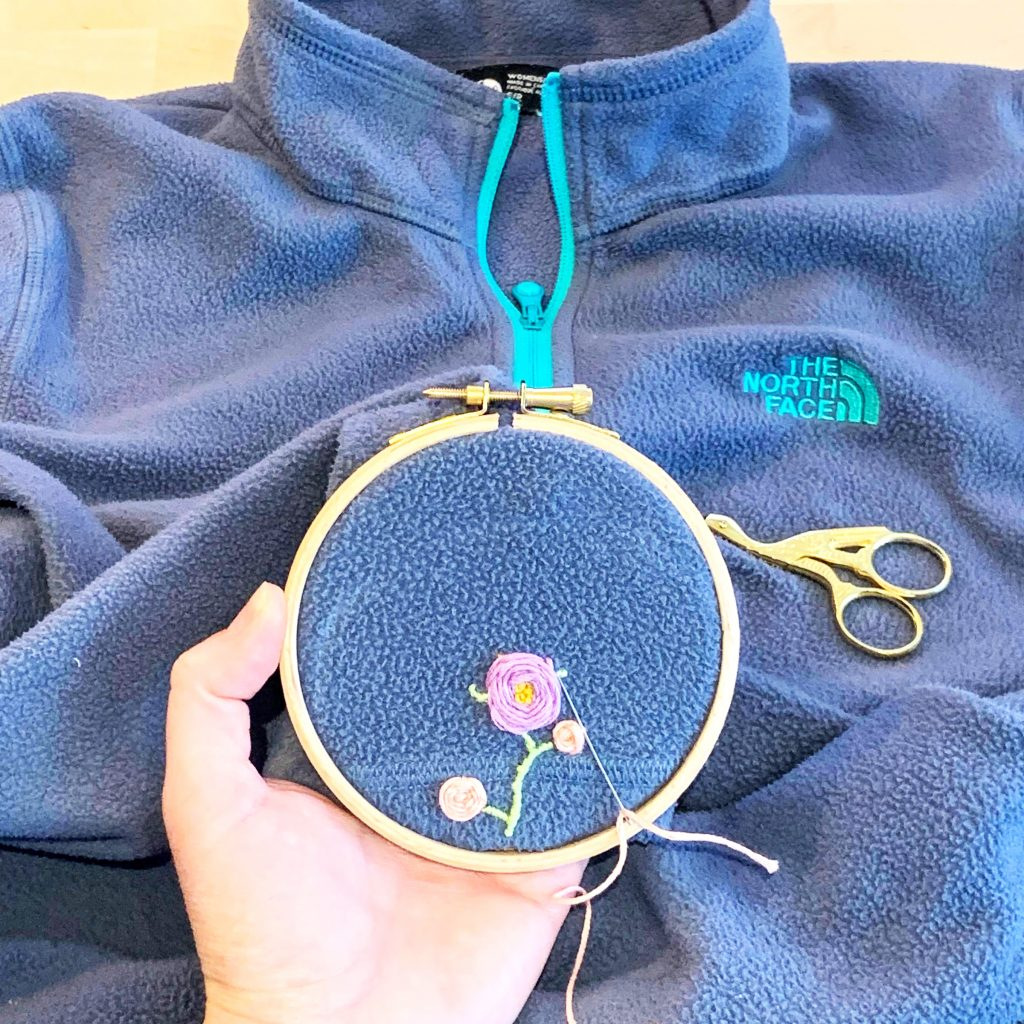
Before you start to embroider, it is important to do a few things right. The first step is to mark the centre line and alignment lines on the fabric. This can be done with either a water-soluble fabric pen or tailor’s chalk. This will provide you with a good line to follow and prevent you from having to rip out stitches.
Instead of hoisting the fleece directly in the embroidery hoop, which may cause marks or stretch the fabric, float it on a hooped sticky stabiliser. This action allows it to be held smoothly on the surface and prevents undue fibre tension.
Place a water-soluble stabiliser on top, which will stop the stitches from disappearing into the fluffy nap. Look at this as a boost, so that your embroidery is nice and proud.
Step-by-Step Guide: How to Embroider on Fleece
Now that your materials are ready, here’s how to embroider on fleece using a simple, reliable method.
Begin by hooping the stabiliser firmly on its own. Score off and strip some paper backing if you are using an adhesive stabiliser, and press the fleece quite gently but firmly onto that adhesive.
Reduce the pace of your embroidery machine slightly. This will help to avoid distortions. Also, make the thread tension a bit lower so the embroideries come out softer and sit better on the fabric. Suited to fleece is a better embroidery design with thick lines or elements, as very delicate lines get lost in the fibres.
You should take the whole object off the matter of the needle poking through the fleece so that it does not pull on the fabric during sewing. When every detail is aptly set, just go away, but do not leave too far to get quick protection if it shifts out of position. Embroidery is kind of like cooking, in the sense that the machine does all the work, but human surveillance keeps bad surprises from popping up.
Finishing Your Embroidered Fleece Project
Just after the finishing of embroidery work is finished, you ought to carefully peel off the water-soluble stabiliser from the sewn item before turning the item inside out. When the object has been turned inside out, cut away the aforementioned surrounding bulk from its backside without engaging in any necessary cleaning. Nonetheless, if some stabiliser remains, you can rinse (gently) or dab some lukewarm water on the wet excess.
Very, very gently nap against a fluff of smooth fleece to give back that softness to the embroidery. That embroidered piece, then, looks crisp, well-made, and planned: as though the embroidery were always planned for it in the centre.
Conclusion
Embroidery is the conductor of aesthetic beauty to any kind of fabric, and a fleece does not remain deprived of its grace. Learning how to embroider on fleece gives you the scope to turn cosy winter essentials into stylish, personal creations. Would it be a name on a blanket, or would it be adorning a jacket, or customising a hat? Embroidery is a tool to elevate basic warmth into something unforgettable and expressive.
We offer excellent fleece blankets wholesale palette of colours and various textures and weights, making it the ideal solution for embroidery, baby blankets, apparel, or winter arts. We choose our fleece cloths for their property of having a clean sewing stitch, with nice details, thus providing you with the liberty to design what you please. Whether for gifting projects or for apparel designing, the fleece fabric makes a big difference in the beauty and softness.
 Peachfurblog | Wholesale & Bulk Blankets
Leave a comment