- Why Fleece Is the Go-To Fabric for Tie Blankets
- What Really Matters When Choosing Fleece for Tie Blankets
- Fabrics to Avoid for Tie Blankets
- Matching Fabric Types Matters More Than You Think
- The Best Fleece Choice Made Simple
Tie blankets are slashingly popular because they are simple, warm, and forgiving. You don’t need to know how to use a sewing machine, have advanced skills, or rack up years of crafting experience. Nevertheless, one aspect could spell doom for your project—choosing the right fleece. No wonder the query that many beginners ask is what type of fleece is best for tie blankets?
This is a good point; with knowledge on the core basics, choosing the exact fleece becomes an easy affair. The guide brings to you exhaustively looking through the best fleece type and therefore settles on the ones that work the best; as well as guiding potential buyers in avoiding common mistakes. All these components are written in frank layman terms.
Why Fleece Is the Go-To Fabric for Tie Blankets
When considering tie blankets, many people opt for fleece material because it ranks pretty well categorically. Firstly, it’s soft and warm, easily manipulated by a pair of scissors, and doesn’t fray. This is what it all comes down to, really. After all, with the knot ends of a tie blanket system, the material has to support itself without becoming undone.
Fleece does a decent job of trapping in body heat without bringing about too much sweatiness; this material can be very good for everyday use. Fleece does require low maintenance and is machine washable while proving itself to be pliable over time. Basically, doing a tie blanket project using fleece is stress-free—just what a beginner would need.
What Really Matters When Choosing Fleece for Tie Blankets
Different types of fleeces undergo different manufacturing processes and also boast different thicknesses. Consequently, weigh more thoughts about the kind of fleece required in order to crochet a better blanket.
Do make sure the fleece you employ is plush in nature so as to feel comfortable but then again does not become too tampered with, which makes cutting and tying any project challenging. The damage is indeed more pronounced when both-of the layers of the fabric are the same; if not, your project will flop.
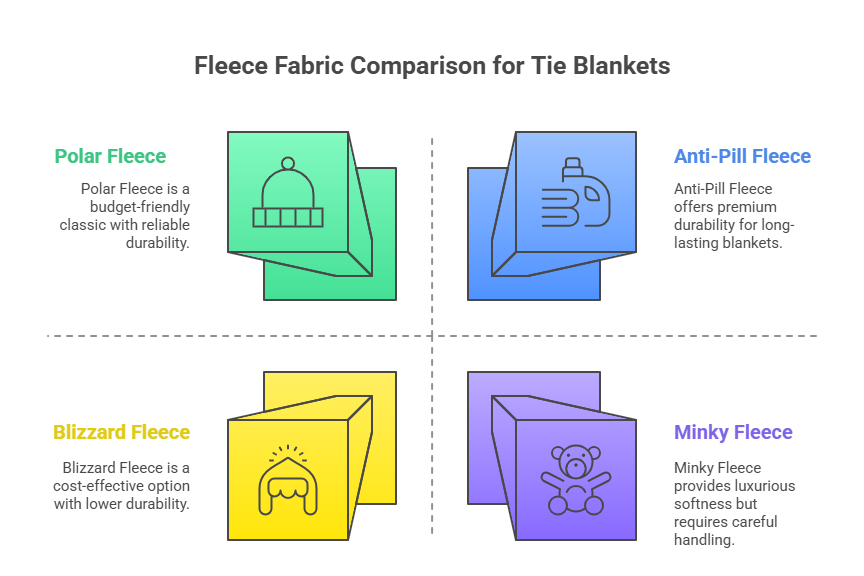
Polar Fleece: The Classic and Most Reliable Choice
Of course, Polar fleece. Polar fleece is an all-time favourite and is highly recommended when it comes to tie blankets.
It is lightweight without being heavy, making it easy to work with and creating easy knots. Medium weight fleeces work well as they generate enough “body” for knots yet are soft and pliable. Fleece hardly needs to be underscored in terms of availability and affordability, this being one of those attributes catering to novices.
If you’re unsure where to start, polar fleece is the safest and most dependable option.
Anti-Pill Fleece: Best for Long-Lasting Tie Blankets

One might say that anti-pill fleece is the deluxe version that supersedes the polar fleece. Traditional fleece will pick and produce little fuzzy balls, called pills, especially after numerous trips through the laundry. Anti-pill fleece is promised to put a stop to all that, keeping one’s blanket looking like fresh off the shelf.
It is the best for handmade projects, gifts, charity blankets, and tie blankets; it is soon adopted and encouraged. People look forward to making a blanket with an anti-pill fleece feeling as they might need to sew it differently soon. It has an increased initial cost, but the trade-off purchase might be a good one, as, speaking of partnership with anti-pill fleece, it usually does not cause turmoil.
Blizzard Fleece: A Budget-Friendly Option
Blizzard fleece is another popular option, especially for large projects or beginner practice. It is slightly lighter and less dense than polar fleece but still warm and comfortable.
One of the practical fabric selections for tie blankets is blizzard fleece, as long as you are willing to admit that it won’t last as long. Nonetheless, it is a good choice for making multiple blankets or when one is working within the limits of a budget. It may-pill faster compared to anti-pill fleece, but it will serve well for cutting, tying, and snuggling anyway.
Minky Fleece: Ultra-Soft but Requires Care
Minky fabric is characterized by its luxurious soft texture. People love it because of its plush, smooth, and ever so comfy texture; this is exactly what makes it appealing for tie-blanket activities. Most people tend to use Minky fleece as one side of the tie blanket and pair it with polar fleece or anti-pill fleece on the other side.
While Minky fleece can be more difficult to work with-it usually stretches in the process of cutting and is not as warm as traditional fleece-nevertheless, it is very soft to touch and an exceptional beauty in high-quality or high-end design tie blankets.
Microfleece: Lightweight and Less Common
Microfleece is typically thinner and softer compared to polar fleece for layering or for use in hot climates and light coverlets. Consequently, it may not offer as much warmth or thick shield as polar fleece when used as a fabric for other purposes.
Warmth is not a priority with microfleece, even though many tie blankets are meant for warmth. Microfleece works well in some situations that do not involve warmth, so long as it is kept decorative and light in weight.
Fabrics to Avoid for Tie Blankets
Heavy sherpa fleeces can make a good appearance, but they are not ideal for using in tie blankets. They can be kind of a pain to cut and worse to tie, being so thick. This is the kind of fleece that produces huge and fat knots with edges curling up.
In general, it is best to avoid mixing fleece types that have different weights. A good marker for matching fabrics on both sites is the peak uniformity caused by washing, wear, and making of a visually good blanket.
Matching Fabric Types Matters More Than You Think
Using the same type and weight of fleece on both sides of your tie blanket helps it wear evenly and last longer. When fabrics behave differently in the wash, one side may stretch or shrink more than the other, affecting the blanket’s shape.
Matching fleece keeps the project simple—and simplicity is the secret to a successful tie blanket.
The Best Fleece Choice Made Simple
So, what type of Fleece is Best for Tie Blankets? For most people, anti-pill polar fleece is the best overall choice. It’s easy to work with, durable, warm, and forgiving—perfect for beginners and experienced crafters alike.
Tie blankets should be fun, relaxing projects—not complicated ones.
At PeachFur Fleece, we’ve specialized in high-quality fleece products for over 21 years. If you’re looking for fleece blankets bulk, we offer premium, non-piling fleece blankets and apparel at competitive wholesale pricing. Our focus on quality, comfort, and long-lasting fleece is what makes us a trusted choice for businesses, charities, and organizations.
 Peachfurblog | Wholesale & Bulk Blankets
Leave a comment