- Why Shedding Feels So Annoying (Even When It’s Minor)
- What “Shedding” Really Means With Fleece
- The Biggest Reason Fleece Blankets Shed: Quality
- How Fabric Finishing Affects Shedding
- New Blanket vs. Old Blanket: When Shedding Usually Happens
- Washing and Drying: A Hidden Trigger
- Static, Pet Hair, and Dust (Often Mistaken for Shedding)
- How to Tell If a Fleece Blanket Will Shed Before You Buy It
- Can Shedding Be Reduced or Prevented?
- When Shedding Means It’s Time to Replace the Blanket
- Bringing It All Together
- Comfort That Lasts (And Why Quality Matters)
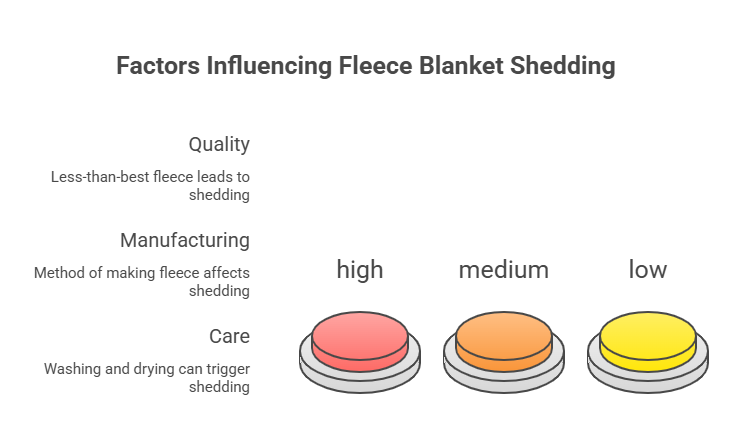
Yes, some fleece blankets developed shedding, mainly due to being broken in or being made of less-than-best quality fleece. But don’t worry because shedding is hardly inevitable, and usually it results from the method of how fleece is made or cared for, rather than the fleece itself.
Let’s walk through this calmly and clearly, so you know what’s normal, what’s not, and what you can actually do about it.
Why Shedding Feels So Annoying (Even When It’s Minor)
All of a sudden, there’s fuzz everywhere. Fuzz on your clothes, and also on the couch (maybe your pet). You know what’s frustrating about this? Residence choice. That is when people ponder whether anything has been done wrong. That is how the query “do fleece blankets shed” is generated so many times.
Shedding is a mess no one likes, but it doesn’t imply that a blanket would be bad or dangerous. Understanding why it takes place can be the big difference.
What “Shedding” Really Means With Fleece
When people say a fleece blanket is shedding, they usually mean one of three things:
- Loose fibres coming off the surface
- Lint showing up after washing or drying
- Small fuzz bits are sticking due to static electricity
True shedding is when fibres detach from the fabric. This is different from pilling (small fabric balls) and different from lint that sticks because of static.
The Biggest Reason Fleece Blankets Shed: Quality
The most important factor behind shedding is fabric quality.
Fleece of low quality has usually been made with shorter fibres that are not anchored with great firmness into the fabric; consequently, when in use, washed or dried, they loosen and fall away. This is the reason why inexpensive fleece blankets are likely to shed more.
High-quality fleece is made from longer fibres and better finishing techniques. These fibres stay in place and are not shed much with time. As for shedding with fleece blankets, the correct answer is somewhat conditional: some do, some do not—and the cause is generally quality.
How Fabric Finishing Affects Shedding
Fleece doesn’t become soft by accident. During manufacturing, the fabric is brushed to lift fibres and then carefully trimmed (or sheared) so those fibres are even and secure.
When this process is rushed or done unevenly, loose fibres remain. Those loose fibres are the ones you later see on your clothes or in the dryer. This is also why some blankets feel incredibly soft in the store but start shedding after just a few uses.
New Blanket vs. Old Blanket: When Shedding Usually Happens
It’s very common for a brand-new fleece blanket to shed lightly during the first wash or two. This is usually leftover surface fibres from production. In most cases, this settles down quickly.
Shedding that continues after many washes is different. That often means the fleece itself is breaking down, which usually points back to lower-quality fabric or harsh laundry habits.
Washing and Drying: A Hidden Trigger
Even good fleece can start shedding if it’s washed the wrong way. Hot water, strong detergents, rough wash cycles, and high dryer heat all stress the fibres. Over time, that stress causes them to loosen.
Okay, so there you have it. You could wonder that, right? Do fleece sheets deposit more after washing? Depending on how gently washed, yes. Cold water and mild detergent can do wonders. Heat properly, and the fibres will naturally stick together better.
Static, Pet Hair, and Dust (Often Mistaken for Shedding)
It could be that some …things are simply static. Fleece gets static easily in dry weather. People find that static attracts hair, dust, and lint; when these show up on the blanket, it gives it a badly put-together appearance, though not as it seems.
This is why fleece blankets seem “worse” in winter. The fabric hasn’t changed—humidity has.
How to Tell If a Fleece Blanket Will Shed Before You Buy It
One test to do while washing may be performed. While wet washing, rub the fabric gently using the palm of your hand for a few seconds. In case some fibres come off fairly easily, or there are fuzzy little balls, this is a sign that this fleece might shed slowly.
Also, check both sides. Some blankets are finished well on only one side, which looks nice in packaging, but sheds later in real use.
Can Shedding Be Reduced or Prevented?
Yes, in many cases. Lower shedding can be achieved by washing the blanket once before use, treating it gently, setting your laundering controls to low and avoiding any harsh conditions. And choosing a better fleece blanket could be more helpful still.
Shedding is not something you just have to accept—it’s something you can mostly avoid with the right choices.
When Shedding Means It’s Time to Replace the Blanket
If, even after clear care, your fleece blanket sheds heavily, begins to appear ragged, or sheds lint, then it is to be thrown away; it is not wastage but instead a reaccumulating of comfort and cleanliness.
Bringing It All Together
Do Fleece Blankets Shed? Indeed, they do, but it is almost always substandard fleece or a product that has faced rough handling when being washed. Again, well-constructed fleece blankets do not shed even the least, and if they are cared for, then they will provide comfort to their users for years. Rather, shedding or non-shedding is a contrast between fleece cloth, based on how fleece is Fleece Made.
Comfort That Lasts (And Why Quality Matters)
When fleece is handled carefully, shedding becomes a minor or non-existent issue. Operating in the fleece market for over twenty years, we consider only top-quality fibres and a very particular finish for an experience of sheer comfort. From throws and baby blankets to picnic blankets and custom embroidered fleece, it is our attention to the minutest detail that renders our blankets soft, clean, and durable.
Fulfilling the demands of corporate concerns, personal festivities, charity affairs, and commercial concerns, the quality assortment of our wholesale fleece blankets amply demonstrates that reliability and shared expectation. The blankets guarantee no unexpected shedding.
Because a fleece blanket should feel cosy, look good, and stay that way.
 Peachfurblog | Wholesale & Bulk Blankets
Leave a comment