- Why Fabric Amount Matters More Than You Think
- Understanding Fleece Fabric Width
- Fabric Amount for Different Blanket Sizes
- One Layer or Two? How That Changes Everything
- Why You Should Always Leave a Little Extra Room
- Fabric Choice Can Change How Big a Blanket Feels
- Custom Sizes Without the Headache
- A Thoughtful Ending: Comfort Without Guesswork
There’s a unique kind of thrill in planning a fleece blanket. You envision cosy evenings, with the finished blanket resting on the couch in a neat pile or maybe as a gift for a beloved one. But then comes the stalling moment for many staring at a myriad of fabric choices: how much fabric for a fleece blanket do you actually need?
It simply is a very simple matter, but one that begets a lot of uncertainty, more so if you are doing it for the very first time. This gets cleared in a simple, friendly manner with this guide. There’ll be a little quiz: Not very complicated math. Direct explanations to ease you and grant you the knowledge about how to feel secure about a purchase.
Why Fabric Amount Matters More Than You Think
Fleece is forgiving, soft, and beginner-friendly, but fabric quantity is the one thing you can’t really “fix later.” Too little fabric leads to a blanket that feels awkwardly short. Too much fabric often means unnecessary expense or trimming regret. The good news is that fleece fabric works in predictable ways, which makes planning much easier once you understand a few basics.
The key thing to remember is that fleece usually comes in wide rolls. That width already takes care of most blanket widths, so the amount of fabric you need is mostly about length.
Understanding Fleece Fabric Width
The width of most fleece material runs between 54 and 60 inches, which is just the right width for infant blankets, throws, and grown-ups’ blankets, all of which can be done in a single cloth-width without any need to have the fabric sewn together. So when you hear people asking, “How much fabric to make a fleece blanket?” they are considering ideas on the number of yards for the length of fabric required.
This is why fleece is so popular. It quietly removes one major headache from the process.
Fabric Amount for Different Blanket Sizes
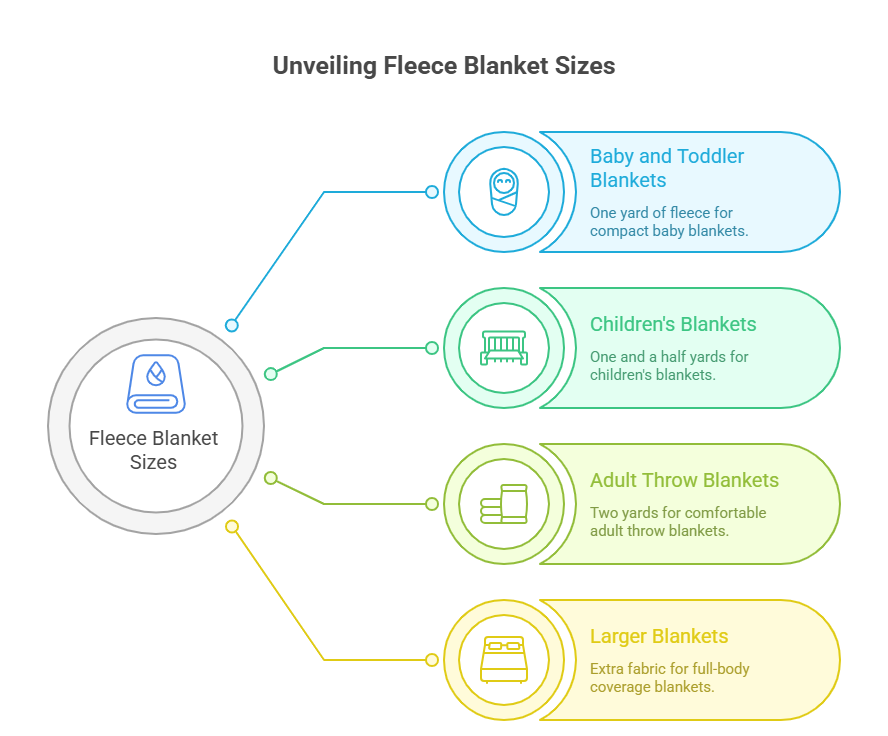
A whole yard of fleece is a comfortable amount for baby and toddler blankets. It’s compact enough for on-the-go strollers or car seats. Just a shade bigger and never out of place with a wide application, really, the extra half yard seems to make the blanket more fun and functional without towing a considerably bulky weight.
A delightful size for children is about one and a half yards of fleece, offering enough room to curl up, drag the blanket from room to room as they please, or use it on a bed without appearing oversized.
Adult throw blankets are where most people pause and hesitate. In most cases, two yards of fleece creates a comfortable, well-proportioned throw. It’s long enough to cover legs and torso during couch time without constantly needing adjustment. If the blanket is for someone taller or if you simply love extra coverage, two and a half yards feels luxuriously cosy.
Larger blankets meant for full-body coverage or taller adults benefit from extra length. In those cases, adding more fabric makes a noticeable difference in comfort. Most people who go bigger never regret it, but many who go smaller wish they hadn’t.
One Layer or Two? How That Changes Everything
The demand for fabric is essentially halved in the case of a single-tied fleece blanket, rather than being quite ample for a two-person or rather shared tie blanket making entailing raw materials (fabric) for two layers.
This is where planning really matters. If you want a double-layer adult throw and you choose two yards, you’ll need two yards of each fleece piece. The warmth and weight of double-layer fleece are wonderful, but the fabric requirement doubles instantly.
Why You Should Always Leave a Little Extra Room
Even though fleece doesn’t fray, it still needs trimming, squaring, and finishing. Tied edges, rounded corners, or simply straightening the fabric all reduce the final size slightly. This is why experienced crafters almost always buy a little more than the bare minimum.
The extra margin is there to turn a nagging task into a tolerable and enjoyable one and to give you scope in case you decide to risk a tad bit more fringe, softened corners, or greater drape in the end.
Fabric Choice Can Change How Big a Blanket Feels
Not all fleece is created equal. Some fleece that is thicker tends to feel warmer, but might drape a little shorter. Thinner fleece moves more easily and may often seem larger when it is actually the same size. Anti-pill fleece that is treated to hold its shape with good usage and regular washing makes a good choice for fleece blankets.
Choosing quality fleece means the blanket keeps its size, softness, and appearance long after it’s finished.
Custom Sizes Without the Headache
Try making a blanket with the intention of it fitting a particular bed or person. The easiest way to figure it out is to know how long to buy fabric for in advance, while rounding up. Due to fleece’s forgiving nature, a tad extra fabric is just better than too little.
You don’t need perfect measurements to succeed. You just need thoughtful planning and a bit of breathing room.
A Thoughtful Ending: Comfort Without Guesswork
After learning how much fabric fleece blankets require, the process becomes quite enjoyable. After all, fleece is for warmth, and not to bring anxiety, so the quantity of fabric should be enough to suit the purpose of the blanket.
For those who do not wish to bother with the guesswork, professionally-made fleece blankets provide a constant relief to this malaise. With over twenty years of experience with exclusivity for fleece, we focus on giving out size, forever softness, and reliable quality. From throws and baby blankets to picnic blankets and customisations with embroidery, fleece is what we are good at.
If you’re looking to fulfil further-reaching needs—if you’re with an entity, charity, or charitable organisation, or into retail, taking a good look at wholesale fleece blanket in bulk quantity possibilities for combining quality with price makes broad sense. After all, a fleece blanket’s key job has always been to do one thing and not deviate from it: make you feel at home.
 Peachfurblog | Wholesale & Bulk Blankets
Leave a comment