- What Are Microplastics in Simple Terms?
- What Is Fleece Actually Made From?
- So, Do Fleece Blankets Shed Microplastics?
- Why Does Fleece Shed Microplastics?
- Where Do These Microplastics Go?
- Should This Stop You From Using Fleece Blankets?
- Easy Ways to Reduce Microplastic Shedding at Home
- Are All Fleece Blankets the Same?
- Comfort and Conscious Choices Can Go Together
Fleece blankets have never failed to be one of the top picks, and this is totally understandable. They are soft, light, and fluffy, protect the skin, washing is not a problem at all, and are fit for any occasion, from binge-watching to winter travelling. But now that the issue of sustainability is more and more frequently discussed, the question that has been occupying many people’s minds is: Do fleece blankets shed microplastics?
No doubt that this concern is widespread among a large number of people; however, on the bright side, it is a query whose answer will not weigh upon you. Just a bit of understanding and some thoughtful daily habits, and you will be making use of your fleece blanket in complete cognizance of its influence. Let’s take a look at the subject matter in a very casual and direct manner.
What Are Microplastics in Simple Terms?
Microplastics are essentially extremely small plastic pieces that are mostly not seen by our naked eyes. When we refer to textiles, these microparticles are usually present in the form of fine fibres that get detached from the synthetic materials during the usage of the clothes, their washing, or their drying.
Microfibers that cannot be seen by the naked eye are actually so small that they can go through the water purification systems. Gradually, they can mix with the rivers and oceans and ultimately reach the food chain. This is exactly the reason why the average consumer is becoming more and more interested in the common fabrics and their contributions to the microplastic issue.
What Is Fleece Actually Made From?
To understand whether fleece blankets shed microplastics, it helps to know what fleece is made of.
Generally, fleece blankets are produced using synthetic fibres, mainly polyester. Plastics are the base of these fibres, and they are processed in such a way that the resulting product has the soft and fuzzy surface that is admired globally. The brushing and finishing that cause fleece to feel soft and comforting also make the surface a little more likely to release tiny fibres, particularly when the blanket is new.
This does not mean fleece is poorly made or unsafe. It simply means it behaves differently from tightly woven fabrics.
So, Do Fleece Blankets Shed Microplastics?
The short and honest answer is yes, fleece blankets can shed microplastics, mainly during washing and drying.
The shedding mostly happens when:
- The blanket is washed for the first few times
- Hot water or high dryer heat is used
- There is a lot of friction inside the washing machine
That said, shedding does not happen constantly or uncontrollably. With the right care, the amount released can be significantly reduced.
Why Does Fleece Shed Microplastics?
Fleece shedding comes down to three main factors:
1. Synthetic fibres
Because fleece is plastic-based, the fibres can break into smaller pieces under stress.
2. Fabric structure
The soft, fuzzy surface that feels so good also means loose fibres are closer to the surface and more likely to release.
3. Washing and drying motion
Agitation, spinning, and heat create friction, which is the biggest trigger for fibre release.
Think of it as a “breaking-in” phase for your blanket. The most shedding usually happens early on, then slows down over time.
Where Do These Microplastics Go?
Once released, microfibers travel with wastewater. Some are captured during treatment, but many are small enough to escape. Over time, they can enter oceans and be consumed by marine life.
After that, they could transfer through the food chain. This is why the issue of microplastics released by fleece blankets matters not only to the maintenance of the fabric but also to the whole environmental situation, which is by far larger.
Should This Stop You From Using Fleece Blankets?
Not at all.
Blankets made out of fleece still have various advantages, are comfortable, and are still the most preferred option for several good reasons. It is not intended to wipe fleece off the map completely, but rather to cut off its use and thus its consuming habits.
Being an informed person will help you not to compromise on comfort or choice. Sustainability does not result from perfection but from the dynamics of evolving with tiny steps.
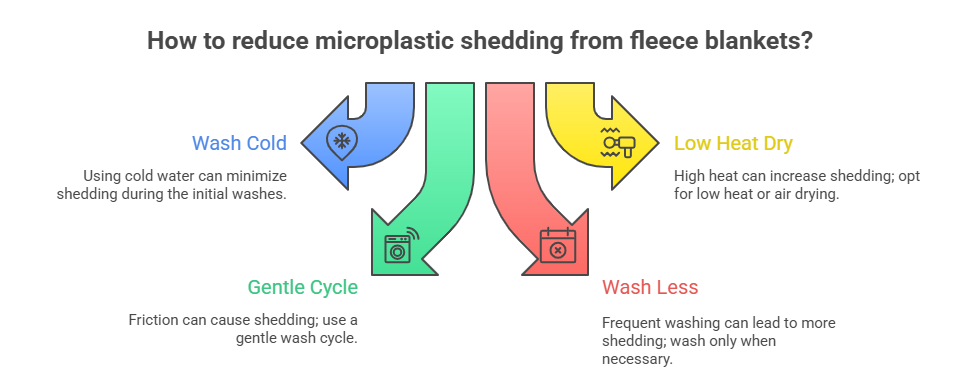
Easy Ways to Reduce Microplastic Shedding at Home
Here are some simple, realistic steps that make a real difference:
Wash less often
Fleece does not need frequent washing. If it is not dirty, it is okay to skip a wash.
Spot clean when possible.
Small spills or marks can often be cleaned without washing the entire blanket.
Use cold water
Cold water causes less fibre breakage than hot water.
Avoid high-heat drying.
Air drying is gentler and helps preserve the fabric. If using a dryer, choose low heat.
Wash full loads
A fuller machine reduces friction compared to washing a single item.
Use microfiber-catching solutions
Special laundry bags or filters can help trap fibres before they reach wastewater.
None of these steps requires big lifestyle changes. Small habits, done consistently, add up.
Are All Fleece Blankets the Same?
Not really.
The fleece of a higher quality is usually tightly woven and long-lasting; it is commonly the case that less shedding will occur during its lifetime. Good quality fleece is also soft for a longer period of time and has a greater resistance to forming pills, which indicates the presence of loose fibres.
The selection of quality is not only a matter of comfort. It is also about durability and responsible use. A blanket that lasts longer is not required to be replaced as frequently, which is ultimately a victory for both the customer and nature.
Comfort and Conscious Choices Can Go Together
When people ask whether fleece blankets shed microplastics, they are usually not looking for guilt. They are looking for clarity.
The truth is actually quite simple: fleece blankets do release microplastics; however, if they are mindfully taken care of, washed less, and quality products are chosen, the impact will be very low. The nice thing about being more responsible is that you do not have to lose warmth, softness or convenience.
Enjoy your fleece. Just care for it a little more thoughtfully.
Our main focus is on high-end fleece items, and selling wholesale fleece blankets altogether is one of our options, which are durable, comfortable, and meant for a long period of use. After working for more than twenty years in this field, we only deal with the best fleece, which does not pill and looks great even after a long time. A well-made fleece product with good care is still a warm and functional choice for today’s living.
 Peachfurblog | Wholesale & Bulk Blankets
Leave a comment