- Why Shedding Feels So Worrying
- What “Shedding” Actually Means
- Why Do Fleece Blankets Shed?
- Does Quality Matter When It Comes to Shedding?
- Shedding vs. Pilling: Not the Same Thing
- A Simple Way to Check a Fleece Blanket
- How Washing and Drying Affect Shedding
- Shedding Doesn’t Mean Fleece Isn’t Good
Does fleece blankets shed? They can—especially when they are new. A little shedding at the beginning is normal and does not mean your blanket is of poor quality. Just like many winter clothes, fleece may release a few loose fibres at first. With proper care and a little time, this usually settles down.
Now, let’s gently walk through why this happens and what you can expect.
Why Shedding Feels So Worrying
A cosy fleece blanket is brought home, you take a comfortable position, and then you see some lint on your outfit or couch. That instant can be disappointing. But the silver lining is that shedding is a usual occurrence with a lot of warm, fuzzy textiles—fleece among them.
If winter items never shed, lint rollers would be very lonely. A small amount of fuzz is simply part of how soft fabrics behave.
What “Shedding” Actually Means
Shedding is the term used for the occurrence of minor and loose fibres that are falling off the surface of the blanket. The majority of these fibres are either the remains of the production or they may have been produced by the brushing of the surface to give it a soft touch.
It’s important to know the difference between:
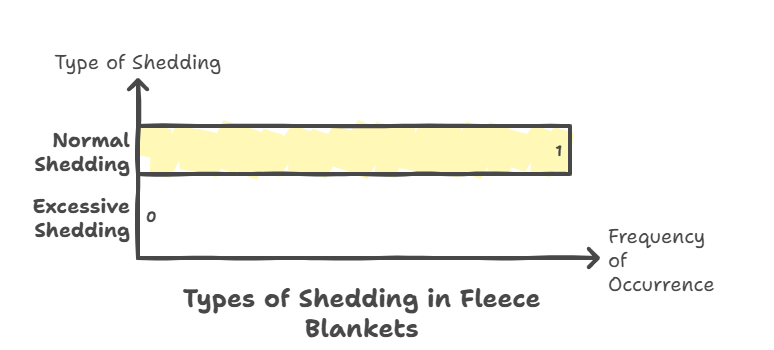
- Normal shedding: Light fuzz that reduces after use or washing
- Excessive shedding: Fibres constantly coming loose over time
Most fleece blankets experience the first kind, not the second.
Why Do Fleece Blankets Shed?
A couple of reasons make fleece blankets shed pretty much similarly. One reason is that the fleece is brushed in the manufacturing process to give it a soft touch; during early use, some loose surface fibers might get released. Also, new blankets usually shed more than the old ones because the fabric has settled in.
Friction is caused by daily movements such as shifting, sitting, or even light contact with the blanket, and this can result in the detachment of very fine fibres. Such shedding is typically of short duration—imagine the blanket getting acclimatised to its new spot.
Does Quality Matter When It Comes to Shedding?
Yes, quality does matter—but shedding alone doesn’t define quality. Well-made fleece is carefully brushed and finished so fibres stay in place over time. Lower-quality fleece may shed more because the fibres are shorter or not well secured.
A good fleece blanket usually sheds less and less as you use it.
Shedding vs. Pilling: Not the Same Thing
These two are often confused.
- Shedding is loose fibres coming off
- Pilling is when small balls form on the surface
Shedding often happens first, while pilling can develop later with friction. Neither means the blanket is useless—and both can be managed with simple care.
A Simple Way to Check a Fleece Blanket
When shopping or checking a new blanket at home:
- Gently rub the surface with your hand
- Lightly tug at the fibres
In case the fibres are detached in large numbers, it might be a shedder of this type. If the outer layer remains the same to a greater extent, it is a positive signal. Always inspect the two sides, for there are cases where blankets are made to look better on one side than on the other.
How Washing and Drying Affect Shedding
The amount of shedding that a fleece blanket undergoes is highly dependent on the washing practices. Cold water wash, gentle cycle and mild detergent can be the best ways to protect the fleece and limit shedding. High heat drying is also not recommended, as very high temperatures can damage the fabric, while air drying or low heat drying is far more effective.
Washing and daily use that are gentle at first might eventually lead to the complete disappearance of shedding. The majority of people would agree that their fleece blankets have gone through the whole process of becoming softer and more settled. Patience is unquestionably a virtue in such situations.
Shedding Doesn’t Mean Fleece Isn’t Good
So, does fleece blankets shed? Yes, sometimes—but that doesn’t mean fleece is bad or low quality. Shedding is common with soft winter fabrics and often happens early on. What truly matters is warmth, comfort, and how the blanket feels over time.
A cosy blanket that sheds a little at first can still be a wonderful, long-lasting part of your home.
Our main focus is on fleece products only. We are familiar with the real-life behaviour of fleece, not just the theory. So, in case you need premium quality wholesale fleece blankets in bulk at the most reasonable rates, we are the one-stop partners for you, considering comfort, value, and trustworthy quality for bulk orders.
 Peachfurblog | Wholesale & Bulk Blankets
Leave a comment