- Why This Question Comes Up So Often
- What “Breathable” Really Means When It Comes to Fleece
- How Fleece Blankets Handle Air, Heat, and Moisture
- Why Covering the Head with a Fleece Blanket Feels Comforting
- What Happens When You Breathe Under a Fleece Blanket for Too Long
- How Fleece Blanket Breathability Affects Sleep Quality
- Special Safety Considerations for Different Age Groups
- Polyester Fleece vs Natural Fibre Fleece: Does It Matter?
- How to Use Fleece Blankets the Right Way
- Are Fleece Blankets Breathable Enough for Everyday Use?
- Thoughtfully Made Fleece for Everyday Comfort
Surely, fleece blankets are breathable, and no denying it. But they seem to trap heat well when small amounts of air pass through them. That is why it is wrong to conclude that fleece blankets are entirely air-tight, through which the overly breathable material can be slung. When properly used, fleece is cosy and comfortable, and yet when the blanket is misused (such as by being kept close to the face for long periods), this results in discomfort rather than any appropriate danger most of the time in an adult.
Why This Question Comes Up So Often
Questions like “Are Fleece Blankets Breathable?” arise because fleece blankets have an overly snug feel to them. When you wrap one around you, it feels like holding warmth within your own little haven, thus an entrance to thoughts about airflow. Parents worry about kids, professional caregivers worry about seniors, and even on occasion, grown-ups awakened in their rather unusual warm or dry state after pulling the fleece way up while sprawling breathlessly into sleep.
It’s a fair question, and one that deserves a clear, calm explanation instead of fear-based answers.
What “Breathable” Really Means When It Comes to Fleece
Breathability in fabric is certainly about the air passage through the fibres of that cloth and not a grand flow, as could be envisaged by an open window or a loose cotton sheet. Fleecy blankets exemplify cold-weather efficiency by trapping the warm air with the fibres.
So naturally, the question arises of whether or not a fleece blanket is breathable or made for tightness–a question guided by that notion: a few can hold back the aerosol a little pre-recognised secondary particle, while sufficient warmth is shielded. That is how comfort is brought into the body; however, it is equally important to remember the possibilities of the blanket pressing against the throat or mouth.
How Fleece Blankets Handle Air, Heat, and Moisture
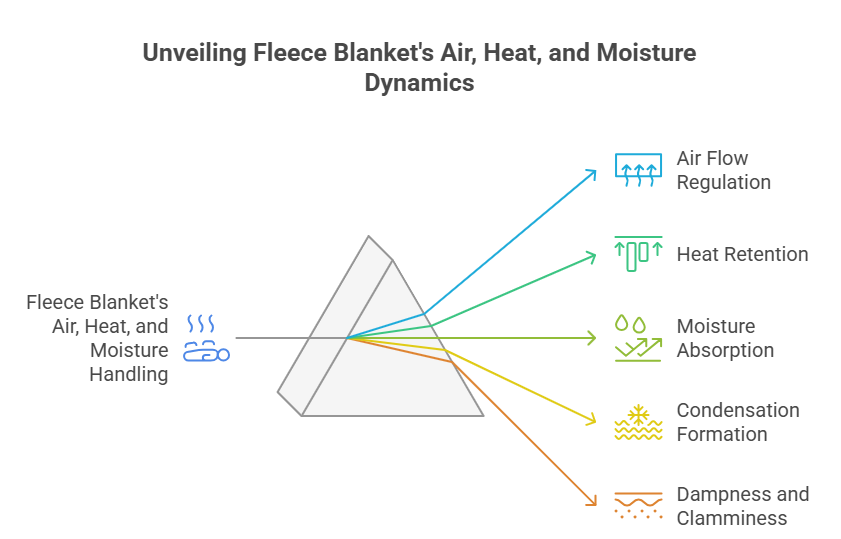
Wool fibres have the nifty knack for creating tiny pockets that capture warm air and regulate air flow. Now, keeping one warm indeed is very important, whilst simply exhaling the woollen blanket directly might actually result in condensation. Over time, it could make the fabric feel almost/ slightly wet or clammy.
Many people have been through this without knowing what caused it. They all wake up feeling hot. Something started feeling damp and cold on the border of the fleece blanket. They might have thought about changes in room temperatures overnight. In reality, it’s just the moisture from their breath, all sucked up by the fleece.
Why Covering the Head with a Fleece Blanket Feels Comforting
A person throws back a cover to hide under it, a habit initiated in childhood, as it signifies a small, cosy, and super safe area, plus avoids light, hence decreasing noise pollution and catching the warmth. Sometimes they do it through their adult years and tend to do so more when it gets cooler at night.
There’s also a psychological comfort involved. The enclosed space feels calming, almost like creating a small personal cocoon. The problem isn’t the instinct—it’s when the habit continues for long periods without enough airflow.
What Happens When You Breathe Under a Fleece Blanket for Too Long
At this moment, each time you draw air back with the sensory wool missing, it shifts the exhaust back, and the space becomes much smaller. Withdrawal of CO2 enhances even more in the atmosphere, sucking in more oxygen into the greatly oxygen-deprived body, thus disturbing the natural equilibrium between oxygen and carbon dioxide.
There are symptoms related to awakening: headache, being thirsty with a headache, etc. These symptoms may be minimal in healthy adults, but still negatively impact performance. The body of a sleeping person may actually move around during sleep; hence, it is quite common for such an individual to wake up and find themselves in the front position without remembering having rolled over.
How Fleece Blanket Breathability Affects Sleep Quality
A good night’s sleep hinges on proper airflow and temperature regulation. The body naturally reduces temperature during deep sleep, but heat can mess this process up when trapped around the head. Fleece blankets are wonderful, and too good to be true when used properly.
When airflow has been restricted, sleep tends to become lighter with some brief awakenings from the brain in an obvious attempt to re-establish its equilibrium. Hence, even after thinking all through that they had been sleeping for hours, people wake up looking rigid and compelled by sleep.
Special Safety Considerations for Different Age Groups
Most adults who are healthy only feel mildly uncomfortable, whereas specific groups need special care. Infants may also be at risk of suffocating or overheating by having their faces covered by fleece blankets or any other material. The elderly are also more prone to oxygen desaturation in sleep, and those with breathing problems must not have their faces fully covered.
Fleeces are to be wrapped around the body – leaving hands and legs open – without covering contact areas like the head or face.
Polyester Fleece vs Natural Fibre Fleece: Does It Matter?
All fleece is not created equal, and the feel depends on which material goes into its making. Generally manufactured from synthetic fibres intended to maximise warmth and durability, fleece treats those long winter evenings with its warmth, but allows humidity to settle on its surface more than natural fibres.
It does not make a blanket unsafe; it simply requires that the blanket be used wisely. Breathability is determined not only by the making of the blanket but also by how it is used.
How to Use Fleece Blankets the Right Way
The proper way to use the fleece blanket is everything! Sleeping with the blanket below the shoulders ensures warmth without obstructing breath. Either by putting the fleece over the body, or leaving it off the head, the cryogen has the option of the best it could have!
Many users may find out that by using fleece differently, they can sleep better during the winter and also feel refreshed in the morning, without losing any of the warm sensations that the fleece gives off.
It’s quite surprising how efficiently your body signals the need for it to be adjusted. Waking up to a dry throat that hasn’t yet felt an overabundance of temperature is often an indication of airflow restriction while sleeping. This does not mean that a blanket is bad for a fleece, but it could use a minor adjustment.
Are Fleece Blankets Breathable Enough for Everyday Use?
So, are fleece blankets breathable for daily usage? Absolutely! When used correctly. Fleece blankets are intended to hold in body warmth with provision for some airflow and require the face to be uncovered. Properly maintained, fleece will give a cozy comfortability without hindering of being able to breathe or sleep.
Thoughtfully Made Fleece for Everyday Comfort
At PeachFur Fleece, a registered trademark and division of HighMark Outdoor, we understand that comfort is about balance. With more than 11 years of experience supplying fleece products to ski resorts, retailers, institutions, and organisations, we design fleece blankets that provide warmth without unnecessary heaviness.
PeachFur Fleece provides breathable warmth, durability, and usability for those customers wanting top-of-the-line fleece blankets wholesale, and the answer to the question of “Are fleece blankets breathable?” lies not so much in the fabric but in our intention; every product we develop encourages breathing.
 Peachfurblog | Wholesale & Bulk Blankets