- Why Yardage Feels Confusing with Fleece Blankets
- What a Throw Blanket Is Really Meant to Do
- How Fabric Width Solves Half the Problem
- Yardage Based on How the Blanket Will Be Used
- Why Two Yards Often Feels “Just Right”
- The Double-Layer Question: When Yardage Doubles
- Fringe, Edges, and the Inches You Don’t See Coming
- Choosing the Right Fleece Before Measuring
- A Simple Way to Decide Without Overthinking
- Common Yardage Regrets (And How to Avoid Them)
- From One Blanket to Many: Thinking Beyond a Single Project
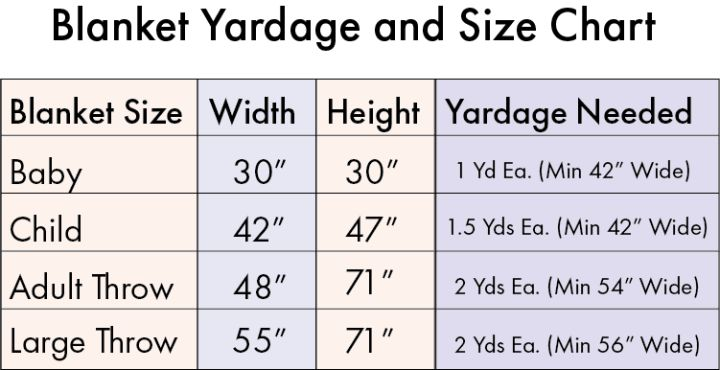
If you make the purchase for fleece for a throw blanket, your answer to the question “How many yards of fleece for a throw blanket should I buy?” is going to be this: Most throw blankets require 1.5 to 2 yards of fleece per side. So, for smaller or kid-sized throw blankets, 1.5 yards is enough. As for the bigger adult throws, a far better look is achieved with 2 yards. If in the case that it is a tie blanket, you are advised to get two yards on each side.
That’s the simple answer. Now let’s walk through the “why,” so you can feel confident before you buy or cut any fabric.
Why Yardage Feels Confusing with Fleece Blankets
Fabric yardage can feel oddly confusing at first, especially with fleece. You buy it by length, but it already comes quite wide. Many people assume they need to measure both width and length, which leads to overthinking and second-guessing at the fabric table.
Almost everyone who has made a fleece blanket has had that moment of holding scissors and thinking, “I really hope I measured this right.” The good news is that fleece is actually one of the most forgiving fabrics to work with once you understand how it’s sold.
What a Throw Blanket Is Really Meant to Do
A throw blanket is not supposed to cover the whole bed, yet it cannot be very small in size. A good throw blanket should blanket a seated person on a couch or a napping person, or should be cosy for a person with a novel or a film. The throw blanket should not be any more of an object requiring constant foot-tugging to stay warm, though.
This purpose matters because throw blankets live in that sweet middle space. They are larger than decorative accents but smaller than full bedding, which is why getting the yardage right makes such a noticeable difference in how the blanket feels once finished.
How Fabric Width Solves Half the Problem
That’s one of the neatest things about sewing with fleece – The realisation that most fleece comes already large enough to make a throw blanket. Standard fleece is generally around 54-60 inches wide, which is perfect for your blanket width.
It means that you rarely have to worry about the width at all. Instead, your main consideration is the length of the blanket, all of which is where yardage comes in. This makes everything much simpler for those people who understand it.
Yardage Based on How the Blanket Will Be Used
The number of yards you need depends less on exact measurements and more on who the blanket is for and how it will be used.
A small blanket may be used by a child, or maybe it is used as a runner or light throw. With a fleece of just 1.5 yards, the throw is of such length as to maximise comfort without appearing oversized.
A throw blanket meant for adults almost always benefits from 2 yards of fleece. That extra length allows the blanket to drape better and cover the legs fully, which matters more than people expect once they actually start using it.
If you have ever used a throw that almost covers you—but not quite—you already understand why those extra inches matter.
Why Two Yards Often Feels “Just Right”
Many experienced makers default to 2 yards for throw blankets, and there’s a good reason for that. Two yards give the blanket a relaxed, cosy feel without turning it into something bulky or awkward.
The size alone will work for a big range of people and functions, just long enough for the taller adults, wide enough to fit a couch, and still very comfy. If in doubt or possible gifting of a blanket, best go for 2 yards to avoid erring on the side of caution and resultant looks of disappointment.
The Double-Layer Question: When Yardage Doubles
Single layer, therefore, is simple and lightweight threads, whereas double layer or even tie blankets are preferred by many others due to the extra warmth and drape. Making a double-layer throw means creating two blankets that become as one.
This means each side will have the same amount of fleece in front and back, be in need of acquiring a span for one side, and two yards on the other. Many people, however, often overlook this, especially when they are caught in the whirl of a hurried shopping trip or are making more than one blanket.
Fringe, Edges, and the Inches You Don’t See Coming
When you’re making a tie blanket, keep in mind that by cutting a fringe about the edges, you will take away from the overall size of the blanket. These knots can look rather inconsequential; when bound together, they rob that blanket of somewhere to the tune of a good few inches from both the length and width.
For this reason, many blanket-makers opt to buy just a bit extra in fleece instead of trying to aim for the precise amount. A little bit more can, in fact, make a lot of changes; loosely woven fleece is always better than fleece to the edge.
Choosing the Right Fleece Before Measuring
Most fleece does not act the same once it has been cut off the sheep. Good quality fleece does not change shape, it cuts cleanly, and remains soft with age. A lower quality of fleece may emit fluff, stretch out unevenly, or lose its softness once it has been washed.
Good-quality and resistant fleece is more predictable yards-wise, and equally regarded for better use once the blanket is done. With the fabric behaving just the way you want it to, a sense of confidence sneaks up on one’s measurements.
A Simple Way to Decide Without Overthinking
If you want an easy decision-making approach, ask yourself three questions. Who is the blanket for? Where will it be used? Do you want it to feel compact or generously cosy?
For a child or lighter use, 1.5 yards gets a lot done. For adults or gifts where comfort is a top concern, people go to 2 yards more often. Mind you, the rule works only if all other variables remain fixed.
Common Yardage Regrets (And How to Avoid Them)
One of the most common regrets comes when you make a tiny cut in the fabric, then later wish you a little bit of extra fabric on the edge. The other is to forget to account for fringe, or trimming on the border. These are easy to avoid if you plan well and always allocate extra fabric on the border.
A blanket that is a bit loose-fitting is actually more comfortable to wrap oneself in than a blanket that falls short of covering the user completely.
From One Blanket to Many: Thinking Beyond a Single Project
When people learn that they need six yards of fleece for a throw blanket, they start thinking beyond just one blanket. This brings up projects of all sizes for holiday gift needs, as group projects, family events, etc., when the quality of the fabric, availability, and consistency in sizing become as important as the yardage itself.
That’s where working with a reliable source makes a difference. At PeachFur Fleece, a division of HighMark Outdoor, we support individuals and organisations looking for dependable fleece blanket wholesale options. Whether you are planning multiple throw blankets for gifts, events, or retail needs, having consistent fleece width, quality, and durability helps every blanket turn out just right.
Understanding yardage is the first step. Choosing the right fleece is what turns that knowledge into comfort that lasts.
 Peachfurblog | Wholesale & Bulk Blankets