Quick Answer: What Is Flannel Fleece?
If you’re asking yourself what is flannel fleece, here’s the short version: it’s a plush, polyester-based fabric that blends the warmth of fleece with the velvety softness of flannel. Known for its lightweight feel, insulating qualities, and smooth surface, flannel fleece has become a staple for blankets, apparel, baby products, and even upholstery.
Why is it so popular? Because it’s durable, affordable, hypoallergenic, and easy to maintain. Whether you’re curling up on the couch with a throw or outfitting a hotel with fleece blanket wholesale options, flannel fleece delivers cozy comfort with long-lasting performance.
Now let’s dive deeper.
The Origins of Flannel and Fleece
To really understand flannel fleece, it helps to know where it came from.
- Flannel: Originating in 17th-century Wales, flannel was traditionally woven from wool. Later, cotton flannel became the everyday version we know today — soft, brushed, and breathable. It’s long been associated with shirts, pajamas, and winter sheets.
- Fleece: A much more modern fabric, fleece was invented in the late 20th century. Made from synthetic fibers (usually polyester), fleece is knit and brushed to create a thick, insulating pile that mimics wool but is lighter and easier to care for.
- Flannel Fleece: This hybrid combines the best qualities of both. Polyester fibers are knitted and brushed to create a smooth, peach-skin surface like flannel, while still retaining the warmth and durability of fleece. The result is an adaptable fabric that looks refined but feels incredibly soft.
Characteristics of Flannel Fleece
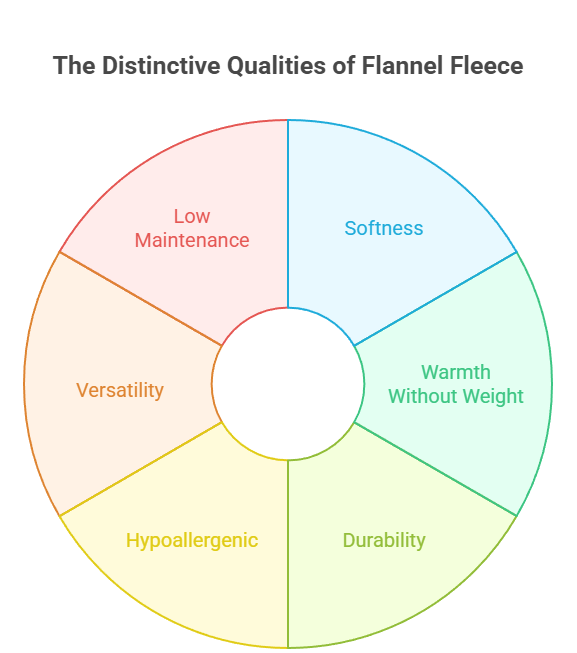
What sets flannel fleece apart from other fabrics?
- Softness: Its brushed surface gives it a velvety, peach-like feel.
- Warmth Without Weight: Retains heat effectively without being bulky.
- Durability: Resistant to shrinking, wrinkling, and pilling.
- Hypoallergenic: Polyester fibers reduce dust mite buildup.
- Versatility: Can be dyed, sublimated, or patterned into countless designs.
- Low Maintenance: Machine washable, fast-drying, and wrinkle-resistant.
These qualities make it suitable for everything from luxury throws to promotional personalized blankets in bulk.
Everyday Uses of Flannel Fleece
Home Textiles
Flannel fleece shines in bedding and décor:
- Blankets and duvet covers
- Throws for couches or beds
- Cushion covers and rugs
Apparel
Thanks to its warmth and softness, it’s often used in:
- Pajamas and robes
- Jackets, coats, and hats
- Children’s costumes and sleepwear
Travel & Outdoor Use
Its lightweight yet insulating nature makes it perfect for:
- Travel pillows and blankets
- Picnic blankets
- Camping gear
Corporate & Events
Businesses love it because it’s affordable and customizable:
- Event giveaways
- Hospitality bedding
- Logo-embroidered blankets for branding
Flannel vs. Fleece vs. Flannel Fleece
| Feature | Flannel | Fleece | Flannel Fleece |
|---|---|---|---|
| Material | Cotton/Wool | Polyester | Polyester |
| Feel | Soft, breathable | Thick, fluffy | Velvety, plush |
| Warmth | Medium | High | Medium–High |
| Breathability | High | Low | Moderate |
| Best Use | Shirts, sheets | Jackets, blankets | Multi-purpose |
So, to answer again: what is flannel fleece? It’s the in-between fabric that gives you flannel’s smooth comfort with fleece’s cozy warmth.
How to Care for Flannel Fleece
The good news? Flannel fleece is as low-maintenance as it gets.
Do’s:
- Wash in cold or warm water, gentle cycle.
- Use mild detergent.
- Air dry or tumble dry on low.
Don’ts:
- Avoid bleach (weakens fibers).
- Skip ironing (heat can melt polyester).
- Don’t use fabric softeners (they reduce fluffiness).
Tip: To keep static low, remove items from the dryer while slightly damp and let them air dry fully.
Sustainability and Longevity
While flannel fleece is synthetic, it has one big sustainability advantage: longevity. A single blanket can last years without losing softness. And unlike some natural fabrics, it resists moth damage, mildew, and fading.
Old flannel fleece blankets can also be repurposed — into cushion covers, pet beds, or DIY projects — extending their lifespan. So while polyester has an environmental footprint, its long-lasting nature means less frequent replacement, which reduces waste.
Why People Love Flannel Fleece
It’s not just about warmth. Here’s why the fabric is universally loved:
- Works in both mild and cold climates.
- Affordable compared to wool flannel.
- Available in countless patterns and textures.
- Soft enough for babies, durable enough for hotels.
- Washes easily, dries quickly, and resists wear.
In short, it’s a fabric that fits seamlessly into daily life.
FAQs About Flannel Fleece
Is flannel fleece good for winter?
Yes — it’s insulating enough for cold nights but breathable enough not to overheat.
Does flannel fleece pill?
Quality flannel fleece resists pilling, especially when washed on a gentle cycle.
Is it safe for sensitive skin?
Yes. Its hypoallergenic fibers make it a good choice for children and those with sensitivities.
How does it compare in cost?
It’s generally more affordable than wool flannel, making it a budget-friendly luxury.
A Note from PeachFur Fleece
At PeachFur, we’ve been crafting cozy home essentials from flannel fleece for over a decade. From duvet covers to baby blankets, our designs bring together comfort, durability, and style. For businesses, designers, and organizations, we also offer fleece blanket wholesale and personalized blankets in bulk, making it easy to share warmth at scale.
Conclusion
So, what is flannel fleece? It’s more than just a fabric — it’s a blend of comfort, practicality, and style. From cozy blankets to stylish apparel, it’s the textile that adapts to every space and every season.
And when you’re ready to bring that comfort home — or to your business — PeachFur Fleece is here with designs that last, warmth you can count on, and styles you’ll love.
 Peachfurblog | Wholesale & Bulk Blankets