Quick Answer: What Material is Fleece?
What Material is Fleece? Fleece is a soft, lightweight, and insulating fabric made primarily from synthetic fibers such as polyester. Unlike wool, which comes from animal sources, fleece is entirely man-made, designed to mimic the warmth and softness of natural fibers while being easier to care for.
It is breathable, quick-drying, and widely used in jackets, blankets, and activewear.
Now let’s dive deeper.
The Popularity of Fleece
Few fabrics have gained as much global recognition as fleece. It’s soft to the touch, incredibly warm without being heavy, and versatile enough to be used in clothing, home textiles, and even accessories. The question “What Material is Fleece?” often arises because of its unique feel—similar to wool yet completely different in composition.
Fleece has earned its reputation as the fabric of choice for outdoor enthusiasts, athletes, and everyday comfort seekers. But what really makes fleece so popular? The answer lies in its origin, properties, and applications.
The Origins of Fleece
Fleece, as we know it today, was first introduced in the late 1970s and popularized in the 1980s by companies that saw the potential of synthetic fibers in textiles. The innovation came from engineers who wanted a lightweight alternative to wool that could provide warmth without retaining moisture.
The fabric quickly took off, particularly in activewear, because it could insulate the body while staying light and breathable. Over time, fleece has evolved into different variations, including microfleece, polar fleece, and sherpa fleece.
What Material is Fleece Made From?
The core component of fleece is polyester, a synthetic fiber derived from petroleum-based products. The process involves melting plastic and spinning it into fine fibers, which are then woven or knitted into fabric. After this, the fabric undergoes brushing to create its signature soft and fluffy texture.
While traditional fleece relies on polyester, modern variations sometimes incorporate recycled plastic bottles, blends with cotton, or even natural fibers to enhance sustainability.
Here’s a breakdown:
- 100% Polyester Fleece: The most common type, known for durability and warmth.
- Blended Fleece: Mixed with cotton or spandex for added softness and stretch.
- Recycled Fleece: Made from post-consumer recycled materials, an eco-friendlier option.
This synthetic origin explains why fleece is so versatile and widely available across industries.
Properties That Make Fleece Stand Out
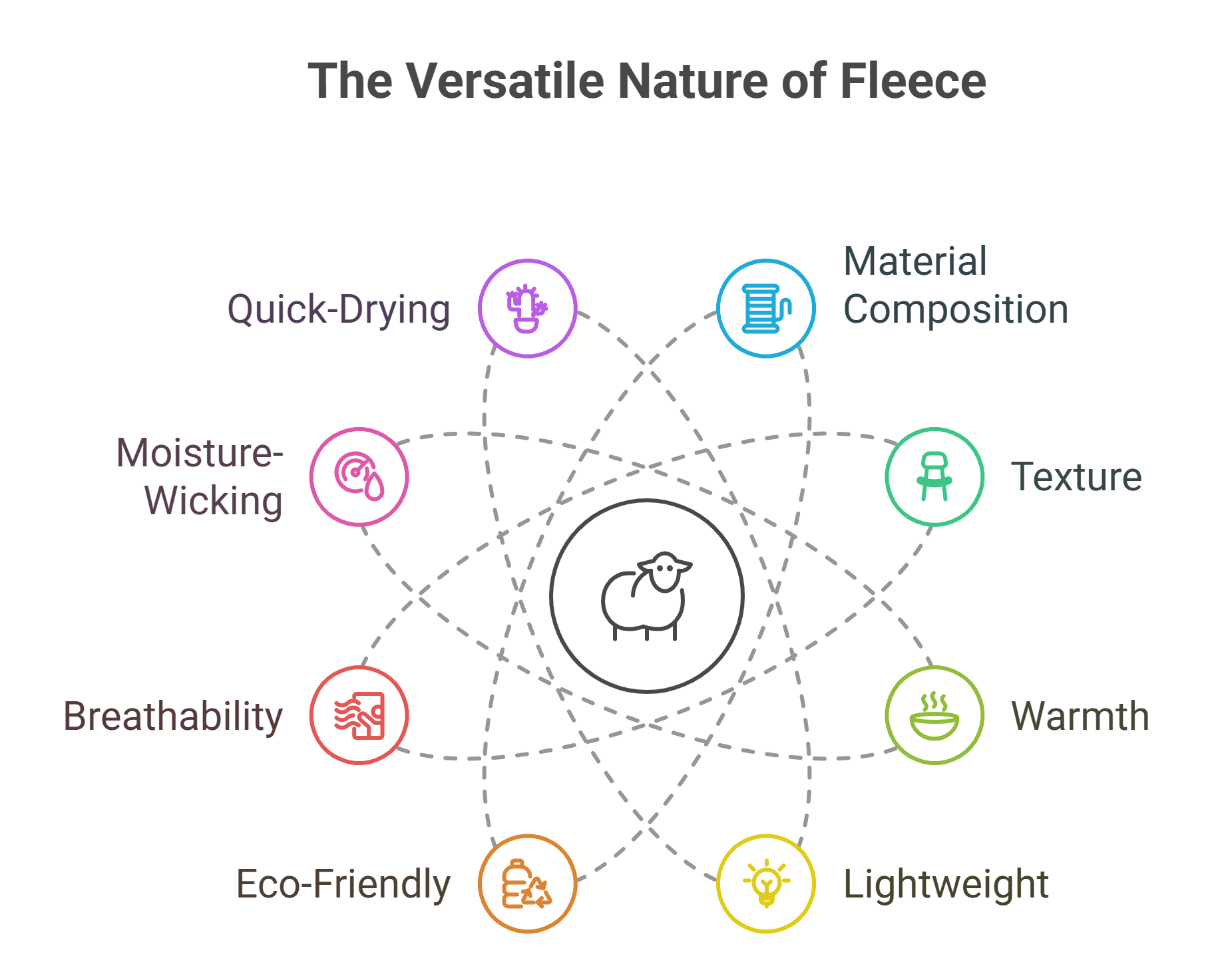
Fleece became a global favorite because of its unique characteristics:
- Lightweight: Offers warmth without heaviness.
- Breathable: Allows air circulation, preventing overheating.
- Quick-Drying: Unlike cotton, it dries rapidly after washing or sweating.
- Moisture-Wicking: Pulls moisture away from the body, keeping the wearer dry.
- Soft Texture: Its brushed surface provides a cozy, plush feel.
- Durability: Resistant to shrinking and stretching, unlike wool or cotton.
These properties make fleece an attractive material not only for fashion but also for performance gear.
Applications of Fleece
Fleece is found in countless products, both functional and decorative. Common uses include:
- Clothing: Jackets, hoodies, gloves, scarves, hats, and joggers.
- Activewear: Base layers, hiking gear, and sportswear for colder climates.
- Home Textiles: Blankets, throws, cushion covers, and bedding.
- Accessories: Pet clothing, baby items, and casual shoes.
Because fleece is affordable to produce, manufacturers can use it across a wide range of consumer markets.
Fleece vs. Wool: Key Differences
While fleece often gets compared to wool, there are major distinctions:
- Source: Wool is natural, fleece is synthetic.
- Weight: Fleece is lighter.
- Care: Fleece is machine-washable, wool requires delicate care.
- Moisture: Wool absorbs water, fleece resists it.
- Allergies: Fleece is hypoallergenic, wool can irritate sensitive skin.
This comparison shows why fleece is often chosen as a practical alternative to wool, especially in affordable apparel and home goods.
Midpoint Use of Keyword
Many people ask, “What Material is Fleece?” because they associate its fluffy softness with natural fibers like wool. However, fleece’s man-made polyester origin allows it to deliver warmth and comfort while being easier to maintain. This makes fleece particularly useful for activewear brands that want functional fabrics without high costs. Its synthetic composition is precisely what gives fleece its moisture resistance and durability, setting it apart from traditional natural fibers.
Sustainability and Fleece
One common concern about fleece is its environmental footprint. Since polyester is derived from petroleum, it is not biodegradable. Additionally, fleece garments can shed microplastics during washing.
However, the textile industry is working toward more sustainable solutions:
- Recycled Polyester: Turning plastic bottles into fleece fabric.
- Eco-Friendly Dyes: Reducing water and chemical waste.
- Blended Options: Combining recycled fibers with organic cotton.
These steps make fleece more environmentally responsible while retaining its desirable qualities.
How to Care for Fleece?
Caring for fleece ensures it stays soft and functional over time:
- Wash Cold: Prevents fibers from weakening.
- Mild Detergent: Avoids harsh chemicals.
- Air Dry: Preserves fluffiness and reduces energy use.
- Avoid Heat: High temperatures can damage fibers.
- Gentle Brushing: Restores its plush surface if it mats.
Following these tips helps fleece garments and blankets maintain their texture and warmth for years.
Why Consumers Love Fleece?
The popularity of fleece is rooted in both practicality and emotion. It feels comforting on a cold day, it’s affordable compared to natural alternatives, and it adapts to countless styles. For many households, fleece blankets and jackets are not just items—they’re associated with coziness, relaxation, and warmth.
Its affordability also means consumers can enjoy multiple fleece products without breaking the bank, making it a reliable choice for families, students, and outdoor enthusiasts alike.
Final Thoughts
So, What Material is Fleece? It is a synthetic, polyester-based fabric designed to offer the softness of wool without its downsides. Lightweight, durable, and versatile, fleece has become a staple in homes and wardrobes worldwide. Its ability to combine warmth with breathability makes it unique, while innovations like recycled polyester are addressing environmental concerns.
For anyone curious about its composition and uses, fleece is not just a fabric—it’s a solution for comfort, style, and practicality that continues to evolve with modern needs.
 Peachfurblog | Wholesale & Bulk Blankets