Tag Archives: wholesale fleece blankets in bulk

How Much Fabric for a Fleece Blanket?

29 Dec

There’s a unique kind of thrill in planning a fleece blanket. You envision cosy evenings, with the finished blanket resting on the couch in a neat pile or maybe as a gift for a beloved one. But then comes the stalling moment for many staring at a myriad of fabric choices: how much fabric for a fleece blanket do you actually need?

It simply is a very simple matter, but one that begets a lot of uncertainty, more so if you are doing it for the very first time. This gets cleared in a simple, friendly manner with this guide. There’ll be a little quiz: Not very complicated math. Direct explanations to ease you and grant you the knowledge about how to feel secure about a purchase.
Why Fabric Amount Matters More Than You Think

Fleece is forgiving, soft, and beginner-friendly, but fabric quantity is the one thing you can’t really “fix later.” Too little fabric leads to a blanket that feels awkwardly short. Too much fabric often means unnecessary expense or trimming regret. The good news is that fleece fabric works in predictable ways, which makes planning much easier once you understand a few basics.

The key thing to remember is that fleece usually comes in wide rolls. That width already takes care of most blanket widths, so the amount of fabric you need is mostly about length.

Understanding Fleece Fabric Width

The width of most fleece material runs between 54 and 60 inches, which is just the right width for infant blankets, throws, and grown-ups’ blankets, all of which can be done in a single cloth-width without any need to have the fabric sewn together. So when you hear people asking, “How much fabric to make a fleece blanket?” they are considering ideas on the number of yards for the length of fabric required.

This is why fleece is so popular. It quietly removes one major headache from the process.

Fabric Amount for Different Blanket Sizes

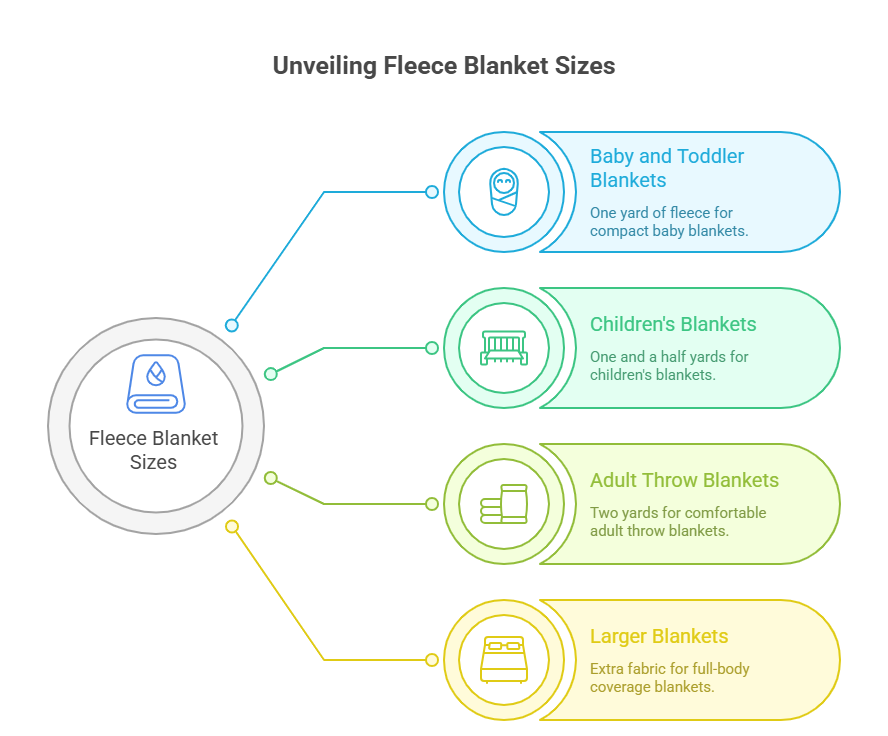
A whole yard of fleece is a comfortable amount for baby and toddler blankets. It’s compact enough for on-the-go strollers or car seats. Just a shade bigger and never out of place with a wide application, really, the extra half yard seems to make the blanket more fun and functional without towing a considerably bulky weight.

A delightful size for children is about one and a half yards of fleece, offering enough room to curl up, drag the blanket from room to room as they please, or use it on a bed without appearing oversized.

Adult throw blankets are where most people pause and hesitate. In most cases, two yards of fleece creates a comfortable, well-proportioned throw. It’s long enough to cover legs and torso during couch time without constantly needing adjustment. If the blanket is for someone taller or if you simply love extra coverage, two and a half yards feels luxuriously cosy.

Larger blankets meant for full-body coverage or taller adults benefit from extra length. In those cases, adding more fabric makes a noticeable difference in comfort. Most people who go bigger never regret it, but many who go smaller wish they hadn’t.

One Layer or Two? How That Changes Everything

The demand for fabric is essentially halved in the case of a single-tied fleece blanket, rather than being quite ample for a two-person or rather shared tie blanket making entailing raw materials (fabric) for two layers.

This is where planning really matters. If you want a double-layer adult throw and you choose two yards, you’ll need two yards of each fleece piece. The warmth and weight of double-layer fleece are wonderful, but the fabric requirement doubles instantly.

Why You Should Always Leave a Little Extra Room

Even though fleece doesn’t fray, it still needs trimming, squaring, and finishing. Tied edges, rounded corners, or simply straightening the fabric all reduce the final size slightly. This is why experienced crafters almost always buy a little more than the bare minimum.

The extra margin is there to turn a nagging task into a tolerable and enjoyable one and to give you scope in case you decide to risk a tad bit more fringe, softened corners, or greater drape in the end.

Fabric Choice Can Change How Big a Blanket Feels

Not all fleece is created equal. Some fleece that is thicker tends to feel warmer, but might drape a little shorter. Thinner fleece moves more easily and may often seem larger when it is actually the same size. Anti-pill fleece that is treated to hold its shape with good usage and regular washing makes a good choice for fleece blankets.

Choosing quality fleece means the blanket keeps its size, softness, and appearance long after it’s finished.

Custom Sizes Without the Headache

Try making a blanket with the intention of it fitting a particular bed or person. The easiest way to figure it out is to know how long to buy fabric for in advance, while rounding up. Due to fleece’s forgiving nature, a tad extra fabric is just better than too little.

You don’t need perfect measurements to succeed. You just need thoughtful planning and a bit of breathing room.

A Thoughtful Ending: Comfort Without Guesswork

After learning how much fabric fleece blankets require, the process becomes quite enjoyable. After all, fleece is for warmth, and not to bring anxiety, so the quantity of fabric should be enough to suit the purpose of the blanket.

For those who do not wish to bother with the guesswork, professionally-made fleece blankets provide a constant relief to this malaise. With over twenty years of experience with exclusivity for fleece, we focus on giving out size, forever softness, and reliable quality. From throws and baby blankets to picnic blankets and customisations with embroidery, fleece is what we are good at.

If you’re looking to fulfil further-reaching needs—if you’re with an entity, charity, or charitable organisation, or into retail, taking a good look at wholesale fleece blanket in bulk quantity possibilities for combining quality with price makes broad sense. After all, a fleece blanket’s key job has always been to do one thing and not deviate from it: make you feel at home.

Are Fleece Blankets Toxic?

29 Dec

One of the most asked follow-up questions after using a cosy fleece blanket and savouring that soft and comfy feeling is, “Wait… are fleece blankets toxic?” That thought springs up more frequently these days, particularly because people have taken time to learn what touches their skin, what their children use, and what materials sit around in their homes.

But don’t worry! The topic does not have fear or panic, but is very self-explanatory. So let us talk about this very gently and honestly so that at the end of the day, you can actually decide on your own.

What People Usually Mean When They Ask “Are Fleece Blankets Toxic?”

Most people don’t mean toxic in the sense of poison. They usually mean something more practical:

  • Can fleece irritate skin?
  • Can it cause allergies?
  • Is it safe for babies or people with breathing issues?
  • Are there chemicals involved that I should worry about?

These are definitely good questions, but the real question here, too, is that fleece blankets are not poisonous in the usual sense whatsoever; they, however, may not be suitable for some situations.

What Fleece Blankets Are Made Of

A great option would be the polyester fleece blankets because polyester has a natural resistance to moisture, yet it does indeed manage to give off a sort of wool-like softness. A common choice among the bedding industry, the blanket is lightweight owing to its nature.

Just because it’s synthetic doesn’t automatically mean it’s unhealthful, as several everyday items, from sportswear to upholstery, impart the same fibres without harm. Fleece sometimes exerts different properties contingent on their quality, maintenance, and users.

Can Fleece Blankets Cause Skin Irritation?

This is one of the most common concerns behind the question of whether fleece blankets are toxic.

Use of fleece blankets for maintaining body heat may be enjoyable for many, but not for all. After all, trapped body heat can cause discomfort, irritations, and itching, and this can particularly aggravate skin problems in those with sensitive, eczematous, or winter dry xerotic skin. This does not mean that blankets should be identified as toxic; rather, a warmer ability is not the best thing you would want for your skin.

A poor-quality fleece can shed particles of lint while probably becoming coarse over many washings, thereby causing irritation for the very sensitive skin. A superior fabric will keep its finer-grain softness and smoothness as it wears.

Fleece Blankets and Allergies: Is There a Risk?

Fleece typically does not bring about genuine allergic reactions the way that certain natural fibres or chemicals could, happening in response to friction, heat and dryness with very susceptible skins and an existing allergy.

Most of the time, a wash one time will tend to reduce surface chemicals or materials used in the production process and break down a tiny bit of leftover fibres, making a difference in everyone’s comfort.

Are Fleece Blankets Safe for Babies and Children?

Here is where more conscious effort is required. Newborns and very young babies are quite fragile, possessing sensitive respiratory systems and delicate skin. Some fleece types, especially the cheap grade fluff or shedding ones, may liberate loose fibres that are not safe for babies to be around- a health hazard posing a threat to breathing.

Fleece blankets are usually quite safe and pretty well worn by healthy, older children. The choice of installation matters equally; it is essential that the fleece is of good quality and that it is kept clean, well looked after, and appropriate for all ages. So now, when parents say, ‘Hey, are fleece jogging blankets poisonous to children?’ it is better to ask which kind of fleece and how safely it might be used.

Respiratory Sensitivity and Fleece Use

There are times when there may be discomfort experienced by people with asthma or chronic respiratory conditions from shedding fibres. Poorly made fleece sheds very tiny fibres on the ceiling. This can happen when fleece is new or when it has been worn enough.

Once again, it is not toxicity but irritation. Properly washing wool while avoiding very hairy and shedding types of wool, and utilising wool in well-ventilated spaces, greatly diminishes this concern.

What About Chemicals and Dyes in Fleece?

Another reason why people are pressing about fleece blankets being harmful is youthful worry about the dyes and finishing treatments. Like all textiles, fleeces can be dyed and then treated during manufacturing, with the inferior types exhibiting less agreeable processes while the better qualities would be seen abiding by strict quality standards.

A simple rule helps here: wash before use and choose quality over price. Washing removes surface residues, and higher-quality fleece is far less likely to cause discomfort.

Static, Shedding, and Winter Discomfort

Static electricity and lint shedding are often blamed on fleece being “bad,” but these are comfort issues—not health dangers. Dry winter air increases static, and cheaper fleece sheds more. Using proper laundry care and choosing well-finished fleece usually solves these problems without giving up warmth.

When Might Fleece Not Be the Best Choice?

There are a few situations where fleece may not be ideal:

  • Newborn babies with very sensitive airways
  • People with severe respiratory conditions
  • Individuals with known reactions to synthetic fabrics

However, for the vast majority of people, fleece will remain the safe, snuggly choice, while for some running the gauntlet, cotton or bamboo could feel better.

So, Are Fleece Blankets Toxic? The Clear Answer

Fleece blankets are never poisonous per se. The fears mostly arise from a sensitive or genuine discussion of the quality in use and care provided, rather than any possibility of real danger. In other words, a very comfortable and warm fleece can definitely be acquired and then put to good use in almost every household in this world.

Comfort You Can Feel Good About

Understanding the truth behind our fleece blankets’ toxicity helps you make calm, confident decisions instead of worrying unnecessarily. Quality matters, care matters, and experience matters, too.

For those organisations, events, charities, or shops that need viable warmth at a large level, our wholesale fleece blankets in bulk make a great combination where, with all juice and no froth, quality, consistency, and price scream: one blankie needs to do well by making one feel securely wrapped, relaxed, and right at home.

Where to Buy Fleece for Blankets

24 Dec

One of the most common questions concerning the making of a fleece blanket is where to buy fleece for blankets. Although this question is simple enough, when the search begins, it can be very easy to get lost among the numerous options available. Shall one buy it from a shop or online? Is it all right if one buys a cheaper fleece? Is there such a thing as quality that matters a lot?

The purpose of this blog is to simplify that decision. The specific names of the brands are not mentioned, nor is there any discussion of fabrics in a complicated way; rather, there is straightforward advice on how to select the best supplier of fleece for the production of blankets in the United States.

Local Fabric and Craft Stores

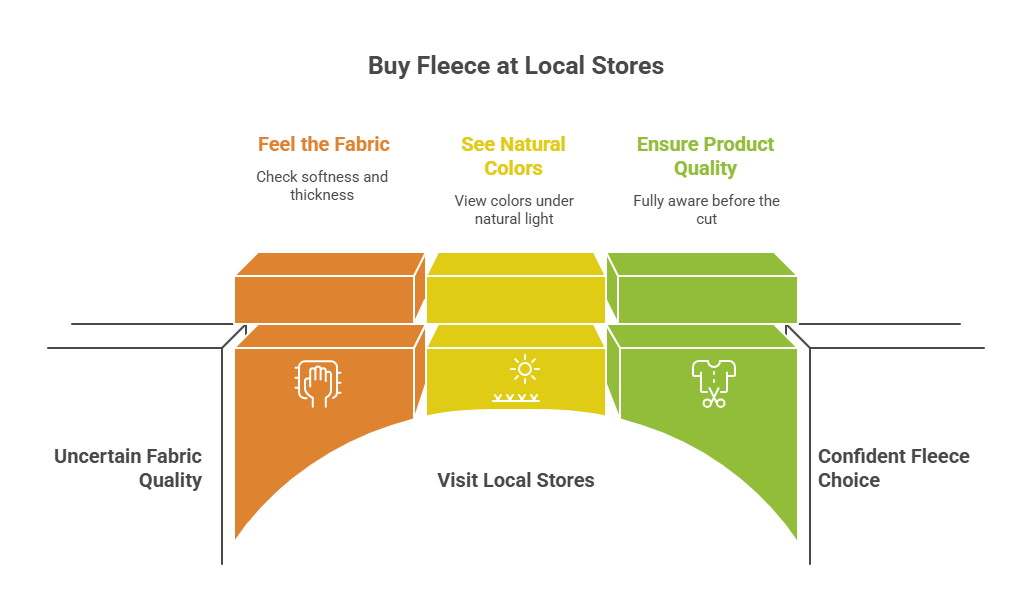
Your local fabric and craft shops will probably be the cosiest place to start, particularly if it’s your first time making a fleece blanket. The main plus of going to a shop is that you get to feel the fabric. You will be able to tell its softness, its thickness will be up to you, and also the colours will look best as you will be seeing them under natural light.

This option is chosen by many people as it eliminates uncertainty. You are fully aware of the product quality and quantity before your cut. Besides, these shops frequently stock fleece, which is the best for sewing and hence, tie blankets and no-sew crafts are very suitable there.

If you enjoy browsing and want confidence in your choice, this is a great answer to where to buy fleece for blankets.

Big Retail Stores

Fleece material can be found in some general retail shops, but only in basic colours or trending prints. The variety may not be as large as in a fabric-only shop, but these places are easy to reach and inexpensive.

This choice is a good one for those who need fleece fast or are just making a regular blanket with no design requirements. A lot of people use this option for their school projects, last-minute gifts, or group activities where low cost is more important than a wide selection.

Online Fabric Stores

Purchasing fleece via the Internet has emerged as a very popular trend in the US, particularly for customers who have a clear idea of what they want. E-commerce fabric stores mostly provide a much larger variety of hues, prints, and fleece kinds compared to brick-and-mortar stores.

Selecting this option necessitates the reading of product descriptions and reviews, as the fabric cannot be felt beforehand. Online shopping is a wise decision if you are looking for more design options or are getting fleece delivered to your home, and do not have the time to visit shops.

For many people, online shopping is the most flexible answer to where to buy fleece for blankets.

Local Independent Fabric Shops

The little fabric stores owned by the locals are often unnoticed, but they might still be a great source for fleece. Sometimes such stores have fleece of better quality or designs that are not commonly found in other places.

Another benefit of this alternative is the help that is given on a personal level. Most of the time, the owners and their employees of the store are well informed and are more than willing to guide you to the fleece that is perfect for your project. If the quality of the product is more of an issue than the price, then it would be a good idea to think about this alternative.

Buying Fleece in Bulk

If you are considering making several blankets—for events, donations, schools, or organisations—buying fleece in bulk will most likely be the best approach. Generally, bulk buying provides better rates, uniform fabric quality, and enough material to make all blankets that look alike.

Those who are looking for places to purchase fleece for blankets usually do not comprehend how much the bulk purchase will save them when they are making several blankets. Also, the issue of having the same fabric running out in the middle of the project is no longer a problem.

What to Look for When Buying Fleece

Quality is a major factor everywhere fleece is bought. One should choose dark fleece that does not shed fibres when its edges are scratched. Generally, medium-weight fleece is cut and tied more easily than thick fabric. Fleece for laundry purposes should be gentle to skin; thus, pilling-resistant fleece is the ideal option.

Always think about how the blanket will be used. A decorative throw may need a different fleece than a blanket meant for daily warmth.

The best place depends on your needs. In-person stores are great for beginners. Online options are perfect for variety and convenience. Bulk suppliers are ideal for large projects. There is no single best answer to where to buy fleece for blankets—only the option that fits your project best.

Final Thoughts

The process of making a fleece blanket should be nothing but soothing all the way through. The selection of the best fleece store brings other things to come. If you begin with high-quality material, the whole process is easier, and the end product is more gratifying.

We have a very close relationship with fleece products and know exactly what characteristics make a blanket really comfy and long-lasting. Besides guiding the consumers in seeking the retailers, we also help companies and events, supplying them with wholesale fleece blankets in bulk for their community and organisational needs. Through this, we aim to make the generation and sharing of warmth throughout the USA very simple.

How Many Yards of Fabric Do I Need for a Tie Blanket?

9 Dec

So, if you are looking to make your first no-sew tie blanket, a common question that gets asked is, ‘How Many Yards of Fabric Do I Need for a Tie Blanket’ It might appear straightforward, but the issue of fabric yardage can prove to be somewhat gnarled—made more complicated yet by fringe cuts, fabric width, and the size of the blanket. The good thing is that once a few essentials are understood, selecting the right fleece is an easy task. (Just count yourself lucky for not having to remember any high school geometry:)

Let’s break it down clearly and professionally so you can start your project with confidence.

How Many Yards of Fabric Do I Need for a Tie Blanket

Here’s the basic rule:

Tie blankets require two equal-sized pieces of fleece layered together.

Your yardage depends on the size you’re making:

  • Baby blanket: 1 yard per side (2 yards total)
  • Child blanket: 1.5 yards per side (3 yards total)
  • Teen/Adult throw: 2 yards per side (4 yards total) — most common
  • Oversized adult: 2.5–3 yards per side (5–6 yards total)

It is time to lay stress on particulars so that a blanket can come out perfect for anybody–from a newborn to an extremely tall adult who, insistently, seems all right to say that “No blanket can ever be long enough.”

Why Yardage Matters Before You Start Cutting

Tie blankets may appear plain, but they are not as simple to complete as they appear. Due to being comprised of two fabric layers tied together, the blanket requires the fabric pieces to be of an equal size. Buying insufficient fabric results in uneven edges, a lack of fringe, which is not good.

Just consider yardage as your project’s groundwork. Once that’s right, the rest goes fine; cutting outdoor ground, tying vapour barriers, trimming shingles. Get it wrong, and you will always be found standing in the fabric aisle muttering, “I should’ve measured!” like every crafter who has gone before you.

Understanding Tie Blankets: Two Layers, One Cosy Finish

The fleece tie blanket involves layering and attaching two pieces of fabric on top of each other and cutting fringes on the edges by hand, and tying them together. In fact, this custom blanket does not involve any seam sewing requirement, and hence, you need to pick two well-coordinated prints for a smooth, even look. Fleece is usually sold in 56-60-inch-wide bolts, which are way big enough for a tie blanket. Addition of seams or extra panels will not be required.

How Many Yards of Fabric Do You Need (By Size)

1. Baby / Crib Size

1 yard of each fabric (2 yards total)

A baby blanket should be snug, lightweight, and easy to carry. One yard gives you a perfectly sized tie blanket for cribs, strollers, or tummy time. After cutting the fringe, the final size remains comfortable and very portable.

2. Child Size

1.5 yards of each fabric (3 yards total)

This is ideal for kids ages 3–10. It provides enough coverage without being too large for small hands to carry around. It’s also a favourite for sleepovers and car rides.

3. Teen / Adult Standard Throw

2 yards of each fabric (4 yards total)

This is the most popular tie blanket size. It creates a blanket large enough for:

  • Couch lounging
  • Dorm beds
  • Camping
  • Movie nights

It’s the perfect “one size fits most” blanket, even for teenagers who seem to grow another inch every winter.

4. Large Adult / Oversized Blanket

2.5–3 yards of each fabric (5–6 yards total)

Choose this size if:

  • The blanket is for a tall adult
  • You want full coverage from shoulder to toe
  • You want something extra cosy for winter

Oversized blankets also work well as bed toppers or cuddle blankets for couples.

Why Your Blanket Shrinks: The Fringe Zone

Every tie blanket loses about 4–5 inches on each side because of the fringe cuts. This means:

  • A 2-yard piece of fabric does not result in a full 72-inch finished blanket
  • Your final measurement will be smaller depending on how deep your fringe is

A simple formula:

Final blanket size = Fabric size – (fringe depth × 2)

So, if you cut 5-inch fringe, expect 10 inches of total reduction in both length and width.

This is why many people prefer to size up. Better to have extra than to end up with a blanket that mysteriously shrinks into “lap blanket” territory.

How to Choose the Right Fleece Fabric

Anti-pill fleece has a brilliant texture for tied blankets. It’s incredibly durable—anti-pill fleece stays soft, wears well, and does not fray. This gives added durability and comfort. Select a pair of coats with complementary designs, one pattern with a solid-colored fleece, or two pieces of the same fabric. It’s for this reason that an anti-pill fleece doesn’t matter, as this is reversible, might as well look good all the way!

Planning Leads to the Perfect Tie Blanket

Having estimated the amount of fleece required to create a no-sew tie blanket, the task to this end is much easier. So, armed only with the measurements and quality fleece, you will soon have a soft, cosy double-layered no-sew blanket – a piece made with skill, a sense of sturdy longevity, and the sharing and camaraderie of communal support in its simplest form.

Tie blankets are beginner-friendly, family-friendly, and perfect for gifting or donating. And the best part? Every blanket you make carries a piece of your creativity.

PeachFur Fleece Wholesale Support

PeachFur Fleece is dedicated to supporting crafters, creators, and charitable groups throughout the country. If you’re interested in making tie blankets or donating them in large quantities, our high-quality fleece blankets are available at wholesale prices and are ideal for such enormous projects.

For the best wholesale fleece blankets in bulk, feel free to reach out—we’re always here to help you spread warmth.