How Long Do Fleece Blankets Last?

29 Jan

For you who are wondering, how long do fleece blankets last? The simple answer is that most fleece blankets last one or two years if used regularly. Although some fleece blankets, if well-made, gently used, and properly cared for, can last up to several years and beyond. Their lifetime has much less to do with time than with the type of use they experience. The washing and storage methods used have a tangible bearing on how long the item lasts.

Blankets are not just household items; they’re the ones that provide us comfort. We crave them while sleeping, watching movies, travelling, or just trying to make it through a cold morning. So, it is quite common to think that fleece soft blankets will last. One good thing is that fleece is made so robust, durable, and easy to maintain if properly cared for.

What Determines How Long Fleece Blankets Last

Some key factors that determine the life span of a fleece blanket include everyday things, the most important of which is how often it is used. A blanket used daily (such as on the couch or in bed) is able to resist the effects of friction and washing far more than one put away and not woken up before winter.

Washing actually plays a significant role in deciding the longevity of a fleece blanket. Repetitive washes with hot water, harsh detergents, or high heat drying damage the fibres of fleece that slowly break down. It is the degradation of fleece, either the fibres thin out, mattify, and fail to maintain softness over time.

Another point is the quality of the fabric itself. The better quality of the fabric with dense fibre and dense bridles holds up longer in the life cycle. Even with daily or regular activity, this material can withstand time. A very low-quality fleece could start to wear much sooner, even if it is properly cared for.

The Real-Life Lifespan of a Fleece Blanket

Hence, in everyday scenarios, fleece blankets last an average of twelve to twenty-four months if the user continually makes use of them. Nonetheless, the end of use lasts in these matters becomes the alert that the owners form when broken.

Sometimes, a blanket, such as a throw for a particular season or one that folds away in the guest bedroom, can visit us forever. But, if a blanket is cannibalised by all your kids and your dog, all going hand in hand in laundering-wise, you must forget about durability. The same fleece blanket can be bought by two people at the same time, yet yielding contrasting complaints on its durability.

Signs a Fleece Blanket Is Reaching the End of Its Life

Fleece blankets usually don’t fail suddenly. Instead, they give gentle signs that they’re ageing.

Another indication is pilling, generally seen as little, fuzz-filled balls on the surface. Some pilling is ordinary, but too much pilling can make the blanket feel rough to the touch. A further clue is when the fabric gets thinner, especially in the most-used parts. If the blanket no longer offers a snug feeling and does not feel warm, that is another indicator.

To some extent, fleece blankets can harbour odours even after they are cleaned. The quality of softness, warmth, and clear freshness – of all qualities remotely tolerable – cannot be easily restored. In truth, this then marks the end of the life span for a nice little cosy throw.

How Washing and Care Affect Longevity

People ask how long fleece blankets, washing habits, are the secret cause. Fleece fibre is very reactive when subjected to heat. If you use hot water or a dryer at a high temperature, with time, the fibres will be damaged, thus becoming stiff or flattened.

Just using a tad of detergent will do here to keep the blanket in good condition. Fabrics, if not rinsed properly, might remain rigid and may come out a tad thinner and sometimes stiff after drying. To be honest, fabric softeners and bleach help but are usually the enemies of fleece simply because they clog or stiffen fleece fibres.

Gentle care doesn’t just preserve softness—it directly extends how long fleece blankets last.

How to Make Fleece Blankets Last Longer

With a few simple habits, you can significantly increase the lifespan of your fleece blankets.

  1. Wash the Fleece blanket in cold water with a mild detergent on a gentle wash. Lesser detergent is commonly better than more. Do not wash the fleece with rough materials, heavy towels, or zippers, as friction causes the fabrics to wear out fast.
  2. If you require drying, you may use low heat or no heat. However, optimal drying is air drying if available. High heat causes the ends of the wool undercoat to melt. This will wear away the softness and render them more rigid as time goes by.
  3. Rotating blankets (the blanket that is in use) is very beneficial. A certain burden on the fabric is relieved after receiving a lot of wear simply by not being in use for a time. When they are not being used, leave folded linen cell blankets in neat piles inside a clean, dry place, away from direct sunshine to avoid fading or the fibre becoming weaker.

These small steps make a noticeable difference in how long fleece blankets last.

How Fleece Compares to Other Blanket Materials

Fleece blankets were not made to last as long as wool or heavy cotton blankets, which might last for decades with special care. Yet, fleece is at its best in softness, convenience of use, and easy maintenance. It’s lightweight, dries out quickly, and is machine-washed, so that it perfectly suits day-to-day use”.

Though fleece is not considered an heirloom material, it offers real value in terms of warmth, comfort, practicality, and good price.

So, How Long Do Fleece Blankets Last Overall?

In straightforward lines: the longevity of a fleece blanket is impacted by its use, quality, and care. With average use and some straightforward care, most fleece blankets remain in good condition between one and two years. High-end fleece blankets may last many years if washed with care and handled considerately.

The key is not to overthink it—just treat fleece kindly, and it will return the favour.

Final Thoughts

Fleece blankets are meant to make life cosier, not complex. By knowing the staying capacity of fleece blankets, you may set realistic expectations and practice proper care. If you follow the right kind of practices, you can expect to see that your favourite fleece blanket will make good on soft, warm, good perception in a lot more time than you have probably estimated.

A smart alternative for buyers where durability, consistency and comfort in the long run are the foremost priority, especially when on a larger scale, is to go for wholesale fleece blankets. Quality fleece, when taken care of properly, offers real enduring-commitment comfort.

Which Blanket Is Better Fleece or Sherpa?

29 Jan

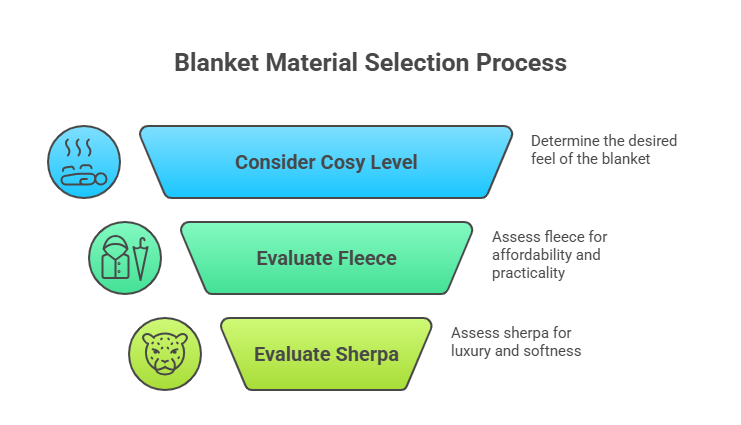
The simple answer to this is that it truly depends upon how the said blanket would be subsequently expected to be used in either case, be it sherpa or fleece. While during a brutal winter, sherpa material would have to be the coldest, a single fleece throw is already lightweight, soft, comfy, and versatile for a variety of applications. This is truly a soft, durable material that is easy to work with, but better suited for various uses.

When winter comes and the mornings start becoming colder, then blankets become so crucial that they actually become life decisions. You get one, wrap yourself with it, and quickly assess whether or not it’s working. By then, the question had almost formulated in your mind: Which is better, fleece or sherpa?

They look similar to the user, feel soft, and are often placed right next to each other while shopping. However, once someone understands how each one works, choosing a camera becomes so much easier.

First, Let’s Understand the Difference

It is extremely useful to understand that Sherpa is a variety of fleece, as one dissects the value behind choosing the best Sherpa versus fleece.

Considering their almost uniform smoothness and considerable consistency in weight, it must be stressed that fleece blankets are very soft. Sherpa blankets, however, have assumed another texture in order to try to look and feel like sheepskin, with the surface of a woollen texture on one side and smooth knit on the other. The change in texture has a big impact on how the blanket feels, warms up, and serves daily.

What a Sherpa Blanket Feels Like

Sherpa blankets are thick, downy, and cosy all over. The sherpa fibres hanging off the face hold the body heat so wonderfully, which is sure to make it the best choice for the places of Kashmir in winters. Just wrap yourself up in one, and you will feel like a snug little cocoon there.

When someone is interested in heat, they cannot help but document two of the supreme flame-mech torches (fleece and Sherpa).

What a Fleece Blanket Feels Like

A fleece blanket is the blanket for the light, loose, and slippery feel. It keeps you warm without weighing you down. On the other hand, the sherpa-lined blanket induces an atmosphere of being too hot and damp. The open-weave fleece helps maintain a laid-back effect without your getting sweaty.

For everyday use—on the sofa, during traveling or covering an extra sheet on the bed—fleece always seems to exhibit a more practical side. If it is the warmth that you look for one can use throughout the year, fleece usually shines through when deciding on which blanket is better fleece or sherpa.

Warmth vs. Breathability: The Real Comparison

The biggest distinction lies in the quality of warmth and airflow. While the sherpas hold warmth and are best for the cooler nights or when the room temperatures are chilly, the fleeces keep you warm but do come with a fair balance of breathability and are better suited for tropical or temperate climates.

However, for winter temperatures, the Sherpa tends to serve up more warmth. Generally, people prefer fleece in better weather conditions or for those who require more flexibility.

Using Fleece and Sherpa in Different Situations

Understanding real-life use helps answer which blanket is better, fleece or sherpa, more clearly.

Sherpa blankets are great for winter days, sleeping in, late-night TV watching, and allowing you to stay warm without turning up the heat. Fleece blankets, wonderfully suitable for all-year-round scheme napping in the afternoon, travelling, and to shun heavy layers of clothing as one move through the house, are the best related option.

Many homes actually keep both—a sherpa for the coldest days and a fleece for everything else.

Care and Everyday Convenience

Both fleece and sherpa blankets are synthetic types and hence are easy to maintain, being machine washable. They are very durable, so they can be treated on a daily basis, and both can maintain their soft and cosy feel for a long period when properly laundered with low heat drying.

This makes the decision less stressful because no matter which one you choose, maintenance is simple.

So, Which Blanket Is Better Fleece or Sherpa?

To put it simply: suited

  • Choose Sherpa if warmth and winter comfort are your top priorities.
  • Choose fleece if you want lightweight, breathable, and versatile comfort for daily use.

There is no wrong choice—only the right blanket for your lifestyle.

Final Thoughts on Choosing the Right Blanket

You must consider the climate in your area, your overall usage and style, and your desired warmth level when choosing fleece or sherpa. It is absurd to buy defining points that you will end up saying are uncomfortable, right? Relax, and buy from your heart and also take into consideration your lifestyle. In fact, that one perfect choice of a blanket will be able to satisfy your needs for you.

If you are looking for something of the most authentic quality, durability, or value, then you should want to be part of the wholesale fleece blanket market as a preferable option, especially when the shopping research is on a much larger scale. Opting for a top-quality fleece equates to the extended comfort of those people who still appreciate the fun and comfort of a fleece jacket from time to time, and who others continue to appreciate for its hardcore warmth of the sherpa.

What Fleece Is Best for Blankets?

29 Jan

Anti-pill polar fleece is the most robust all-around choice for all possible fleece options for blankets. It is comfortable, warm, strong, and of easy care, making it an ideal choice for everyday throw or for warm layering beneath your bed. Nevertheless, shinier names in the fleece lineup actually cater to a different scenario: Sherpa fleece promises sumptuousness and wintry weather warmth; microfleece is about light cosiness; blizzard fleece is good for no-sew purposes; and coral fleece is like silk in terms of lustre and looseness. The type of “best” fleece for us is virtually dictated by the purposes of that blanket.

Once you purchase it, it becomes your favourite. Fleeces are great. At one moment, they are in a nice pile waiting to be hugged and the next moment they are transported to the couch, the road, or a slightly better late afternoon nap. Though people hardly notice, fleece comes in two ways. Two blankets look similar when stacked up to each other, yet feel different when you wrap them around you. That’s why it pays to know what fleece is best for making blankets before you buy it.

Why Fleece Works So Well for Blankets

Fleece is the best one to do the job of keeping one warm without putting on so much weight. Fitting perfectly to the natural profile of properties like softness, warmth, dry fastness, hard work, flea resistance, skiing, adverse reactions, and so on, it is even more popular. Therefore, it can be one of the best considerations for young children’s slumber party nap, bedtime blanketing, throw-away hide-a-blanket-wherever-you-go-size, or even some extra warmth outdoors.

And that’s the magic of the design… the quality of texture, lightweight, and longevity of a fleece blanket lies in the type of cloth used in making that particular fleece.

What Matters When Choosing Fleece for a Blanket

Comfort should be considered rather than technicalities. A good fleece blanket draws comfort, like being hugged when one touches it. Weight comes next: lighter fleece that works for layering or mild weather, heavier fleece to keep you warm in colder weather. How dense is the fleece? Another quieter hero of choice—this being colorfastness since you will wash the fleece so many times. Nature should act as your guide, beyond face value.

Understanding the Different Types of Fleeces Used for Blankets

Polar Fleece: The Everyday Classic

Whenever speaking about micro-furnished polyester, one always refers to “polar fleece” as another expression. This light and cosy fabric, with its widespread uses for robes and rags, pleases the eye with colour and design created by its interactive usage.

Anti-Pill Fleece: The Best All-Around Choice

When people ask which fleece is best for blankets, the answer usually turns out to be anti-pill fleece. It is made to fight off pill-shaped growth over time, even after multiple washings. It thereby precludes fewer fuzz balls from growing, keeps the texture of fabric much longer, so your blanket won’t just look nice but feel good in your hands much longer. It is quite a sensible upgrade, so it converts into actual benefit in everyday comfort.

Sherpa Fleece: For Extra Warmth and a Touch of Luxury

Sherpa fleece is about ultimate indulgence. We all have one side of the wool-textured fabric with a modelling quality that is soft and heat-retaining. Indeed, the kind of fleece you take on extremely cold nights is just perfect for winter throws and cuddly bedding with multiple layers.

Microfleece: Lightweight and Breathable Comfort

Microfleece is smoother and thinner, making it preferable to materials that may bunch up. It is a great favourite for baby blankets, travel throws, or use in stopovers in warm regions, because it provides softness sans the distaste for weight. Luxurious without any overkill effect.

Coral Fleece: Velvety Softness You Can Feel Instantly

Coral fleece is distinguished by its luxurious surface that feels as if it were velvet. Usually plush and inviting, this is best suited for comforting blankets and children’s bedding and possesses softness as a predominant feature.

Blizzard Fleece: Structure That Holds Its Shape

Blizzard fleece is dense and sturdy, which makes it ideal for tie blankets and no-sew projects. It cuts cleanly and holds patterns well, offering a satisfying structure that works beautifully for crafts and decorative throws.

Matching Fleece to How You’ll Use the Blanket

A couch throw, a bed blanket, and a DIY gift don’t all need the same fleece. Everyday lounging benefits from anti-pill polar fleece, while colder climates call for Sherpa. Lightweight options like microfleece shine for layering and travel, and structured blizzard fleece simplifies crafting. When fleece matches function, comfort follows naturally.

Great-quality fleece will feel smooth and even, with no sticky or stiff feeling to it. This fleece is good enough to return to its original shape when pressed and takes on colour that has fastness in washing processes. Your sense of touch and testing may prove necessary; happy hands now mean hands grateful for warm cosiness down the road.

Choosing Comfort That Lasts

No one fleece can claim to fit everyone, but some do come the closest and may be the best selection for your purposes. Anti-pill polar fleece lies in the middle and is the best solution for the majority of households that wonder what the best fleece is for a blanket. A judicious choice will never languish in central storage, resulting in blankets that stay inviting and cosy, quilt after wash.

In addition, if purchased for its consistent quality, long life, and overall good value, wholesale fleece blankets are just a good idea. Good fleece is found by careful sourcing and provides excellent comfort in the long run, maintaining good condition after easy care and delighting in functionality.

Who Sells Fleece Blankets?

29 Jan

If you want to know where to buy fleece blankets, the simplest answer is from many places. These places can be big retail stores, department stores, online platforms, home décor houses, seasonal shops, and factory outlets. This is particularly dependent upon consumer specifics: Are they looking for just one warm, cozy blanket for personal use, or do they want to win over an event with many blankets, sell them or put them to good use in the long run? How and where to buy definitely had its short-term and long-term financial impacts on price, satisfaction, and quality.

Fleece blankets have indeed become quietly indispensable at home; they can be found in beds, sofas, travel luggage, and pets, thinking it’s theirs now. But when it comes to purchasing one or more, it is only logical to ask: who sells blankets? And are there any so-called sensible options out there for me?

It depends on the purpose, the number to be chosen, and the needs for which they are needed.

Big Retail Stores That Sell Fleece Blankets

At large department stores or big stores, most people first see fleece blankets on the sales rack. The retail stores typically sell fleece blankets as one of their seasonal items, generally in the fall and winter weather, so one can always pick one up quickly in case there is a need for the same at the eleventh hour.

However, retail fleece blankets often come with limited design choices and higher per-blanket pricing. Once the season ends, options may disappear altogether. This makes retail a decent choice for one-off purchases, but not always ideal for long-term or bulk needs.

Online Marketplaces and E-Commerce Platforms

The Internet has made it simple to identify stores that sell fleece blankets. Marketplaces provide customers with thousands of products, which include both inexpensive throws and high-end designer items. The process requires no effort because users can search for products with their mouse and receive their items through shipping.

That said, online listings can be hit-or-miss. The photos fail to show the fabric’s thickness, soft texture, and durable nature as they exist in reality, while customer reviews show different results. Buyers often realise too late that not all fleece is created equal.

Home & Bedding Speciality Stores

Fleece blankets are sold at home décor and bedding stores, which serve as another popular retail location for these products. The sellers of these products concentrate their efforts on designing products that match their existing colour schemes and their interior design needs. The stores provide attractive options for customers who want to find a blanket that matches their home decorating style.

The trade-off is price and availability. The blankets are sold as decorative throws, which customers use for special occasions because they do not consider them necessary for daily use, and they do not offer bulk purchasing options. This may restrict function-first buyers because their options become limited.

Seasonal and Promotional Sellers

Pop-up shops, holiday stores, and promotional vendors also answer the question of who sells fleece blankets—at least temporarily. These sellers are common during colder months or around special events. They’re convenient and sometimes offer eye-catching designs.

The product has a disadvantage because it fails to deliver reliable performance. The same blanket will become unavailable after the season ends, which creates challenges for customers who want to make repeat purchases or seek replacements.

Local Manufacturers and Direct Suppliers

Many buyers don’t realise that fleece blankets can be purchased directly from suppliers or manufacturers. The product vendors focus on fabric quality and durability while they create products that customers can use for extended periods of time instead of following seasonal fashion trends.

The blanket manufacturing process, its washing performance, and durability

The option provides particular value to customers who prefer to make regular purchases instead of buying items without planning. Who Sells Fleece Blankets for Bulk or Business Needs

The search process for finding fleece blanket sellers needs to begin a different path for businesses, organisations, events and all entities that require multiple blankets. The personal needs of customers make retail stores and online marketplaces fail to provide suitable pricing and consistency for their bulk purchase requirements.

This is where wholesale purchasing becomes practical. Bulk buyers benefit from predictable quality, better pricing per unit, and the ability to plan without worrying about seasonal stock shortages.

Why Wholesale Makes Sense for Many Buyers

Wholesale buying isn’t just for large businesses anymore. It’s often the smartest option for schools, hospitals, event planners, retailers, and even families stocking up for colder seasons. Wholesale fleece blankets provide better value, uniform quality, and long-term reliability—things that casual sellers often can’t guarantee.

Choosing the Right Seller Comes Down to Purpose

Who sells fleece Blankets? The correct response is that many sellers do, but they also do not serve the same needs. Retail stores provide easy access to products, online platforms deliver multiple product options, speciality shops concentrate on particular design features, and direct suppliers deliver products that maintain their quality at a lower price. Understanding your purpose—whether it’s personal comfort, decor, gifting, or bulk use—cuts down the choices fairly quickly.

Wholesale fleece blanket purchasing makes for the most economical option for those buyers who genuinely want consistency, long-lived softness, and value from the cost angle. Just think how nice it would be to get dependable softness and not have the hassle of definitely one-time item guessing. Selecting fleece wisely and astute sourcing together may provide you with comfort that goes a long way beyond merely one season.

How Often Wash Fleece Blanket?

29 Jan

The easiest way to determine washing frequency for fleece blankets requires following this rule: users should wash their blankets between one and three months for light usage. The optimal washing schedule for your fleece blanket requires two to three weeks of washing after daily couch bed and movie marathon use. The washing schedule for blankets used by children and pets requires weekly cleaning. Fleece blankets can be washed safely because proper cleaning methods actually extend their lifespan while maintaining their softness.

The fleece blanket offers people a comfortable experience that they can enjoy without making any loud sounds. The blanket becomes available during three particular occasions, which include cold outdoor temperatures, excessive indoor cooling, and the Netflix service’s “Are you still watching?” prompt. People commonly use fleece blankets, yet they need to answer one question: How often should fleece blankets be washed without causing damage?

Fleece blankets exist in a grey area between sheets and towels because they require evaluation. Their surfaces remain uncontacted by skin throughout the night, yet their surfaces still accumulate dust, body oils and cookie crumbs, which occur from time to time. (No judgment—crumbs are part of the experience.)

Why Fleece Blankets Don’t Need Constant Washing

The users of fleece fabric gain three primary advantages from the material because it delivers warmth, supports air movement and needs very little upkeep. The fabric maintains its dry state. It repels moisture, which leads to faster drying times than cotton because it does not hold sweat. Fleece blankets need washing only after they have been used extensively because their fabric does not need cleaning every week. Fleece material loses its softness through over-washing because this process damages its fibres and creates pilling.

Your blanket remains in two fixed locations: the bottom of your bed and the back of your chair, which demonstrates to readers that washing it too often resembles daily cactus watering because both activities start as good practices yet become excessive.

How Often Wash Fleece Blanket Based on Real Life (Not Perfection)

The best way to decide how often wash a fleece blanket is to think about how it’s actually used.

The cleaning schedule for decorative or infrequently used blankets needs to be performed every two months in order to maintain their fresh condition. The cleaning schedule for couch and bed blankets should be conducted every two to three weeks because we use blankets more during the wintertime. The weekly washing of children’s blankets together with blankets used with pets helps to remove hair, odours, and allergens from the fabric.

The blanket needs immediate washing when the person begins to recover from their illness. The washing machine serves as the washing hero’s first victory because the blanket needs to be cleaned as soon as recovery starts.

Signs Your Fleece Blanket Is Ready for a Wash

People need calendars, but fleece blankets require people to use their common sense. A blanket needs to be washed when it starts to retain odours, becomes less soft, and develops static, which makes it look like a science experiment prop. The presence of allergy flare-ups, visible debris, and food spills serves as a clear indicator. The condition of an object holds greater importance than knowing the precise time of its most recent cleaning.

Is It Safe to Wash a Fleece Blanket? Absolutely—With One Catch

The statement confirms that fleece blankets can be washed in washing machines and their integrity remains intact through washing when proper procedures are followed. Most fleece damage occurs when people use hot water, harsh detergents, and aggressive drying methods. Fleece requires low maintenance, yet it demands high performance standards. The material will respond positively to gentle treatment.

Always glance at the care label first. It exists for a reason, even if most of us only read it after something goes wrong.

How to Wash a Fleece Blanket Properly (Without Turning It into a Science Project)

You must shake your blanket before washing to remove dust particles, crumbs, and pet hair. The process of removing stains requires gentle treatment, which should not involve forceful scrubbing that would harm the fabric.

You need to wash your clothes with cold water and use the gentle washing cycle. The fleece fabric maintains its original state because washing it with cold water prevents the material from shrinking. You should select a mild detergent and apply it at a rate lower than what you would need for washing towels. Fleece fabric already understands how to be soft, so fabric softener may seem appealing, but it covers the fibres, which results in decreased breathability over time.

Wash fleece blankets separately or with similarly soft items. Zippers, rough fabrics, and heavy towels are fleece’s natural enemies.

Drying Fleece the Right Way (This Is Where Most People Slip)

The best method for drying fleece safely maintains its original softness. You should operate the dryer at low heat or no heat settings. High temperatures cause fibres to become flat, while they also increase static electricity and develop pilling. The blanket should be taken out when it still has some dampness so that it can complete its drying process through natural means. The process requires some time to complete, but we wait for cookies to cool because that is what we do (sometimes).

Why Washing Frequency Affects Softness and Lifespan

Fleece blanket washing frequencies determine both cleanliness standards and blanket lifespan. The frequent washing of clothes causes their fibres to deteriorate, while the infrequent washing allows oils and dirt to accumulate. The maintenance of correct fleece fabric property balance enables the material to maintain its lightweight, breathable nature while providing warm, comfortable wear.

A well-maintained rug may endure for several years, but one must remember such factors as correct washing, over a hurried cleaning routine.

A Simple Routine for Long-Lasting Warmth

The design of fleece blankets exists to provide people with better comfort. The actual usage of a fleece blanket will help you determine its washing frequency, which will reduce your time spent on uncertainty and increase your time spent experiencing its familiar warmth. Fleece material enables you to stay warm without needing to perform any additional maintenance when you wash it with care and dry it at low temperatures.

The value of maintenance increases when wholesale fleece blankets receive proper care because their materials and durable design demonstrate exceptional quality. The wholesale market for fleece blankets requires vendors to maintain two essential requirements because customers need to know about product softness, washing safety and reading comfort. The correct maintenance of well-made fleece products results in enduring comfort that remains intact through multiple laundry cycles.