Archive | fleece blankets bulk RSS feed for this section

Where to Buy Fleece Material for Blankets

23 Dec

If you are questioning yourself about purchasing fleece material for making blankets, local fabric stores, craft and DIY shops, online fabric marketplaces, wholesale fabric markets, and seasonal fabric fairs are the best options almost always. The proper place is determined less by shopping location and more by the reason for the fleece purchase.

Buying fleece might sound simple—after all, it’s soft, warm, and cosy. But anyone who has ever bought a blanket that looked perfect online and felt “slightly plastic” in real life knows that fleece shopping deserves a little more thought. Whether the blanket is for a baby, an elderly parent, a gift, or for yourself, understanding what you’re buying makes all the difference.

Why purpose matters more than price

One common mistake people make is buying fleece the same way they buy socks—quickly and without thinking. But fleece for a newborn baby and fleece for a winter movie night are two very different things. A friend once proudly showed me a fleece blanket he bought for his grandmother because it was “extra thick.” She used it once and politely folded it away forever. Turns out, it was warm but not breathable, and she felt uncomfortable within minutes. Lesson learned: warmth without comfort is just enthusiasm gone wrong.

Understanding the intended use enables you to determine the parameters of softness, weight, and breathability that are essential for you. Infants require soft and non-irritating fleece. Ageing parents often go for lightweight warmth that does not add heaviness to the body. Presents are required to be comfortable right away, while blankets for personal use should be able to withstand frequent washing without losing their appeal.

Understanding fleece before you shop

Fleece cannot be defined as a single fabric or even a fabric family. It is a whole collection of fabrics with various degrees of softness, thickness, durability, and breathability. Fleece is composed of a mixture of several fairly soft and warm fibres, but some others are really good at holding warmth and feel too hot. A thicker fleece is not always a warmer fleece, and a soft fleece that looks beautiful is not always the most durable.

If you have a blanket that was beautiful for just a month and then began to have small fabric balls all over, you are already aware of the importance of knowing the fleece quality. Just a bit of information can keep you from experiencing buyer’s remorse and having to deal with the uncomfortable situation when a person inquires why their present blanket is shedding more than a golden retriever.

Where to buy fleece material for blankets

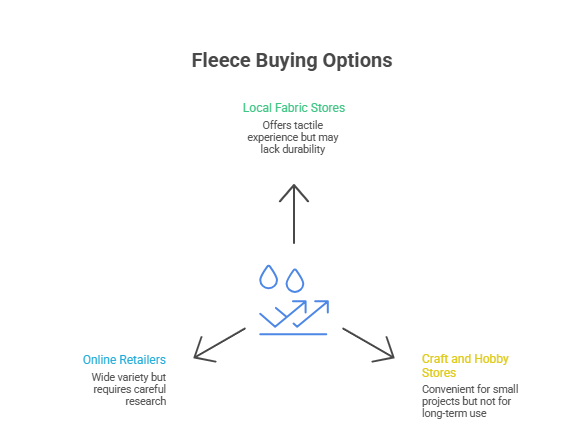
Often, local fabric and textile stores are the best places to start, especially if it is your first time buying fleece. Instant clarity is conveyed by walking through, touching, stretching, and feeling the fabric. You can compare textures, ask basic questions, and not feel lost at all. If the blanket is intended for babies or elderly family members, these stores are of great help, since in the case of such groups comfort is more important than trends.

Craft and DIY supply stores are another great option, particularly if you’re making a handmade gift or a smaller blanket. These stores usually stock fleece in appealing colours and prints. They’re ideal when the emotional value of the blanket matters just as much as its warmth. Many people discover fleece quality here simply because they’re encouraged to feel and experiment rather than rush.

Online fabric marketplaces are convenient and offer a huge variety, but they require a bit more caution. Reviews, fabric descriptions, and material details become very important. Online fleece shopping works best when you already know what kind of fleece you like. Otherwise, you may end up learning the hard way that “soft-looking” doesn’t always mean “soft-feeling.”

If you are looking to purchase fabric in bulk, wholesale fabric markets are the right place to go, as they are typically located in bigger cities or trade areas. The fabrics bought here are mostly for donation, school, shelter or community drive purposes. The prices are lower, but it is necessary to be knowledgeable. It is quite dangerous to buy wholesale without having any understanding of fleece quality—comparable to buying spices without having the possibility to smell them; it is possible, but very risky.

Seasonal fabric fairs and exhibitions are underrated gems. They don’t happen every day, but they offer a chance to explore unique fleece types and learn directly from sellers. Even if you don’t buy immediately, these places help you understand what good fleece actually feels like.

Choosing fleece for different people

When buying fleece for babies, softness and breathability should always come first. Lightweight, gentle fleece that feels smooth against the skin is ideal. For elderly parents, comfort is key. A blanket should provide warmth without feeling heavy or restrictive, especially for daily use.

Gifting fleece is a slightly emotional exercise. You want the blanket to feel welcoming the moment it’s touched. Neutral colours, balanced thickness, and easy care usually work best. Personal-use fleece is where durability matters most. If you plan to wash it often, choosing quality fleece will save you from disappointment later.

Common mistakes to avoid

Many people buy fleece based only on price or appearance. Others assume all fleece is the same. Some buy in bulk without testing a small sample first. These mistakes don’t just cost money; they cost comfort. A fleece blanket should feel like a warm hug, not a compromise you quietly tolerate.

Final thoughts

It is very significant to know where to buy fleece material for blankets, but the knowledge of the reason why you need it helps you to make a good choice. A blanket made through considerate purchasing becomes a source of better comfort, longer use, and more happiness than one made through carefree purchasing. The user could be yourself or any loved one, but the overall effect would be the same.

PeachFur Fleece is all about creating premium quality fleece blankets that are super comfy, non-resistant, and ideal for daily use. If a reliable wholesale fleece blanket option is what you need—infants, parents, gifts, or charity—you can always reach out to us. Our principle is that warmth should be easily accessible, thoughtful, and made with love.

What Is Micro Fleece Fabric?

16 Dec

Micro fleece material is a synthetically created fabric that is super light and very soft at the same time, and its main component is polyester. The fabric gives off heat only while not adding any weight at all, and it also possesses outstanding air permeability and moisture-wicking abilities. It is one of the most preferred materials in the clothing, blanket and home textile industry due to its comfort and easy maintenance.

Understanding What is Micro Fleece Fabric

Micro fleece is a custom-made classic fleece that gets its name for being thinner, lighter and more flexible but still keeps its heat. In most cases when people ask for micro fleece fabric, the reality is that they are looking for a material that is very soft to the skin but at the same time feels like nothing at all on the body.

Micro fleece is, differently from thick fleece, composed entirely of very fine polyester fibers. First, the fibers are closely knitted together then they are brushed to get a soft and velvety covering. The result is a fabric that keeps warmth effectively while at the same time being breathable and comfortable for everyday wearing.

Why Micro Fleece Feels So Soft and Comfortable

Softness and comfort are the characteristics that have made micro fleece one of the most favored materials. The microscopic fibers offer a very nice and warm feeling and this is why they are used in clothes, beddings, and even blankets. The size of the fiber is so small that it actually makes micro fleece smoother and lighter than the ordinary fleece and at the same time, it still gives the same amount of warmth.

The micro fleece material is very gentle and therefore it is suitable for people with sensitive skin. It is not scratchy and as it is synthetic, it is also non-allergenic, which together creates a very pleasant and attractive product.

How Micro Fleece Fabric Is Made

Understanding the characteristics of micro fleece fabric requires a look at the production process. Micro fleece consists of polyester fibers that can be virgin polyester or recycled polyester from post-consumer plastic bottles.

Initially, the fiber undergoes spinning into yarn, and after that, the yarn transforms into the fabric through a knitting process. The fabric is then processed through brushing or napping, wherein the fibers are lifted, and the soft and fluffy surface typical of micro fleece is created. Moreover, finishing treatments may be done on the fabric to make it stronger, reduce pilling, and improve moisture-wicking capacity.

This production process allows micro fleece to remain lightweight, strong, and long-lasting.

Key Properties of Micro Fleece Fabric

Micro fleece is a remarkable product that allows comfort and performance to coexist. It weighs almost nothing but nevertheless gives out quite a bit of warmth; thus, it chooses to retain just that of the wearer without making them feel like a giant marshmallow. The material allows air to pass through very well and this feature helps the body to cool or warm up according to the user’s activity or the time of the day.

Another important feature is moisture-wicking. Micro fleece takes moisture in and then manages to evaporate it almost instantly. Thus, the fabric stays dry and pleasant even if one is involved in sports. Furthermore, its fast-drying property makes it possible for regular use and washing.

Micro Fleece Compared to Regular Fleece

Micro fleece and fleece have some things in common but they are different. Because it is thinner, lighter, and softer, micro fleece is mainly used for indoor comfort or as a layer under other garments. Fleece fabric is usually thicker and so it is more appropriate for winter wear.

Because micro fleece is more breathable and flexible, it is often preferred for activewear, sleepwear, and lightweight blankets. Regular fleece, on the other hand, is often used when extra insulation is needed.

How Micro Fleece Compares to Wool

A lot of people draw a parallel between micro fleece and wool as both keep you warm. Micro fleece gives you comparable heating but at a featherweight of a few grams. It, however, dries quicker than wool and is not as fussy in terms of care since it does not need any special washing or handling like wool does.

Microfleeces can transfer moisture across their surfaces and through the fabric because their hydrophobic composure disallows the absorbency of water.

Common Uses of Micro Fleece Fabric

Micro fleece is a material that has a wide range of applications in clothing for its comfort and versatility. It is usually present in jackets, hoodies, loungewear, and sportswear. Due to its lightweight warmth, it is very suitable for layering during the colder months.

In domestic environments, micro fleece is frequently selected for blankets, throws, and bedding. It provides heat without weight, thus being ideal for daily coziness. Besides, micro fleece is utilized in animal and nursery items as it is gentle, long-lasting, and laundry-friendly.

How to Care for Micro Fleece Fabric

Maintaining micro fleece is easy and that is one reason it is so popular. Normally it can be washed by machine, is wrinkle-free, and dries very fast. Washing in a gentle cycle keeps the fabric soft and also prevents it from pilling throughout its life.

Microfleece is low-maintenance fabric for people leading hectic lifestyles because it does not shrink and does not need ironing.

Gaining knowledge about micro fleece fabric makes it clear why the material is so widely spread. It provides heat with no weight, gentle feeling no itchiness, and long lastingness with no complex maintenance. The aforementioned characteristics are the reasons that it will be favored for apparel, beddings, and to the home textile industry.

Micro fleece combines comfort, performance, and affordability, which is why it continues to be a favorite for both manufacturers and consumers.

Final Thoughts on Micro Fleece Fabric

Micro fleece fabric is an efficient and cozy solution for anyone seeking warmth, softness, and easy maintenance. Its light construction, moisture absorbing property, and flexibility make it fit for everyday use as well as home use. Micro fleece gives long-lasting comfort and reliable performance when selected and taken care of in the right way.

If you are in search of the best fleece blanket in wholesale, we are the ones who provide the greatest comfort for a lifetime. Blankets made of fleece are sold in bulk by us and that is only the beginning, as they are of high-quality materials which are soft, durable, and easy to care for. Our long experience has seen many customers buy fleece products that are warm, good in price, and reliable over a long period of time.

What Is Panne Velvet?

16 Dec

Panne velvet is one kind of crushed velvet created through the process of heavy pressure application to the pile of velvet in one direction. This technique results in the fabric possessing the characteristic very shiny, nearly wet, or mirrored look. Usually, polyester is the main ingredient, great stretch and drape are the characteristics of this fabric, and it finds application in costumes, dancewear, fashion, and stage adornments widely.

Understanding What Panne Velvet Really Is

Velvet has always been regarded as a luxurious, opulent, and elegant material. Over time, the various kinds of velvet that were offered changed and one of the most famous among them is panne velvet. People most frequently when they ask -‘what is panne velvet?’ associate the fabric that to some extent looks very smooth, shiny, and very light and comfortable at the same time.

Panne velvet is known by the names panne velour or crushed velour, sometimes. It has a shinier, smoother, and even look than crushed velvet, which is usually considered in the same category. Pile is not crushed in various directions as in the case of crushed velvet; instead, it is flattened in one direction for panne velvet thus making the surface of the fabric shine equally all over.

How Panne Velvet Is Made

To truly understand what is panne velvet, it helps to know how it is manufactured. The fabric starts as a standard velvet with a soft pile. After weaving, it goes through a process called “pannage,” where the pile is pressed under heavy rollers.

The application of heat and pressure leads to the flattening and arranging of the fibers in one direction. This, in turn, makes the fabric smoother, shinier, and more light-reflective. The process besides also improving the fabric’s let down and elasticity gives the panne velvet its remarkable fluid-like property.

Key Characteristics of Panne Velvet

Panne velvet has a very striking feature that is its look. Its surface is with a high-sheen finish and it reflects light so nicely that sometimes it appears like a liquid or glass under stage or event lighting. The texture of the fabric is smooth and soft, although it does not have the softness and fullness of a regular velvet.

Another important character trait is stretchability. Panne velvet, even without spandex, has mechanical stretch, often in two directions. This property makes it a pleasant cloth to wear and easy to fit to the body. In addition, it is very light, does not wrinkle easily, and is quite easy to maintain, which is one of the many reasons for its popularity.

Panne Velvet vs Crushed Velvet

Although crushed velvet and panne velvet have very different traits, the consumers generally mix them up, hence it is advisable to reveal the distinction between the two. The pile of crushed velvet is subjected to pressure and is rotated in several ways resulting in a surface made up of both dull and bright regions where the degree of brilliance varies.

Panne velvet, in contrast, is characterized by a more controlled and even finish. The gloss is the same all over, and the texture appears to be less prominent and more polished. The decision is often based on the look one wants to achieve. If the target is heavy luster and liquid motion, then panne velvet is most likely the preferred option.

Drape, Stretch, and Fit

Panne velvet has been a very popular choice because of its movement. The fabric carries an easy and gentle flow, thus it is perfect for such kinds of clothing that need to mold the body’s contour. Its extensibility gives comfort and freedom of movement, and that’s the reason it is a common selection in dance, performing arts costumes, and tight dresses.

Panne velvet’s lightness doesn’t cause any heaviness or limit the movement of the wearer. This characteristic makes it proper for the whole day wearing either on stage or at receptions where, besides the looks, comfort is also a key factor.

Common Uses of Panne Velvet

Understanding what panne velvet is makes its versatility evident. Due to its excellent light reflection properties, it is often incorporated in to dance costumes, leotards and theatrical outfits. Besides, fashion designers have also been relying on this material for creative and spectacular dresses, tops, skirts and loungewear, which are the areas where shine and movement are particularly sought.

Besides garments, panne velvet is widely used in event decoration and as a theatrical background. Its shiny surface creates an intense and elegant atmosphere, particularly when lit up. Moreover, it is utilized in such items as accessories and ornaments where a high-end look is desired without the heaviness of fabric.

Panne velvet is a favorite among designers, performers, and decorators as it provides a stunning effect without any elaborate procedure. The material is not just easier to sew than the traditional velvet but also more forgiving in fitting and thus cheaper. Its resistance to wrinkles and durability also add to its advantage of being practical for multiple uses.

Panne velvet, in fact, is the most “user-friendly” velvet variety when it comes to maintenance. Cleaning of panne velvet is mostly machine-washable and at the same time these fabrics are resistant to creasing. Gentle washing and careful storage can not only preserve the luster but also ensure the right alignment of the pile. It is mainly polyester-based, which gives it the property of culture and thus, the durability.

Is Panne Velvet Right for You?

The choice of panne velvet depends on the needs you have for the fabric. If the attributes of high luster, soft drape, comfort and versatility are most important to you, then panne velvet is an excellent choice. While it may not give the deep plushness of the traditional velvet, it definitely takes the lead in movement, brightness and practical use.

Understanding what is panne velvet allows you to make a confident choice based on function rather than appearance alone.

Final Thoughts on Panne Velvet

Panne velvet is one of those fabrics that are modern and versatile and at the same time, luxurious and practical. If properly applied and cared for, panne velvet gives a long-lasting beauty and comfort, thus being a dependable choice for a lot of artistic works.

Our company is engaged in the business of selling high-quality fleece blanket wholesale. We have been in the premium material domain for many years, so we strive to provide products that offer both performance and quality that lasts for a long time. Our dedication to quality ensures that the customers are always guided and guaranteed in their fabric selections.

How to Get Cat Fur Off Fleece

16 Dec

If you are a cat owner, the situation is already familiar to you. In one moment, you are having a cozy evening in your beloved fleece blanket and the next moment you are standing and looking as though a second layer of fur has grown on you. Cats adore fleece as much as we do and once, they take it as their napping spot their fur appears to be glued there for good.

The advantage is that you are able to choose both snuggling your cat and fleece keeping your clean. Properly getting cat fur off fleece can make you like both. Just to mention a few; fleece jacket, blanket, throw, or any other fleece fabric at home, there are simple and safe ways to remove cat fur without damaging the fabric.

Why Cat Fur Sticks So Easily to Fleece

Fleece is composed of synthetic fibers, one of which is polyester. These fibers are remarkable for their heat retention properties but also their contribution to the creation of static electricity. The static is the very reason why cat fur is attracted and held so strongly. Fleece, unlike smoother fabrics, has a soft and slightly textured surface which fur can easily cling to and weave into.

That is the reason that cat hair quite often detaches from cotton fabrics easily but sticks to fleece. With this knowledge, it becomes simpler to pick the correct removal technique instead of scrubbing or washing repeatedly, which can harm the fabric.

Quick and Easy Ways to Remove Cat Fur from Fleece

Sometimes you just need a fast fix before guests arrive or before heading out the door. For surface-level fur, there are a few simple methods that work surprisingly well.

Lint rollers are another quick option. Rolling over the fleece picks up loose fur instantly. If you don’t have a lint roller, wrapping packing tape or household tape around your hand with the sticky side facing out works just as well.

Pet hair brushes or silicone fabric brushes are also effective. Using slow, one-direction strokes helps pull the fur away from the fleece surface instead of pushing it deeper into the fabric.

For larger items like fleece blankets, using a vacuum with a brush attachment can save time. This is especially useful when fur covers a wide area and hand tools would take too long.

Deeper Cleaning Methods for Stubborn Cat Fur

When cat fur is deeply embedded in fleece, surface cleaning alone may not be enough. This is where laundry methods come in.

A very easy yet extremely effective method is to begin the drying process before washing. The fleece item is to be placed in the dryer for 10 to 15 minutes on the no-heat or air-fluff cycle. The moving and flowing air makes the fur loose and gets it trapped in the lint trap. Using dryer balls or a dryer sheet helps to decrease static and increase fur release.

The fleece has to be washed in cold water and gentle cycle after the washing process. The white vinegar which is added in the rinse cycle will help in detaching the fur from the fibers and at the same time, will not harm the fabric. The vinegar will not give off any smell after the washing but it will still be very effective in removing the fur.

Once washed, drying the fleece again on low heat or air-fluff with dryer balls helps capture any remaining loose fur in the lint trap. Cleaning the lint trap between cycles is important to keep it effective.

How to Get Cat Fur Off Fleece Blankets

Fleece blankets often gather more hair simply due to the fact that cats are so fond of sprawling on them. Shaking the blanket outside prior to washing is a simple yet effective method that helps to remove a considerable amount of stray pet fur. In addition, brushing or vacuuming makes the wash cycle more efficient.

Using the dryer-first method followed by washing and a final low-heat drying cycle usually removes most of the fur. For households with multiple cats, repeating this routine occasionally keeps blankets manageable without excessive washing.

How to Get Cat Fur Off Fleece Jackets and Clothing

Fleece jackets usually attract and trap cat fur if they are left on beds or chairs. For regular usage, a lint roller or a rubber glove is an efficient choice for quick cleaning. In case the jacket has a lot of fur, the dryer-first method before washing helps to avoid the fur transferring to other laundry.

Storing fleece jackets in a closed closet or garment bag also helps reduce how much fur sticks to them between wears.

How to Prevent Cat Fur from Sticking to Fleece

Doing such things today makes later fur removal really easy. The house will not be filled with loose hair if you do regular grooming. If you brush your cat all the time, particularly during shedding seasons, you will definitely see a difference.

The use of specially designed pet blankets on beds and couches enables your cat to remain nearby without your favorite fleece items being covered in fur. When fleece is not in use, storing it and shaking it out from time to time will also help to reduce the buildup.

Most importantly, these steps allow you to enjoy time with your cat without constantly cleaning up afterward.

Keeping Both Your Cat and Your Fleece Happy

Having cats as pets is accepting the fact that a certain amount of fur is unavoidable. The target is not perfection but a balance. Using soft and efficient ways to get rid of fur will keep your cat’s fleece looking neat and good, not only that but your cat will also get to snuggle in their favourite warm places.

When you know how to get cat fur off fleece, the problem becomes manageable instead of frustrating.

Enjoy the Comfort Without the Fur

Cat hair on fleece can seem like an endless struggle, but it isn’t really so. By employing appropriate tools, straightforward laundering ways, and a couple of of preventative habits, you can ensure your fleece jackets, blankets, and throws stay clean and dainty. Plus, the greatest part of the whole thing is that you won’t have to compromise on snuggles or togetherness to achieve it.

In case you want to buy quality and inexpensive fleece blankets in bulk, your search ends here. Our company has been operating for more than 21 years and has the sole aim of providing superior, non-piling fleece materials, while giving priority to customer support. The fleece production expertise that we have gained over the years is the reason why our customers experience and continue to enjoy long-lasting comfortable and low maintenance fleece.

How to Wash a Fleece?

16 Dec

Fleece is undeniably one of the most pleasant fabrics to have. It is light and warm at the same time, has a soft texture but not a bulky one, and is multipurpose and can be made into a coat, a blanket, or an item for travel. Nonetheless, fleece likewise requires proper maintenance. A lot of people ruin their fleece without realizing it simply because they do not know the correct washing method. Knowing the right way to wash fleece will maintain its softness, avoid pilling, and increase its lifespan.

Cleaning fleece is not a complicated task, but it is still, nonetheless, the heat, strong detergents, as well scrubbing, that will most affect it. Adding a few easy steps to your daily routine will make your fleece look and feel much better over time.

Why Washing a Fleece Properly Matters

Fleece is synthetic fibers’ product that has been engineered to hold warmth while still being breathable. These fibers are fragile in a certain way. If they undergo hot water, strong washing cycles, or fabric softeners, the fibers can either flatten or get tangled. Eventually, the loss of fleeces softness and the formation of pills are the results of this process.

A typical scenario in real life is when a person does a regular wash of fleece jacket with towels or jeans. The jacket may not look dirty, but it gets rough gradually. Such damage usually occurs silently and is seen after a number of washes. Fleece that is washed in the right way does not suffer from this at all.

How Often Should You Wash a Fleece?

Washing frequency is one of the most neglected aspects of fleece care. Fleece does not require frequent washing. The result of over-washing is increased friction, faster wear, and pilling.

Normally fleece is machine-washed after wearing it few times, and the primary reason for washing is that it has become dirty, has mud stains, or has absorbed sweat or odors from outdoor use. A fleece jacket that has undergone a mountain trip should be washed quicker than an indoor-used fleece blanket. Fleece is produced to be softer and longer-lived if washing is not frequent.

Preparing a Fleece Before Washing

Preparation is a must before putting fleece into water. By turning the fleece inside out, the outer side that is prone to pilling is protected. To avoid such damage, all zippers, hooks, and fasteners should be closed during washing. All pockets should be cleared because even a small piece of paper can spread the lint to the whole garment.

Fleece is better washed separately or together with other lightweight items. If it is washed with heavy fabrics, the result will be excessive rubbing that will ultimately ruin the fibers over time.

How to Wash a Fleece in a Washing Machine

If correctly done, machine washing is safe for almost all fleece products. Coldwater is very important because it not only prevents shrinking but also keeps the fibers sturdy. So, washing in gentle or delicate cycle leads to reduced agitation and friction. With the use of a mild detergent, the fabric will be free of any buildup.

Understanding how to wash a fleece in a machine comes down to using cold water, gentle motion, and minimal detergent.

How to Hand Wash a Fleece for Best Results

For taking care of premium fleece, embroidered products or blankets, hand washing remains the most secure and reliable method and the best option in the long term. Just cold water and a tiny bit of gentle soap are good for it. The fleece ought to be softly immersed and slightly shifted in the water without turning or pressing out the water.

The rinsing process should be done properly to ensure that no detergent is left inside the fibers. This method is very soft and therefore the fleece will keep its original texture which is a big plus.

Drying a Fleece the Right Way

Drying plays a major role in fleece care. High heat is one of the fastest ways to damage fleece fibers. Air drying is always the best option. Hanging the fleece or laying it flat allows it to dry naturally without stress.

In case one is to use a dryer, then its setting should be the lowest heat or air-dry option. Taking out the fleece immediately after it is dry helps in avoiding heat exposure. A lot of people observe that fleece which is air-dried is still much softer compared to that machine-dried regularly.

How Proper Washing Keeps Fleece Soft and Non-Piling

If fleece is washed properly, the fibers will stay still and soft. This will not let pilling happen, will keep the fabric warm, and will also keep the fabric looking clean and new. Proper washing can especially benefit high-quality fleece, which is often the case that it becomes more pleasant to the touch through right care over time.

Learning how to wash a fleece is not just about cleanliness. It is about preserving comfort, appearance, and performance.

Caring for Fleece Starts with How You Wash It

Even though fleece has been designed to withstand hard usage, it still relies on appropriate care. The application of cold water, tender washing, mild detergent, and drying with caution are some very simple practices that can give a long life to fleece. The fleece, which is washed properly, continues to be soft, warm, and reliable, thus turning into a comfort item for a long run rather than a fleeting one.

Final Thoughts on Washing Fleece Properly

You are at the right place if you want to buy fleece blankets in bulk that are of good quality and at a low price. PeachFur Fleece uses the best non-piling fleece and we are the only ones who make quality fleece products such as blankets, throws, picnic blankets, baby blankets, and fleece jackets.

Washing a fleece properly is a tiny effort that brings big benefits in the long run. The right washing method keeps the fleece soft, prevents breakage, and guarantees that it remains as cozy as the day you bought it. If the fleece is treated correctly, it will warm and comfort you for many more years.