Archive | fleece blankets bulk RSS feed for this section

Are Fleece Blankets Toxic?

29 Dec

One of the most asked follow-up questions after using a cosy fleece blanket and savouring that soft and comfy feeling is, “Wait… are fleece blankets toxic?” That thought springs up more frequently these days, particularly because people have taken time to learn what touches their skin, what their children use, and what materials sit around in their homes.

But don’t worry! The topic does not have fear or panic, but is very self-explanatory. So let us talk about this very gently and honestly so that at the end of the day, you can actually decide on your own.

What People Usually Mean When They Ask “Are Fleece Blankets Toxic?”

Most people don’t mean toxic in the sense of poison. They usually mean something more practical:

  • Can fleece irritate skin?
  • Can it cause allergies?
  • Is it safe for babies or people with breathing issues?
  • Are there chemicals involved that I should worry about?

These are definitely good questions, but the real question here, too, is that fleece blankets are not poisonous in the usual sense whatsoever; they, however, may not be suitable for some situations.

What Fleece Blankets Are Made Of

A great option would be the polyester fleece blankets because polyester has a natural resistance to moisture, yet it does indeed manage to give off a sort of wool-like softness. A common choice among the bedding industry, the blanket is lightweight owing to its nature.

Just because it’s synthetic doesn’t automatically mean it’s unhealthful, as several everyday items, from sportswear to upholstery, impart the same fibres without harm. Fleece sometimes exerts different properties contingent on their quality, maintenance, and users.

Can Fleece Blankets Cause Skin Irritation?

This is one of the most common concerns behind the question of whether fleece blankets are toxic.

Use of fleece blankets for maintaining body heat may be enjoyable for many, but not for all. After all, trapped body heat can cause discomfort, irritations, and itching, and this can particularly aggravate skin problems in those with sensitive, eczematous, or winter dry xerotic skin. This does not mean that blankets should be identified as toxic; rather, a warmer ability is not the best thing you would want for your skin.

A poor-quality fleece can shed particles of lint while probably becoming coarse over many washings, thereby causing irritation for the very sensitive skin. A superior fabric will keep its finer-grain softness and smoothness as it wears.

Fleece Blankets and Allergies: Is There a Risk?

Fleece typically does not bring about genuine allergic reactions the way that certain natural fibres or chemicals could, happening in response to friction, heat and dryness with very susceptible skins and an existing allergy.

Most of the time, a wash one time will tend to reduce surface chemicals or materials used in the production process and break down a tiny bit of leftover fibres, making a difference in everyone’s comfort.

Are Fleece Blankets Safe for Babies and Children?

Here is where more conscious effort is required. Newborns and very young babies are quite fragile, possessing sensitive respiratory systems and delicate skin. Some fleece types, especially the cheap grade fluff or shedding ones, may liberate loose fibres that are not safe for babies to be around- a health hazard posing a threat to breathing.

Fleece blankets are usually quite safe and pretty well worn by healthy, older children. The choice of installation matters equally; it is essential that the fleece is of good quality and that it is kept clean, well looked after, and appropriate for all ages. So now, when parents say, ‘Hey, are fleece jogging blankets poisonous to children?’ it is better to ask which kind of fleece and how safely it might be used.

Respiratory Sensitivity and Fleece Use

There are times when there may be discomfort experienced by people with asthma or chronic respiratory conditions from shedding fibres. Poorly made fleece sheds very tiny fibres on the ceiling. This can happen when fleece is new or when it has been worn enough.

Once again, it is not toxicity but irritation. Properly washing wool while avoiding very hairy and shedding types of wool, and utilising wool in well-ventilated spaces, greatly diminishes this concern.

What About Chemicals and Dyes in Fleece?

Another reason why people are pressing about fleece blankets being harmful is youthful worry about the dyes and finishing treatments. Like all textiles, fleeces can be dyed and then treated during manufacturing, with the inferior types exhibiting less agreeable processes while the better qualities would be seen abiding by strict quality standards.

A simple rule helps here: wash before use and choose quality over price. Washing removes surface residues, and higher-quality fleece is far less likely to cause discomfort.

Static, Shedding, and Winter Discomfort

Static electricity and lint shedding are often blamed on fleece being “bad,” but these are comfort issues—not health dangers. Dry winter air increases static, and cheaper fleece sheds more. Using proper laundry care and choosing well-finished fleece usually solves these problems without giving up warmth.

When Might Fleece Not Be the Best Choice?

There are a few situations where fleece may not be ideal:

  • Newborn babies with very sensitive airways
  • People with severe respiratory conditions
  • Individuals with known reactions to synthetic fabrics

However, for the vast majority of people, fleece will remain the safe, snuggly choice, while for some running the gauntlet, cotton or bamboo could feel better.

So, Are Fleece Blankets Toxic? The Clear Answer

Fleece blankets are never poisonous per se. The fears mostly arise from a sensitive or genuine discussion of the quality in use and care provided, rather than any possibility of real danger. In other words, a very comfortable and warm fleece can definitely be acquired and then put to good use in almost every household in this world.

Comfort You Can Feel Good About

Understanding the truth behind our fleece blankets’ toxicity helps you make calm, confident decisions instead of worrying unnecessarily. Quality matters, care matters, and experience matters, too.

For those organisations, events, charities, or shops that need viable warmth at a large level, our wholesale fleece blankets in bulk make a great combination where, with all juice and no froth, quality, consistency, and price scream: one blankie needs to do well by making one feel securely wrapped, relaxed, and right at home.
Where to Buy Fleece for Blankets

24 Dec

One of the most common questions concerning the making of a fleece blanket is where to buy fleece for blankets. Although this question is simple enough, when the search begins, it can be very easy to get lost among the numerous options available. Shall one buy it from a shop or online? Is it all right if one buys a cheaper fleece? Is there such a thing as quality that matters a lot?

The purpose of this blog is to simplify that decision. The specific names of the brands are not mentioned, nor is there any discussion of fabrics in a complicated way; rather, there is straightforward advice on how to select the best supplier of fleece for the production of blankets in the United States.

Local Fabric and Craft Stores

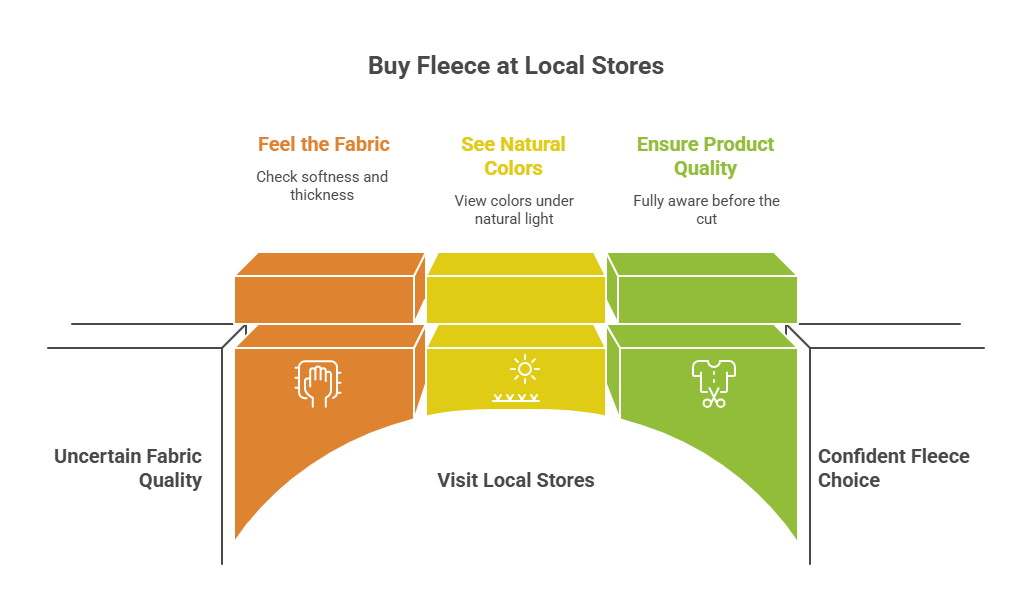
Your local fabric and craft shops will probably be the cosiest place to start, particularly if it’s your first time making a fleece blanket. The main plus of going to a shop is that you get to feel the fabric. You will be able to tell its softness, its thickness will be up to you, and also the colours will look best as you will be seeing them under natural light.

This option is chosen by many people as it eliminates uncertainty. You are fully aware of the product quality and quantity before your cut. Besides, these shops frequently stock fleece, which is the best for sewing and hence, tie blankets and no-sew crafts are very suitable there.

If you enjoy browsing and want confidence in your choice, this is a great answer to where to buy fleece for blankets.

Big Retail Stores

Fleece material can be found in some general retail shops, but only in basic colours or trending prints. The variety may not be as large as in a fabric-only shop, but these places are easy to reach and inexpensive.

This choice is a good one for those who need fleece fast or are just making a regular blanket with no design requirements. A lot of people use this option for their school projects, last-minute gifts, or group activities where low cost is more important than a wide selection.

Online Fabric Stores

Purchasing fleece via the Internet has emerged as a very popular trend in the US, particularly for customers who have a clear idea of what they want. E-commerce fabric stores mostly provide a much larger variety of hues, prints, and fleece kinds compared to brick-and-mortar stores.

Selecting this option necessitates the reading of product descriptions and reviews, as the fabric cannot be felt beforehand. Online shopping is a wise decision if you are looking for more design options or are getting fleece delivered to your home, and do not have the time to visit shops.

For many people, online shopping is the most flexible answer to where to buy fleece for blankets.

Local Independent Fabric Shops

The little fabric stores owned by the locals are often unnoticed, but they might still be a great source for fleece. Sometimes such stores have fleece of better quality or designs that are not commonly found in other places.

Another benefit of this alternative is the help that is given on a personal level. Most of the time, the owners and their employees of the store are well informed and are more than willing to guide you to the fleece that is perfect for your project. If the quality of the product is more of an issue than the price, then it would be a good idea to think about this alternative.

Buying Fleece in Bulk

If you are considering making several blankets—for events, donations, schools, or organisations—buying fleece in bulk will most likely be the best approach. Generally, bulk buying provides better rates, uniform fabric quality, and enough material to make all blankets that look alike.

Those who are looking for places to purchase fleece for blankets usually do not comprehend how much the bulk purchase will save them when they are making several blankets. Also, the issue of having the same fabric running out in the middle of the project is no longer a problem.

What to Look for When Buying Fleece

Quality is a major factor everywhere fleece is bought. One should choose dark fleece that does not shed fibres when its edges are scratched. Generally, medium-weight fleece is cut and tied more easily than thick fabric. Fleece for laundry purposes should be gentle to skin; thus, pilling-resistant fleece is the ideal option.

Always think about how the blanket will be used. A decorative throw may need a different fleece than a blanket meant for daily warmth.

The best place depends on your needs. In-person stores are great for beginners. Online options are perfect for variety and convenience. Bulk suppliers are ideal for large projects. There is no single best answer to where to buy fleece for blankets—only the option that fits your project best.

Final Thoughts

The process of making a fleece blanket should be nothing but soothing all the way through. The selection of the best fleece store brings other things to come. If you begin with high-quality material, the whole process is easier, and the end product is more gratifying.

We have a very close relationship with fleece products and know exactly what characteristics make a blanket really comfy and long-lasting. Besides guiding the consumers in seeking the retailers, we also help companies and events, supplying them with wholesale fleece blankets in bulk for their community and organisational needs. Through this, we aim to make the generation and sharing of warmth throughout the USA very simple.

How to Tie Fleece Blankets ?

24 Dec

If you need a very basic and uncomplicated explanation regarding tying fleece blankets, then here it is. You cut two pieces of the same size fleece, put one over the other, cut out fringes around the perimeter, and knot the top and bottom fringe sections together. You don’t need to sew, you don’t need any special skills, and the result is a warm, snuggly blanket that you can either use or gift with confidence.

There really is nothing that beats the comfort of a fleece blanket during the winter season. Just think about it, you would be able to make one yourself without having to go near a sewing machine. That is the main reason why tie fleece blankets have gained immense popularity. They are easy to make, relaxing, and you would actually be surprised at how fun it is to make one. It is not only the making of a blanket that one learns in the process of tying fleece, but also the creation of warmth with the hands.

A lot of individuals initiate this undertaking, believing it could be a complicated one; however, the majority are amazed at the speed with which everything falls into place. Before you complete one section, you have already gained enough self-assurance to continue.

What Is a Tie Fleece Blanket?

A tie fleece blanket is nothing but a no-sew blanket made through the process of tying two layers of fleece fabric along their edges. In place of sewing, you make tiny cuts along the border and then tie the corresponding strips of the upper and lower layers. The blanket is kept in place by these knots, which at the same time form a fancy border.

This kind of blanket is ideal for beginners, children, group work, and anybody who wants a warm final result without going through the technical process. Fleece is the best material as it does not unravel and is easy to work with.

What You Need Before You Start

First, you should make sure that you are fully equipped to learn the process of tying fleece blankets together. The very first thing that you must do is to acquire two pieces of equally-sized fleece fabric. Choosing the fleece type is very important. The regular fleece is the best choice because it can be cut and tied easily without any fuss. Very thick or soft materials might not be flat, thus they will also take much time due to their tricky handling.

You would need sharp scissors or a rotary cutter plus a ruler to confirm the measurements. Choosing the right stuff beforehand can make the process so much easier as well as enjoyable.

Preparing the Fabric the Right Way

Primarily, the most effective method would be to lay both fleece pieces perfectly flat on the floor or a large table. The two pieces ought to overlap with their edges aligned. This operation is critical as the bumps and irregularities of this type of fabric can make the tying part very hard and annoying.

In such a case, you should be patient and not hurry at all. This is a necessary slow process, which ensures the overall process will be successful at the end. It does not have to be perfect to the last detail, but the smaller the pieces, the more beautiful the blanket will look at the end.

Cutting the Corners: Why This Step Matters

A surprising move that catches novices off guard is cutting squares out of the corners. The fringe is tied up very neatly through this process and thus free of bunching. The corner square’s size must be equal to the length of the fringe you intend to cut.

The cutting of the corners has the effect of making the blanket stay flat and also contributes in a great way to the overall appearance of the item. It might seem odd to trim fabric at the beginning, but the outcome of the corners turning super neat really justifies the action.

Cutting Fringe for a Tie Blanket

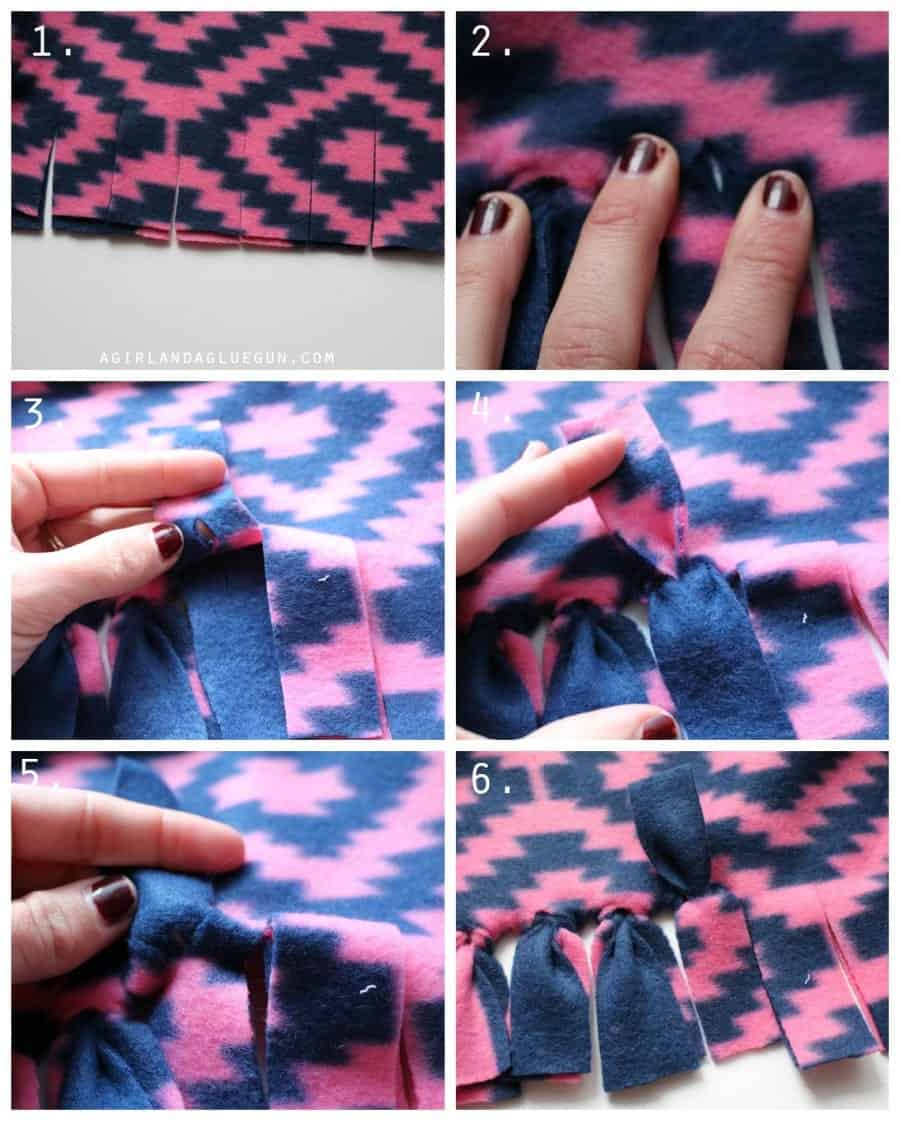
The next step is the one that actually determines the process of tying fleece blankets. You are going to cut simultaneous strips on both layers of fleece along the entire perimeter of the fleece blanket. These strips will form the fringe that is to be knotted.

The fringe must be of a proper length for comfortable tying, yet at the same time it should not be so long as to consume excessive blanket space. The width should be kept rather uniform, but do not bother too much about the accuracy. After everything is tied up, minor variations are very difficult to spot.

How to Tie Fleece Blankets Step by Step

Now that the fringe has been cut, the next step is to start knotting. Select a strip from the top layer and take the corresponding strip from the bottom layer. Make a simple knot, just like how you would tie a balloon or begin tying your shoelace, to join them together.

As you traverse the border, a rhythm will be discovered. First, tie one pair, then the next, and then continue working around the blanket. It is really important not to miss any strips, as this can create holes. This is the most rewarding step of the operation since the blanket is now really coming together.

Different Ways to Tie a Fleece Blanket

The methods for tying a fleece blanket are not limited to one. A few prefer using just one knot for a softer appearance, while others prefer a more secure and tighter knot. You can even switch between various tying techniques just for the sake of altering the edge appearance.

There is no right or wrong method here. The best knot is the one that feels easy for you and gives the blanket the look you like.

Common Problems and Easy Fixes

One side of the blanket can occasionally be more difficult to tie than the other side. The reason for this is that fleece has different stretches in different directions. If the strip seems a bit short, then gently pull and re-tie the knot.

In case your fringe appears uneven, do not fret. Small flaws are no more once the blanket is completed. The skill of tying fleece blankets is and should be all about the fun and not about stressing over minute points.

How Long Does It Take to Tie a Fleece Blanket?

Most tie fleece blankets can be made in a few hours. Smaller blankets require less time, while bigger ones may take a little bit longer. A lot of people think the process is calming and even forget the time while knot-tying. It is also a good thing to do together with relatives or friends. More hands on the job speed it up and make it a collective experience.

Tie fleece blankets are more than just blankets. Whether made for yourself, a loved one, or a group project, these blankets often become favourites that last for years. Knowing how to tie fleece blankets gives you a skill you can use again and again, especially during colder months when comfort matters most.

Anyone Can Learn How to Tie Fleece Blankets

Once you try it, you will see how simple and rewarding it really is. Learning how to tie fleece blankets does not require experience, just a little patience and creativity. The result is something warm, useful, and personal that brings comfort every time it is used.

We work closely with fleece because we believe warmth should be simple and dependable. Along with helping people learn projects like tie blankets, we also support organisations, events, and community programs through fleece blanket wholesale solutions. Whether for crafting, gifting, or large-scale needs, we are always focused on quality, comfort, and reliability.

What Is Berber Material?

24 Dec

If you are wondering what is Berber material is, the simple answer is: Berber material refers to a surface or fabric with a texture featuring loops or curls, and it is also recognised for its warmth and durability. At present, the term primarily points to two items: hard-wearing, looped carpets and soft, warm fleece that is generally used in blankets and jackets. Although the items have a very different feel, they all share the same idea of being textured, comfortable, and long-lasting.

Why Berber Material Gets So Much Attention

The term “Berber” has almost always come up in conversations among people. In fact, you may have come across this word while looking for carpets or perhaps buying a jacket or blanket. The perplexing thing is that the term Berber varies in its meaning through so many products. Hence, the question, what exactly is Berber material, continues to surface among consumers.

The confusion has been eliminated by this blog. You will, at least, gain the knowledge of Berber material meaning, source, current usage, and reason for its long-term popularity by the end.

Where the Term “Berber” Comes From

The word “Berbers” comes from the North African Berber tribes, who were famous for their weaving skills, which have existed for a long time. They worked with nature and used wool, dyes, and plants to produce rugs and textiles that were usually marked with loops, knots, and geometric patterns. These fabrics were strong and gave the necessary warmth in the cold climates of the respective areas.

In the course of time, new-style producers called the name “Berber” to fabrics and rugs sharing a similar textured appearance or construction. Nowadays, the materials of Berber are frequently made by machines and are synthetic, but the original handwoven designs still serve as a source of inspiration.

What Is Berber Material in Modern Use?

The Berber material in today’s vocabulary is contingent upon its usage. Berber is not a single fabric. It is rather a textural or a construction style description. Hence, the term covers both carpets and fleece fabrics. In a nutshell, Berber material generally means one that has loops, curls, or a soft, elevated surface. That surface is responsible for its thermal, cozy and durable qualities.

Berber Material in Carpets: Strength Meets Texture

The term “Berber carpets” generally refers to loop pile carpets. Such carpets are the result of a process in which the yarn is looped through the backing rather than being cut, thus providing the firm textured surface that withstands the burden of foot traffic in the busy areas where it is placed.

Handcrafted wool was the raw material of traditional Berber carpets, and their colouring and patterns were totally natural. Today’s Berber carpets are mostly composed of synthetic fibres and are created with durability and stain resistance in mind. Because of this, they find their way into spaces like offices, halls, basements, and living areas where the traffic is heavy.

Berber Material in Fabric: Soft, Cosy, and Warm

Berber material is one of the most common fabrics that the fleece industry uses. In this case, Berber means a soft, fluffy, and slightly curled fabric with a resemblance to sheepskin. This particular type of Berber material is very common as a jacket, hoodie, and winter clothing lining, as well as in blankets and throws, etc.

First-time contact with the fleece of Berber usually leads to the same description: warm, friendly, and hospitable. It is a wonderful heat trap, but it still feels like a feather, and this is why it is so suitable for cold weather.

Common Names You’ll See for Berber Fabric

The first thing causing the confusion to the consumers regarding the berber material is the different names it is known by. The sellers in the fabric market and online shops sometimes refer to Berber fleece as a sherpa, fake shearling, or even fake wool. All these terms denote the same soft, warm, and animal-fur-free texture.

What differs are only the names, but the concept remains unchanged. All of them are talking about a gentle, cosy material that is made to resemble and feel like sheepskin.

Key Characteristics of Berber Material

Once you are aware of the particular things to notice, you will be able to easily identify Berber material. It generally features a surface with some sort of texture, either loops or curls. This air-trapping quality of the texture is the reason why Berber material is warm and insulating to feel.

Durability is another significant aspect. No matter if it’s carpeting or fleece, Berber fabric is designed for daily use. It is usually breathable and cool, so a heavy or suffocating feeling is avoided. A lot of Berber textiles are also skin-friendly, which makes them suitable for use by sensitive individuals.

What Is Berber Material Made Of?

Initially, the natural wool was the source of Berber material. Nowadays, the major part of contemporary Berber textiles and carpets consists of synthetic fibres like polyester or other artificial materials. The main reason for the popularity of these fibres is their low price, easy maintenance, and durability.

The fibre used influences the Berber fabric’s feel, its warmth, and the cleaning method. Synthetic Berber fleece, for instance, can be cleaned easily and dries in no time, which makes it suitable for regular use.

Where Berber Material Is Commonly Used

Numerous daily life aspects include the use of Berber material. It shows in garments such as jackets, sweaters, hoodies, and coats that are meant to keep you warm in winter. In houses, Berber fleece is the most used material for blankets, throws, and other home comforts. It is also a commonly used material for pet beds, since the animals are fond of the soft texture.

Berber carpets are selected for their durability and capacity for heavy foot traffic in flooring. This large area of application demonstrates the real versatility of Berber material.

Final Thoughts: Why Berber Material Remains a Favourite

The moment you completely grasp the concept of Berber fabric, it becomes apparent that its popularity is here to stay. It is a one-stop solution for comfort, warmth, durability, and versatility. Berber fabric is the main source of this nice feeling that people have an instinctive bond with, whether it is on the floor, on the body, or even in their favourite jacket.

We are experts on supreme fleece items made for comfort, long-lasting, and regular use. Besides teaching people about materials such as Berber, we also provide fleece blankets wholesale to companies, events, and charities that appreciate warmth and trustworthiness. Our priority is always to make comfort easy, trustworthy, and available to everyone.

Are Fleece Blankets Warm?

24 Dec

Fleece blankets are grounding, looking very light for their weight, but in essence, they are very warm. They get warm with this reminder, especially when it is hot during their carrying; air crevices trap it. Also, they are soft and breathable; therefore, the fleece blanket is great for fresh, cold nights, by way of a mild amount of heat, daily enjoyment, without using blankets that are too weighty and suffocating.

Now let’s talk about why this happens and are fleece blankets warm and right for you.

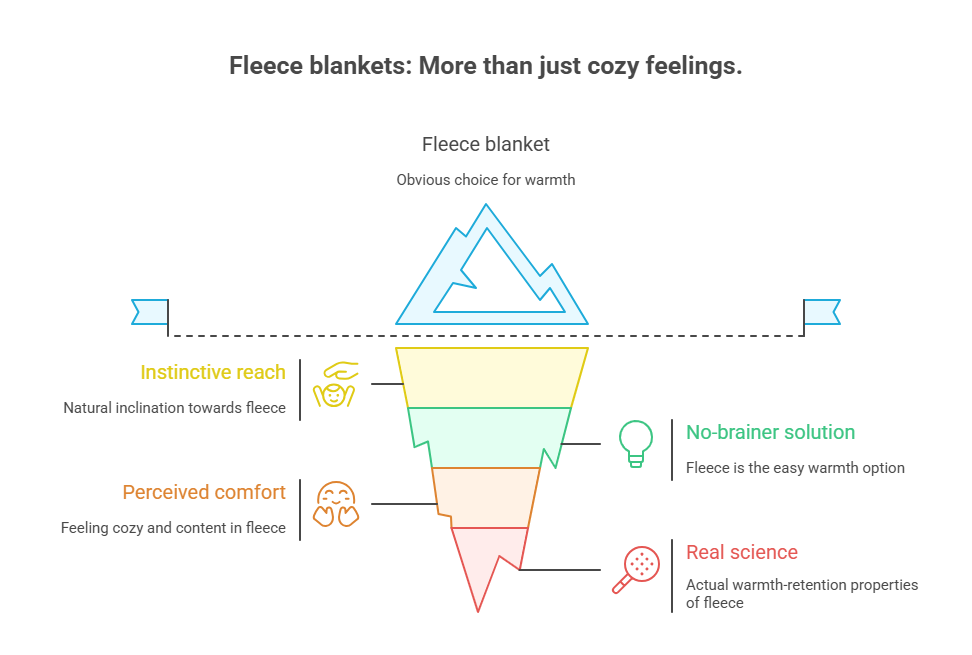
Why We Instinctively Reach for Fleece When It’s Cold

Think back to the most recent cold snap. You probably didn’t reach for your ultra-light, ripstop, triple-layered, moisture barrier rain-alpine-ski-cross-country wicking system; you grabbed a fleece blanket. There is a reason for that. Fleece has sneakily become the “No-Brainer” warmth solution.

I had a throw that was fleece, and I just used it for decor purposes on the couch. It was quite cold one evening, the heater was running, as were the electric teas, yet I still felt cold. I decided to lie for five minutes under my guilty pleasure blanket made of fleece, finding that my world seemed all right. I asked myself in an instant, do fleece blankets catch and store warmth, or do you just feel cosy in a fleece?

Turns out, there’s real science behind that comfort.

What Fleece Is Made Of (and Why That Matters)

Fleece blankets are generally made of synthetic fibre like polyester. But it is not just about the material; the fabric construction is crucial. The fibres of fleece are brushed during manufacturing, creating a pile with a fluffy surface and spaces throughout.

Those gaps matter more than you’d think.

The Real Reason Fleece Blankets Feel Warm

Indeed, comfort isn’t synonymous with thickness, as it also depends on insulation. The insulation derived from fleece involves trapping air between the fibres: air is a lousy heat conductor. This means that trapped body heat never really leaves you or radiates out into the room.

This is why fleece keeps you warm in short order. Unlike cotton, which can sometimes feel cold from the outset, fleece begins working almost the moment the temperature shows a noticeable drop. There isn’t any delay; it takes up the heat source that’s been provided.

Staying Warm Without Feeling Sweaty

Customers often face overheating issues; this may occur because of fleece. Fleece therefore solves burning and gives comfort at the same time. The hydrophobic characteristic of the fleece fibres ensures sweat removal.

This is significant; it helps keep you warm. Ultimately, moisture makes you cool once again. Fleece, however, keeps you dry, titillating dry warmth in preference to the heat from a large, thick blanket.

This explains why fleece is used for blankets that do well for different purposesalready including sleeping, lounging, travelling, and even camping.

Lightweight Warmth vs Heavy Blankets

Here lies the advantage of fleece. Most blankets rely on their weight to keep you warm. Wool or heavy quilts certainly work, but they also make the user feel all cocooned up. Fleece, however, offers warmth without the pressure!

If, at 2 a.m., cold and oppressive, you want to throw off a heavy blanket, you understand why fleece is such a great fabric. It keeps you warm while letting you move around.

Are Fleece Blankets Warm?

Not exactly. Just like jackets, fleece blankets come in different “warmth levels.” Standard fleece is great for everyday use—think couch time, light winter nights, or layering on a bed.

In the case of conditions with considerable cold, consider using one of the very thick wool, fleece, or Sherpa-fleece blankets. Among fleece options for the warmest in the said choices would be the fleece-cloth cottage blanket, which has a finely woven fleece material on one side and wool felt on the other side.

When Fleece Blankets Work Best

For a truly wonderful fleece blanket, you will require those cold months or cool evenings, or indoors, in a home somewhere between the North Pole and the Sahara. Also great for travelling, given their lightweight, easy-to-pack, easy-to-dry sides, the components are really coming together quite wonderfully.

During the viewing season, the fleece begs to get extremely hot; on some sweltering summer night, even its most amazing fleece might feel like a thick winter coat—a blanket for such a season would be very important.

How Fleece Compares to Other Winter Blankets

Fleece is softer, lighter, and fuller of tenderness as compared to wool. Fur is lighter than all but works well under wet conditions and also eases maintenance. Incompatibility with everyday uses would stow the trial by fire with other pieces of clothing.

This balance is why so many households rely on fleece as their go-to blanket rather than their “emergency cold-weather only” option.

What to Look for If You Want a Warmer Fleece Blanket

Keep in mind that if warmth is your primary consideration, the thickness and quality of the fleece are immensely significant. Thicker fleece and antimicrobial agents impede the pilling process favor the retention of heat and lifespan. A good fleece blanket will feel soft yet have some support to it- in the sense of support under the weight of the blanket, but not so thin that the blanket merely clings around the user.

Sometimes it’s assumed that fleece isn’t warm because people have been exposed to low-quality examples only. Quality fleece really does make all the difference.

Final Thoughts: So, are Fleece Blankets Warm Enough?

Yes, fleece blankets are warm. They hold the heat, wick away moisture, allow for good breathability, are lightweight, and super easy to use.

Fleece blankets may not replace heat-trapping bedding in cold conditions, but they sure seem like the right compromise for most people in terms of warmth, comfort, and practicality. Quite often, you will just reach for that preferred fleece blanket without even thinking about it.

About Us

We specialise exclusively in high-quality fleece products designed for real comfort and long-term use. Whether you’re buying for home, events, or outreach programs, we offer wholesale fleece blankets in bulk made from first-quality, non-piling fleece. Our focus is simple: warmth without weight, durability without compromise, and fleece that truly feels as good as it looks.