Archive | Fleece Blankets RSS feed for this section

What Is a Sherpa Throw?

14 Nov

Being bound within one and thinking, “Oh, that seems like cuddling with a warm, fluffy cloud,” is something that describes the usage of a Sherpa throw. They are pretty−much in agreement on being ultra-soft, warmly snug, supremely light−with everything else acting as extra grace.” However, for most buyers, this often brings questions about what is a Sherpa throw, how it is made, and what makes it so different from an ordinary fleece blanket. We will cover everything else to vindicate that Sherpa brings uniqueness, comfort, and fame today.

Let’s break it all down — minus the complicated fabric jargon and with just the right touch of friendly humour.

Understanding What is a Sherpa Throw

A Sherpa throw is a synthetic blanket that has been made to mimic the texture as well as warmth that natural sheep wool would have. There is no wool in them- just lambs’ fleeces with a high lustre.

In simpler terms, imagine wool, but softer, lighter, warmer, and with none of the itchiness. That’s Sherpa.

How Sherpa Fabric Is Made

Sherpa is manufactured in an effective manner that ensures a copious amount of tiny synthetic bristles are spun, brushed, zapped for loftiness, and curled all together into a dense, velvety nap that provokes admiration for real Teddy fur. These bristles provide sherpa with a thick, cushioning touch that traps warmth; simultaneously, however, it feels softest and most comfortable against the skin.

The manufacturers are arranging the pile to stand up, creating thousands of tiny air pockets. These pockets trap warmth. This is why Sherpa feels instantly comforting without being overly heavy. It’s the equivalent of being wrapped in a cup of hot chocolate and comfort, albeit without the mess.

Texture and Feel: Why Sherpa Feels Like a Dream

The Famous Fluffy Pile

Sherpa throws are best known for their plush, cloud-like feel. The fibres are dense yet airy, soft yet supportive — a perfect balance that makes Sherpa ideal for lounging, reading, movie nights, and “pretending it’s winter even though the heater is on” moments.

Run your hand across a Sherpa throw and you’ll immediately understand why people call it one of the cosiest fabrics ever created.

Single-Layer and Double-Sided Designs

Sherpa throws typically come in two designs:

  • Single-layer Sherpa – Fluffy on one side only.
  • Reversible two-sided Sherpa throws – Fluffy Sherpa on one side, smooth fabric (like fleece or microfiber) on the other.

The reversible style is especially popular because it offers two textures in one blanket. Rough day? Use the Sherpa side. Extra rough day? Flip to the Sherpa side again. There is no losing here.

Construction Details That Make Sherpa Special

Heat-Trapping Structure

Sherpa’s curly pile naturally traps heat, much like real wool. This insulation makes Sherpa throws perfect for chilly nights, cold living rooms, and “my office is freezing, but the thermostat is apparently a myth” situations.

Warm but Never Heavy

The Sherpa, though warm, is quite light, so it may be utilised for easy arrangements in the home, as a thin bedding sheet or throw on a sofa without any bulky feeling. Sherpa is basically the blanket version of someone who keeps you warm but never asks you to lift heavy emotional baggage.

Where and When Sherpa Throws Are Used

Everyday Home Comfort

Most people use Sherpa throws for:

  • Sofa and couch lounging
  • Bed layering
  • Recliner snuggling
  • Movie nights
  • Naps that weren’t planned but just happened

Wherever comfort is needed, Sherpa follows.

All-Season Use

Many people prefer using a sherpa the whole year round because while its warmth is a good trait to hold on to in winter, its breathability ensures you’re not feeling kinda suffocated on pleasant or cool summer evenings.

Extra Warmth Layer

The Tibetan shawl adds an extra layer of warmth on cold nights; it looks good with comforters or mixed with quilts to warm you up.

1. Exceptional Warmth

Sherpa’s wool-like structure traps heat more effectively than regular fleece. This makes it one of the warmest blanket types available without added weight.

2. Unmatched Softness

The plush pile creates a luxurious feel that many describe as “sleep-inducing.” Consider yourself warned.

3. Lightweight Comfort

Sherpa gives you heavyweight warmth in a lightweight form — perfect for anyone who wants to stay warm without feeling smothered.

4. Hypoallergenic Alternative to Wool

Because Sherpa is synthetic, it’s suitable for people who avoid wool or have sensitivities to animal fibres.

How Sherpa Differs From Other Blanket Fabrics

Sherpa is a type of fleece, but with a different texture and warmth level. The simplest way to understand it:

  • Sherpa – Fluffy, wool-like, thicker, cosier
  • Standard fleece – Smooth, lighter, less textured

Sherpa takes fleece and says, “Let’s make this even softer.”

Choosing the Right Sherpa Throw

Think About the Size

Throws come in different sizes depending on how or where you plan to use them. A small throw is perfect for the couch, while a larger one is better for the bedroom.

Look for Quality Indicators

Higher-quality Sherpa throws have:

  • A dense, balanced pile
  • Soft, non-scratchy fibres
  • Strong stitching around the edges

A good Sherpa throw should feel luxurious from the moment you touch it — no guessing required.

Final Thoughts

One of the most favourite blankets for most homeowners worldwide is the Sherpa throw, for its fluffiness, insulating ability, and light weight-that can sometimes be said to be almost non-existent. It is a member of the tallest order of smart investors, flies the Zen-copter, digs up worms, and thus spreads its billion blessings across creation: Why not? It consented in good humour as it gave them a free hand in their handiwork, feeling sorry for their weaker lambs so much!

About Us

At PeachFur Fleece, we understand comfort, warmth, and quality craftsmanship — the very qualities that make Sherpa throws so popular. With over 21 years of experience producing premium fleece blankets bulk and cosy throw products, we’re committed to helping customers find the perfect blend of softness and durability. From fleece to Sherpa-style blankets, we deliver comfort you can trust.

How Wide Is a Bolt of Fleece Fabric?

14 Nov

Whenever planning a sewing or crafting project, one ought to know the width of the fabric involved, especially when it comes to fleece material. The bearer of bulk, bulk fabric covering zip-to-zippy areas! Nevertheless, without knowledge of the standard measurements of the fabric, you risk ordering more or less. Imagine researching how wide a bolt of fleece The answer is here-to the point, and simplified information-sharing.

So, it is somewhat clear that a bolt is not just random cloth. It follows industry standards for sizing, which is necessary when a crafter, manufacturer, or DIY enthusiast is trying to plan the parameters of his or her project ahead of time. Whether one needs to create an entire product run or avoid a stressful moment by looking for more fabric, he or she must not ignore the width of bolts.

Let’s break it down.

What Is the Standard Width of a Fleece Fabric Bolt?

The Common Industry Standard

Most fleece fabric bolts measure 59–60 inches wide. This width has become the standard among leading manufacturers because it’s large enough for most project layouts and works well with commercial cutting tables. It also offers enough room for efficient pattern placing without leaving too much unusable scrap.

Think of the 59–60-inch width as the “medium coffee cup” of the fabric world — not too small, not too oversized, and universally understood.

Normal Variations You Might See

Although 59–60 inches is the standard, fleece isn’t one-size-fits-all. You may come across bolts that measure:

  • Around 54 inches wide
  • Up to 61 inches wide

Such small differences suggest the manufacturers’ choices, the machine setups, and the types of fleece being made. Such that no, in case you order fleece from two different brands and notice that one bolt can be thinner while the other looks wider, that is not your eyes fooling you.

What Affects the Width of a Fleece Bolt?

Fleece is made in numerous silhouettes and many fabrication processes, and the factors that greatly affect the final width under an industrial environment include:

1. Type of Fleece

Different categories of fleece — such as anti-pill fleece, polar fleece, or microfleece — each require slightly different production processes. Those processes result in minor width differences. Some fleece types naturally lie wider on the production line, while others shrink a bit during finishing.

It’s like baking cookies: slightly bigger or perfectly tender ones due to the oven. Although its capabilities are not too delicious.

2. Manufacturer Production Methods

Each manufacturer uses machinery set to their own specifications. Some prefer producing fleece at exactly 60 inches, while others allow a little space and let it run wider. Production line tension, heat application, and finishing techniques all contribute.

In short, width can vary simply because every manufacturer has its own version of “perfect.”

3. Printed vs Solid Designs

Printed fleece sometimes requires additional processing, alignment, or edge stabilisation, which may slightly impact the final width. Solids, on the other hand, often maintain more consistent sizing.

If you’ve ever bought one bolt with a print that seemed a little narrower, it wasn’t your tape measure misbehaving.

Why Does the Width of a Fleece Bolt Matter?

Understanding the width of your fleece bolt helps you plan your project with precision. Here’s why it matters:

1. Better Measurement Planning

Knowing the width helps you calculate how much fabric you actually need. Fleece is bulky, so precise measurements prevent waste — and also save money. When a project requires large pieces (like wide cuts or pattern matching), the bolt width becomes even more important.

2. Efficient Pattern Placement

Having the fabric of the width gives you more room to lay out pattern pieces more efficiently, and reduces the number of seams that need to be made. It opens opportunities for thinking about contriving when cutting. This is a real boon for any overlocker, with a large number of identical objects to put together.

3. Smarter Cost Decisions

Width affects value. A wider bolt gives you more fabric per yard, meaning better cost efficiency. Two fleece yards can look identical at a glance — but if one is 54 inches wide and the other is 60 inches, you’re getting significantly more usable fabric from the wider one.

Little details like this are what separate “smart buyer mode” from “I didn’t notice that” mode.

How to Check the Width Before Buying

In a market saturated with fabric suppliers and fleece manufacturers, it is necessary that the precise measurements of the garments are checked prior to purchasing. Here’s what to do:

1. Read the Fabric Listing Carefully

Most online retailers clearly list fleece width in the product description. Look for the measurements in inches, typically next to fibre content or fabric weight.

2. Ask the Seller or Supplier

If the details aren’t listed, reach out directly. Whether you’re buying in-store or online, reputable sellers can confirm the width immediately. Never assume — fleece can surprise you.

3. Review Swatches or Sample Cuts

Some suppliers offer sample pieces that include all technical details, including width. It’s a small step that removes guesswork when buying in large quantities.

Final Thoughts

If you are planning to make a fleece blanket, this might come to your mind: How wide is nominated fleece fabric? In most cases, expect this fabric to measure 59-60 inches, as long as it could vary a bit. Normally, bolt widths vary between 54-61 inches, with differences from one fabric to another or one manufacturer to another. Knowledge of these dimensions is perfect in obtaining an accurate purchase, build cuts with certainty, and circumvent any surprises midway.

In the world of crafting and sewing, where measurements matter, knowing this simple detail can make every project smoother — and a lot more enjoyable.

About Us

Peach Fur Fleece offers an array of high-quality fleece products for those who need large quantities. Therefore, we provide them with custom-made products. We provide high-quality fleece blankets in bulk, fleece jackets, etc. As for bulk orders, they will always have a reasonable budget and always end up with an order that suits them.

How Wide Is Fleece Fabric

13 Nov

If you have started a project involving sewing or crafting, then maybe one of the first questions to hit your brain might be rather simple: How wide is fleece fabric? It sounds straightforward, but the width can vary from one kind to another, from one brand to another, or even sometimes from one usage to another.

If anything, understanding these measurements is the key to avoiding your fabric getting wasted, stretching your budget, and so on, and of course, having your work come out just the way it was supposed to. Now we will gently discuss fleece width with exact clarity.

Understanding the Standard Width of Fleece Fabric

If you have ever passed by a fabric store and glanced at a label, you will have noticed that most fleece measures about 58 to 60 inches. This, as they say, is an industry standard, and the width of most popular fleece types, including anti-pill polar fleece, microfleece, and casual fleece that you buy by the yard. The equivalent metric terms to this would be something like 147 to 152 centimetres.

Think of this width as the “Goldilocks zone” — not too narrow, not too wide, but just right for most apparel, blankets, and craft projects. This is also why most online listings describe fleece as 58/60 inches, since both measurements appear frequently depending on the manufacturer.

Other Widths You May Come Across

Although the standard size is the most common, fleece is not a one-size-fits-all fabric. You will also spot a few other widths, such as:

Narrower Options

Some fleece fabrics come in 36 inches or 48 inches. These are often older production styles or specific niche types meant for lightweight apparel or children’s clothing. Narrower fleece is less common, but it exists, much like those socks that mysteriously disappear from the laundry — rare, but real.

Extra-Wide Options

On the other end of the spectrum, some fleece fabrics stretch as wide as 90 inches. These extra-wide rolls are especially useful for:

  • Oversized blankets
  • Group sewing projects
  • Extra-long throws
  • Commercial batch production

If you’ve ever tried to make a king-sized blanket using standard fleece, you already know the emotional journey of “almost, but not quite.” Extra-wide fleece solves that drama.

Metric Conversions for a Smooth Buying Experience

Understanding metric conversions makes you a more confident buyer — especially if you shop internationally. Here is a quick and friendly breakdown:

  • 60 inches ≈ 152 cm
  • 59 inches ≈ 150 cm
  • 90 inches ≈ 228 cm

These numbers matter because if you’re shopping from a supplier that lists everything in centimetres, knowing how wide fleece fabric is in both units takes the guesswork out of the purchase.

Why Fleece Width Varies Across Brands and Fabric Types

The width of fleece fabric isn’t random. Several factors influence it:

1. The Type of Fleece

Different types demand different machinery settings:

  • Polar fleece tends to follow the standard 58/60-inch rule
  • Plush or sherpa fleece can sometimes be narrower
  • Thick winter fleece may require tighter production setups
  • Microfleece is usually consistent at around 150 cm (about 59 inches)

Much like people, every fleece type has its personality and size preference.

2. Manufacturer Differences

Various mills around the world use different production machines that determine maximum roll widths. Some aim for standardised sizes, while others create speciality formats for commercial buyers. That’s why “how wide is fleece fabric” can have more answers than expected.

3. Speciality Fleece for Commercial Projects

Manufacturers producing fleece for blanket companies or event organisations sometimes create custom-width rolls. These can reach extra-wide dimensions for mass production efficiency, reducing waste and saving time.

Always Check the Width Before Buying

Even though the standard width is easy to remember, it’s always best to double-check:

  • Read product descriptions
  • Look at the bolt label
  • Ask the supplier for width confirmation if buying online

A few seconds of checking can save you from the classic mistake of buying too little fabric or miscalculating yardage for your pattern. As the old crafting saying goes, “Measure twice, cry zero.”

How Fleece Width Affects Your Project Planning

Whether you’re creating apparel, blankets, décor, or accessories, fleece width influences everything:

Blanket Making

Standard fleece width works beautifully for throws, twin blankets, and baby blankets.

For oversized blankets, extra-wide fleece is the hero.

Apparel Projects

For hoodies, joggers, robes, or jackets, a wider fabric allows you to use fewer yards while also reducing seams.

Bulk or Business Needs

Organisations ordering hundreds of units usually prefer wider fleece to reduce overall fabric consumption and maximise efficiency. So yes, even in fabric, width equals savings.

Choosing the Right Width for Your Project

Your ideal fleece width depends on:

  • What you are making
  • How much coverage the pattern requires
  • Whether you prefer fewer seams
  • Your budget
  • The fabric’s thickness

Once you understand how wide is fleece fabric across different varieties, choosing the right width becomes an easy and confident decision.

Your Trusted Partner for Wholesale Fleece Products

If you’re looking for premium fleece in bulk, you’re in the right place. We specialise in first-quality fleece blankets, jackets, baby blankets, picnic throws, and embroidered fleece goods — all crafted with exceptional attention to detail. With over 21 years of industry experience, we proudly supply charities, hospitals, resorts, retailers, government groups, and businesses nationwide.

Whether you need customised embroidery, bulk orders, or speciality fleece products, we make the process simple. Share your preferred colours, sizes, and logo, and we’ll take care of the rest. And now that you know how wide fleece fabric is, we’re here to help you choose the perfect options from our fleece blankets wholesale collection for your next project.

What Fabric Is Best for Tie Blankets?

16 Oct

Quick Answer: What Fabric Is Best for Tie Blankets?

When asking what fabric is best for tie blankets, the answer almost always comes down to fleece. Fleece is soft, warm, easy to cut, and doesn’t fray—making it the ideal choice for no-sew tie blankets.

It’s also affordable and available in a wide range of colors, prints, and thicknesses, allowing both beginners and crafters to create personalized designs with ease. Whether you’re making one for a gift, charity, or classroom project, fleece ensures comfort, durability, and simplicity every time.

Now let’s dive deeper.

The Comfort of Handmade Tie Blankets

There’s something timeless about a handmade blanket. Whether it’s for cozying up on a winter night, gifting a loved one, or supporting a charitable cause, tie blankets have become a favorite DIY project. But before you begin, one question stands out: what fabric is best for tie blankets?

Choosing the right material isn’t just about aesthetics—it’s about ensuring your blanket feels soft, lasts long, and is easy to make. The right fabric determines how your blanket will drape, how well the knots hold, and how it performs after multiple washes.

1. What Is a Tie Blanket?

A tie blanket is a no-sew project where two layers of fabric—typically fleece—are cut around the edges and tied together to create a fringed border. It’s a simple, relaxing craft that doesn’t require needles, threads, or sewing machines.

Each blanket involves:

  • Two equal-sized fabric layers (often patterned and solid)
  • Fringe cuts (usually 5–6 inches deep)
  • Knots along the edges to hold the layers together

The result is a thick, cozy blanket with a beautiful fringe that looks as if it was professionally made. But the key to success lies in choosing the right fabric.

2. Why the Fabric Choice Matters?

Fabric affects everything—texture, warmth, ease of cutting, and longevity. If the fabric frays easily or lacks stretch, tying it becomes a challenge. If it’s too thin, the blanket won’t feel plush. And if it’s too thick, knots might not hold properly.

That’s why picking the right material ensures:

  • Durability (so it doesn’t unravel)
  • Softness (for comfort and warmth)
  • Ease of handling (so you can cut and tie easily)
  • Low maintenance (machine washable and long-lasting)

3. Exploring Common Fabric Options

Let’s look at the most common fabrics people consider for tie blankets—and why fleece stands above them.

a. Cotton

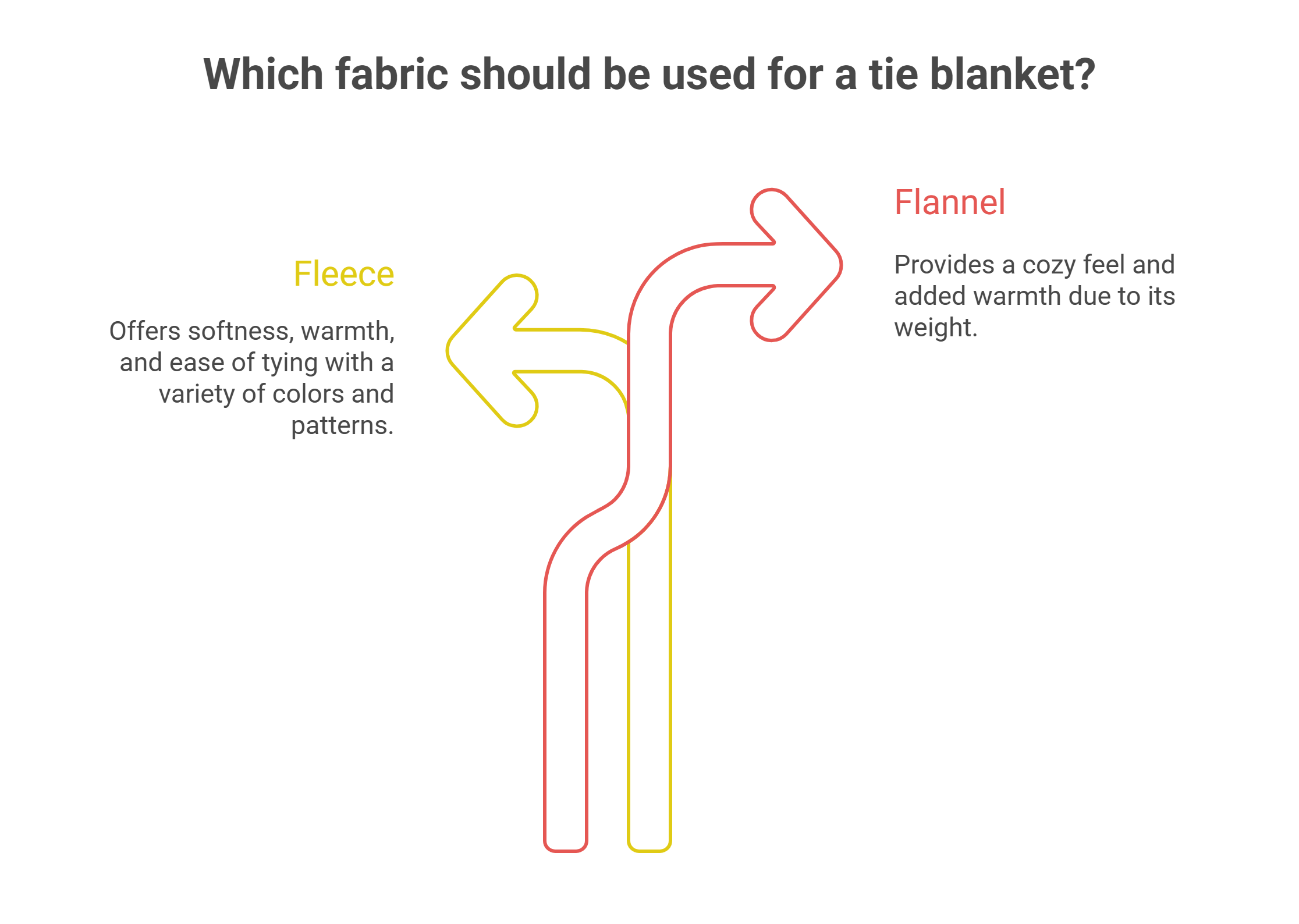
Cotton is breathable and natural but not ideal for tie blankets. It frays easily, requires hemming, and doesn’t stretch enough for secure knots. Cotton is best for quilted or sewn blankets—not no-sew tie versions.

b. Flannel

Flannel is soft and warm but tends to shed and lose shape over time. It can work for tie blankets, but you’ll need to stitch or hem edges to prevent fraying. It’s better for those who don’t mind adding a sewing step.

c. Minky Fabric

Minky is ultra-soft and plush, but it’s slippery. Tying knots with two layers of minky can be difficult, and the blanket may not hold together well after washing.

d. Fleece (The Winner)

Fleece, especially polar fleece or anti-pill fleece, is perfect for tie blankets. It doesn’t fray, it stretches slightly for strong knots, and it retains warmth even after multiple washes. Plus, it’s lightweight yet insulating—ideal for both kids and adults.

4. Why Fleece Is the Best Fabric for Tie Blankets?

a. No Fraying

Unlike cotton or wool, fleece doesn’t unravel when cut. This makes it perfect for no-sew projects—just cut and tie.

b. Super Soft and Warm

Fleece mimics the feel of wool without the itch. It’s soft against the skin, holds heat, and stays comfortable even in colder temperatures.

c. Stretchy and Flexible

A small amount of stretch allows you to make tight, secure knots that don’t loosen over time.

d. Easy to Care For

Fleece is machine washable and dries quickly. It resists shrinking and fading, which means your blanket stays bright and fluffy for years.

e. Wide Variety of Designs

From solid colors to animal prints and holiday patterns, fleece offers endless design choices—perfect for personalized gifts or matching home decor.

5. Types of Fleece You Can Use

There are several kinds of fleece to consider, each with its own texture and purpose:

  • Polar Fleece: Soft, durable, and budget-friendly. Ideal for everyday blankets.
  • Anti-Pill Fleece: Specially treated to resist pilling, keeping blankets smooth even after many washes.
  • Blizzard Fleece: Thick and plush—great for extra warmth.
  • Microfleece: Thinner and lightweight; suitable for baby blankets or layering.

For most projects, anti-pill fleece is the best choice—it combines softness, resilience, and affordability.

6. How Much Fabric Do You Need?

The size of your tie blanket determines how much fabric to buy. Generally, you’ll need two equal cuts of fleece: one for the top layer and one for the bottom.

Here’s a quick reference:

  • Baby blanket: 1 to 1.5 yards each side
  • Child blanket: 1.5 to 2 yards each side
  • Adult blanket: 2 to 2.5 yards each side

If you’re making multiple blankets, consider ordering fleece blankets wholesale to save money and ensure consistency in fabric quality and color.

7. Step-by-Step: Making the Perfect Tie Blanket

  1. Lay Out the Fabric: Place both fleece pieces on top of each other, right sides facing out.
  2. Trim the Edges: Ensure both layers are even.
  3. Cut the Corners: Cut 5-inch squares from all four corners.
  4. Create the Fringe: Cut 5-inch long, 1-inch wide strips along all sides.
  5. Tie the Knots: Tie the top and bottom strips together tightly twice for each fringe.
  6. Fluff & Finish: Shake it out and enjoy your cozy handmade creation!

This no-sew method makes it a fun activity for kids, classrooms, and family projects.

8. Where to Buy Fleece for Tie Blankets?

You can find fleece in most fabric stores, but for large projects or group orders, buying fleece blankets bulk or fleece blankets wholesale is more cost-effective.

Wholesale suppliers often provide:

  • Better prices per yard or per blanket
  • Consistent quality and texture
  • Large selections of colors and patterns
  • Options for custom sizing or branding (great for charities or schools)

When buying in bulk, always check for:

  • Fabric thickness (medium-weight is ideal)
  • Anti-pill treatment
  • Consistent dye quality

9. Tips for Long-Lasting Tie Blankets

  • Wash with care: Use cold water and avoid fabric softeners to preserve softness.
  • Dry gently: Air dry or tumble dry on low heat.
  • Store properly: Keep in a cool, dry place to prevent pilling.
  • Trim if needed: If knots loosen over time, re-tie or tighten them for longevity.

Final Thoughts

When it comes to what fabric is best for tie blankets, fleece stands out as the clear winner. It’s durable, affordable, easy to work with, and provides unmatched comfort.

For those planning to make multiple blankets—whether for gifts, fundraisers, or retail—purchasing fleece blankets wholesale ensures uniform quality and excellent savings. And if you want ready-to-use materials or easy customization, buying fleece blankets bulk is the simplest and most efficient option.

In the end, tie blankets are more than just crafts—they’re symbols of warmth, love, and creativity. And with fleece, you get all three in one perfect fabric.

What Is Heather Fabric?

24 Sep

Heather basically means a textile made by interweaving yarns of different colours to impart a subdued speckled effect. This can be for cotton, polyester, wool, or blends for various blends of comfort and style. On being asked what Heather fabric is, the simplest explanation therein is: they are the next best thing for clothing and home decor when solid colours feel like too boring and wild prints feel like too much to handle.

Heather Fabric Basics

What Is Heather Fabric?

Heather fabric is uncommon because of its muted, multicoloured look. A fine set of fibres in two or more shades is interlocking, giving it a sense of depth and texture rather than having just one single colour shade on the surface. Just picture that T-shirt of yours which is neither grey nor white-it must be heather.

The Origin Story

The name “Heather” originates from heather, a plant that grows in the Scottish Highlands. The plant consists of earthy speckled shades resembling the mixed colourway of this textile. While the term has an earthy origin, it went on to be equally famed in the fashion domain, especially in knitwear and casual apparel. Designers saw the potential for a mottled texture to infuse interest into anything-even a plain T-shirt!

Key Characteristics of Heather Fabric

Visual Appearance

The most defining trait is its speckled or flecked surface. Unlike tie-dye or prints, the look is subtle—making garments appear more natural and versatile.

Texture and Feel

Soft, smooth, textured, or cuddly are all possible touch sensations of heather fabrics, just depending upon what kind of fibres are used. Cotton heathers breathe more and are lighter, whereas wool heathers tend to be thicker and warmer.

Fiber Variety

Heather isn’t one single material—it’s a category of looks. It can be crafted from cotton, polyester, wool, bamboo, or acrylic. Many modern heather fabrics are blends, combining natural softness with synthetic durability.

Performance Traits

  • Breathable: Cotton-heavy blends keep you cool.
  • Moisture-wicking: Polyester-heavy blends suit athletes.
  • Warm: Wool-based heathers are insulating.
  • Durable: The blending process increases strength.

Types of Heather Fabrics

Cotton Heather

Perhaps the most common, cotton heather is lightweight, soft, and ideal for everyday wear. It’s used in T-shirts, loungewear, and hoodies. The slight colour variation adds flair to basic garments.

Polyester Heather

Today’s fashion has forgotten the silhouette, which can take the hourglass shape due to the tutu, leaving you ready for anything. The bell shape is set to postpone old age, and it grabs the best for the round.

Wool Heather

Being warm and textured, wool-heather fabrics are primarily used for sweaters, coats, and scarves. Think of them as winter wardrobe heroes that are there to give you comfort without a dull look.

Blended Heather

Mixtures like cotton-polyester or wool-acrylic combine the strengths of completely different types of fibres. Due to their versatility, these fabrics have so many applications, such as softness, stretch, or moisture control.

Specialty Types

  • Heather Jersey: Mainly used for casual wear, long T-shirts and sweatshirts.
  • Heather Tweed: Quite textured classic wool blends for jackets and coats mostly.
  • Heather Fleece: Cosy and warm, a must for winter and cold-weather clothing.

Everyday Wear

Heather is a hit casual wardrobe fabric, perfect for hoodies, tees, joggers, and jammies. The cool coolness of the heather style should work for chilling at home and running small errands around town.

Sportswear and Athleisure

Polyester heathers crown the activewear segment. The fabric is breathable, moisture-wicking, and flexible-just perfect for workouts or yoga classes. Plus, the familiar speckled pattern from the silver-returns-and-gives glare-on-the-library-book-code dots into a handy anytime spotter for sweat stains!

Outerwear

Wool heathers are seen in coats, jackets, and scarves. They provide insulation with a rich, textured appearance that adds sophistication to winter fashion.

Home Textiles

Heather fabrics aren’t limited to fashion. They appear in cushions, throws, curtains, and upholstery. Designers love the understated depth they bring to interiors.

Heather Fabric vs. Other Fabrics

Heather Fabric vs. Cotton

Heather can be made entirely from cotton, but unlike plain cotton fabrics, it has that distinctive speckled effect. It’s cotton with a visual upgrade.

Heather Fabric vs. Melange

Both involve blending different colored fibers, but “melange” refers to a broader category of mixed-fibre looks. Heather is a specific, classic style within that category.

Heather Cotton vs. Heather Fleece

Heather cotton is soft, breathable, and suited for everyday wear. On the other hand, Heather Fleece is heavier and designed to keep warm, suited to cold nights and layers.

Care and Maintenance Tips

Washing and Drying

  • Wash in cold water to preserve colours and prevent shrinkage.
  • Air-dry when possible; if using a machine, stick to moderate or low heat.

Ironing and Storage

  • Cotton heathers can be ironed at a higher heat.
  • Polyester or blended heathers need a low setting.
  • Store folded or on hangers to maintain shape.

Common Issues

  • Cotton heathers may shrink if washed too hot.
  • Synthetic blends may pill over time, but choosing high-quality fabrics reduces this risk.

Why Consumers Love Heather Fabric

Heather fabrics check many boxes: they’re stylish, comfortable, versatile, and low maintenance. The muted colours make them easy to pair with other pieces, while the blended construction ensures durability. And let’s be honest—sometimes that heather grey tee just looks cooler than a plain white one.

In between all these, it will be worth revisiting the question: what is Heather fabric? It’s the quiet workhorse of the textile world-never flamboyant, always dependable, and somehow able to make the simplest everyday wardrobe feel just right.

The Mystery of the Favourite T-Shirt

We have all come across that lucky T-shirt we wear all the time. The one that fits just right, feels soft, and goes well with anything. The secret? Perhaps it’s Heather fabric. That speckled look and the fibre-blend work to make it less transparent, more durable, and more attractive with every use. So, should you have ever pondered over the question of why you can’t give up your shirt, the answer lies in the weave!

A Fabric That Blends Style with Practicality

So, in the end, what is Heather fabric? It’s an intermingling of fibres and colours into something comfortable, strong, and stylish. From the hoodie you wear casually after work to the wool coat you have in the harsh winter, heather fabrics have carved their niche in wardrobes and houses across the globe.

And if you’re interested in textiles that combine comfort and practicality, we can help. Our business specialises in bulk fleece products that balance warmth, durability, and affordability. From embroidered jackets to cosy throws, our fleece blankets wholesale collection is perfect for charities, corporate events, schools, or anyone needing high-quality fleece in volume. Just like Heather fabric, our fleece options prove that the best fabrics are the ones that quietly make life better.