Can Fleece Blankets Be Washed in Hot Water?

5 Jan

Generally, laundry day is not a hard and fast rule—it becomes a whole different game when you have a fleece blanket in the picture. You aspire to achieve the same quality and freshness through washing, but one question haunts you:’ Can Fleece Blankets Be Washed in Hot Water, or will that destroy them?

It’s a fair question. Hot water feels powerful. It sounds like the fastest way to clean anything that’s been used daily, covered in pet hair, snack crumbs, or just weeks of comfort use. But when it comes to fleece, heat needs a little more respect.

Let’s walk through this together in a simple way, without fear or overthinking.
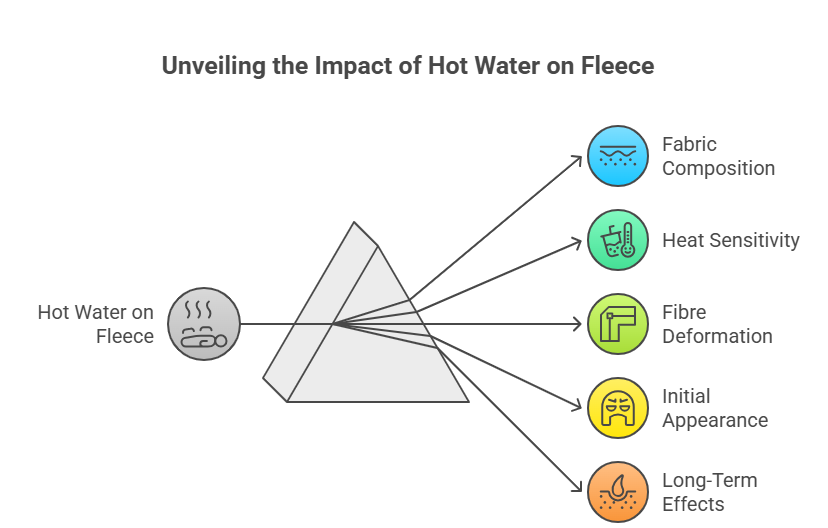
What Hot Water Really Does to Fleece Fabric

Understanding Fleece as a Heat-Sensitive Material

Most of the time, polyester, which is a man-made fibre that has been artificially designed to provide a soft, warm, and light feel, is the main component of fleece. This softness is produced through a process of brushing and moulding of the fibres that are so tiny.

Here’s the important part: polyester is essentially plastic-based. And just like plastic, it doesn’t respond well to high heat. When exposed to hot water, those soft fibres can change shape—even if the blanket still looks “okay” at first glance.

That’s why understanding the fabric matters before choosing the water temperature.

The Quiet Damage Hot Water Can Cause

Hot water doesn’t usually destroy fleece in one dramatic wash. Instead, it causes small changes that build up over time. The blanket may feel slightly stiff. The surface may start to look fuzzy or uneven. Colours might lose their brightness.

These changes often sneak up slowly, which is why many people don’t connect them to hot water right away.

Why Hot Water Is Usually a Bad Idea for Fleece Blankets

Shrinking Is Only Part of the Problem

When people ask can fleece blankets be washed in hot water, they often worry only about shrinking. But shrinking is just one possible issue.

Hot water may be responsible for the alteration of the fleece’s shape. The edges might curl up, certain areas of the blanket might seem thinner, and the general flow can be different. When this takes place, it is quite tough to go back to the original state.

Pilling and Roughness Explained Simply

Pills, the little balls that are created on fleece, are mainly formed when heat is present. Hot water loosens the fibres, resulting in their merging during washing.

A blanket can remain warm for a long time, but it wouldn’t be as soft and smooth as it was before. And that warmth is usually the most important reason for buying fleece at all.

Is There Ever a Reason to Use Hot Water?

Clean Doesn’t Always Mean Hot

Many people believe hot water cleans better, especially for blankets. While that can be true for some fabrics, fleece doesn’t work the same way.

Fleece releases dirt, oils, and odours quite easily—even in cold water. Using hot water doesn’t make it cleaner; it simply adds stress to the fibres.

Better Ways to Get a Deeper Clean

When it comes to cleaning, using a mild detergent along with a gentle cycle is still the best option for a super dirty fleece blanket instead of increasing the temperature. At times, washing with an extra cold water rinse or cycle is more effective than doing one strong hot wash.

Patience beats heat when it comes to fleece.

Choosing the Right Water Temperature for Fleece

Cold Water: The Safest Choice

Cold water is the best everyday option for fleece blankets. It protects the fibres, preserves colour, and keeps the blanket feeling soft wash after wash.

For regular cleaning, cold water does everything fleece needs—without the risks.

Lukewarm Water: A Careful Middle Ground

In some cases, slightly warm (not hot) water may be used for heavier soil. The key is moderation. Lukewarm water should feel comfortable to the touch, never steaming.

Once water starts feeling hot, it’s too much for fleece.

A Simple, Safe Washing Routine for Fleece Blankets

Before the Wash

Always check the care label if it’s still attached. If not, default to gentle settings. Shake out the blanket and wash it with similar soft items to reduce friction.

During the Wash

Use a gentle or delicate cycle. Choose a mild detergent and avoid bleach or fabric softeners. These products can coat or weaken fleece fibres over time.

After the Wash

Drying naturally is the softest method. In case of using a dryer, set it to a low temperature. Washing and drying are partners—using low heat in both stages keeps wool in good condition.

Common Hot-Water Myths That Ruin Fleece

One common myth is “one hot wash won’t hurt.” Unfortunately, even a single hot wash can start damaging fibres.

Another is assuming that damage means poor quality. In reality, even high-quality fleece can suffer if washed in hot water repeatedly.

And perhaps the biggest myth of all: hot water equals better care. With fleece, the opposite is usually true.

Final Thoughts: Clean Fleece Doesn’t Need Hot Water

Can Fleece Blankets Be Washed in Hot Water? In the majority of situations, the answer is no—and they really don’t have to. Cold or gentle warm water does an excellent job of cleaning fleece while keeping the softness and comfort you like safe.

Caring for fleece isn’t about being extra careful. It’s about being informed. Once you know how fleece reacts to heat, laundry day becomes much simpler and far less stressful.

Our company is dedicated to delivering the best quality fleece products and wholesale fleece blanket solutions to businesses, charities, and organisations that prioritise comfort and quality. We are committed to providing the best fleece and long-lasting softness as our main quality assurance for a good fleece feel and its long-life for years.
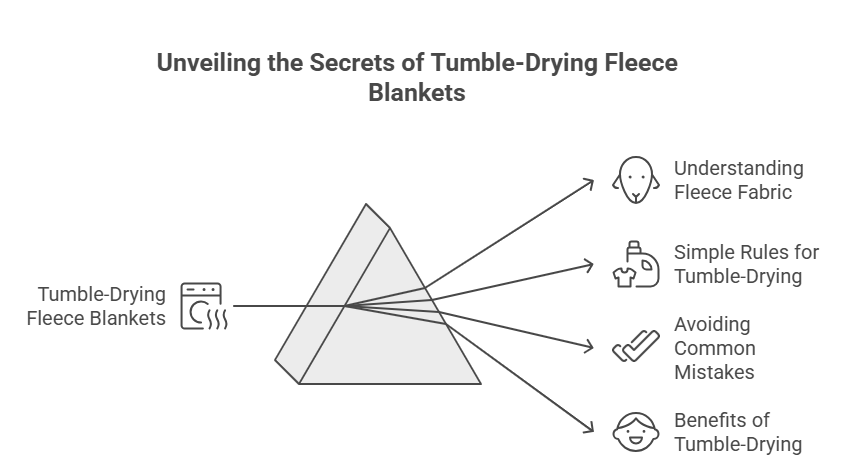
Can Fleece Blankets Be Tumble Dried?

5 Jan

You’re not the only one who has stood in front of the dryer with a fleece blanket and questioned if it is going to be ruined forever. Fleece is and has always been the most comfortable, soft, and pleasant fabric, but it may still be regarded as such a laundry-day headache. One wrong step, and your beloved blanket would already be feeling stiff, flat, or strangely crunchy (this has happened to us all).

Let’s settle this issue definitely: is it possible to tumble-dry fleece blankets, and if yes, what is the method to avoid the blanket getting turned into a science experiment?

Tumble drying is allowed for fleece blankets, and this is wonderful! What is more, it is straightforward to do—just knowing the very few simple rules will suffice.

Why Fleece Blankets Need Special Care

Synthetic fibres are generally used to make fleece blankets since they have been designed to retain heat, making the blankets light. This is the reason why fleece blankets are favoured by people for couch naps and using them on winter nights. However, those same fibres are not very friendly to high temperatures.

Consider fleece to be a good-quality sweater instead of a large, thick towel made of cotton. It is strong and can resist, but it is still not up to the harsher treatment. The high temperature may also affect the fibres by pressing them together, and in some cases, even melting them a bit or causing them to ball up. This might be the reason some fleece blankets become less soft after only one round of bad drying.

So, Can Fleece Blankets Be Tumble Dried?

Yes, can fleece blankets be tumble-dried? Absolutely.

Should they be tumble-dried carelessly? Definitely not.

The dryer machine is not an enemy—it’s the heat. The fleece material has the potential to, during high temperatures, lose its plush quality that we all love, shrink or group together. The secret to this is to keep the process gentle.

If your dryer has a low heat, delicate, or air-fluff option, you’re already halfway to success.

The Right Way to Tumble Dry a Fleece Blanket

Properly drying fleece does not necessitate an advanced degree in ecology or appurtenant technology, just enough patience: when the total-drying line says, “Stand still!” the beauty of the fleece starts progressing: how do you like that?

Begin by choosing the heat setting with the least amount of heat or an air cycle with no heat. This process enables the moisture to disappear without harming the fibers. It may require a bit more time, but your blanket will appreciate it.

Prior to putting it into the dryer, shake the blanket properly. It may seem silly, but this very easy step helps avoid the fabric going into one big clump and getting dried at different rates. Imagine it as getting the blanket up from the sleep before its spa session.

Once dry, remove it promptly. Leaving fleece sitting in a warm dryer is like leaving toast in a toaster—it doesn’t end well.

A Small Trick That Makes a Big Difference

Here’s a small professional tip that feels almost too simple to work: dryer balls or clean tennis balls.

Putting a pair in the dryer aids in maintaining the fleece’s movement, thus avoiding dull areas and bringing back the softness. There was once a time that I did not adhere to this step for a newly bought blanket, and, as a result, I had something that seemed closer to a mat made of felt than a warm throw. I learned my lesson.

This trick also helps reduce static, which is always a bonus—especially if you’re tired of sparks flying every time you unfold your blanket.

Why Air Drying Is Still the Gold Standard

If you possess large time and space, air drying is the safest method of drying fleece blankets. The fabric will lose its moisture naturally by hanging it or putting it flat without applying heat.

Air drying is the method that helps to retain the qualities of softness, shape, and texture during the entire use period of blankets the best. However, it’s a must to ensure that the blanket is completely dry before storing it. Slightly damp fleece might turn odoriferous or even mouldy, and nobody wants their blanket to smell like a neglected gym bag.

That said, life isn’t always that patient. That’s why low-heat tumble drying remains a perfectly acceptable backup plan.

Washing Habits That Affect Drying Results

Drying problems often start before the blanket ever reaches the dryer. Washing fleece correctly makes drying much easier.

Always use a gentle cycle and mild detergent. Fleece doesn’t need strong cleaning agents to smell nice and fresh. And although fabric softener might be really tempting, it actually spreads a layer of coating on fleece fibres and consequently decreases the softness in the long run. Ironically, not using the softener most of the time results in fleece being softer and fluffier.

Bleach is another fleece villain. Even small amounts can weaken fibres and shorten the life of your blanket.

Common Mistakes People Make with Fleece Blankets

The most common mistake? Turning up the heat “just to speed things up.” We’ve all done it. We’ve all regretted it.

Some other errors are: over-drying, not spreading blankets out in the dryer and considering all fleece the same. You should always verify the care label—different weights and blends of fleece may have almost identical but slightly different requirements.

If your blanket feels stiff or looks fuzzy in odd places, it’s often a sign of too much heat rather than poor quality.

Fleece Care Doesn’t Have to Be Complicated

Maintaining fleece blankets is not a matter of achieving perfection, but rather it is a matter of being cautious. Once you get the heat and fleece interaction right, the other things will be easier to control for you. Of course, a tumble dryer can be used for fleece blankets, but it should be at low heat, a gentle process and the correct time.

Take care of your wool fleece, and it will return the favour with years of warmth and comfort. Fair exchange.

Our business specializes in high-end fleece products and offers fleece blanket wholesale that are aimed at companies, charities, and organizations with quality and uniformity as their main concern. We have spent years working exclusively with fleece, and our primary focus is on excellent materials, skilled workmanship, and dependable service. You have arrived at the right place if fleece is vital to you.

Is Fleece Blanket Legit?

5 Jan

If you have ever ventured online to search for some high-quality Fleece Blankets, you would notice the mixed reviews from the customers who either swore by them or seemed to be confused about how good they really are. Owing to this dilemma, most buyers would stop for a moment to think for themselves–about is fleece blanket legit or just another overestimated product.

Let’s slow down and talk about that in an orderly fashion. The purpose of this blog is simple—to help you understand what fleece blankets really are, why they are so common, and most importantly, how to shop for them with a sense of confidence.

Why People Question If Fleece Blankets Are Legit

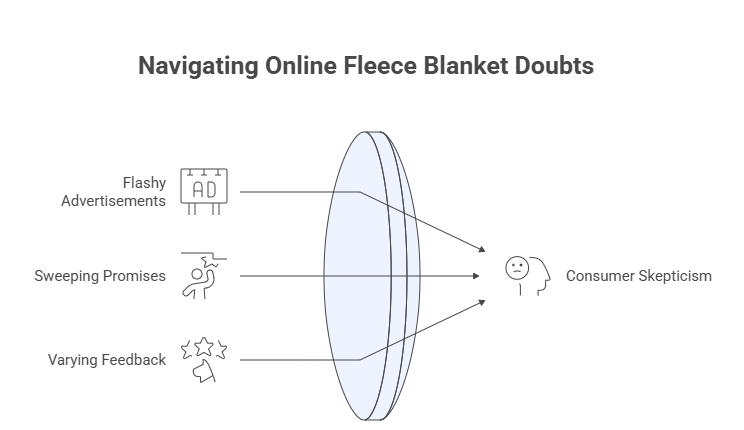
Online shopping has facilitated the procurement of almost anything. But as an unsettling downside, it calls for caution. Flashy advertisements, sweeping promises, and varying feedback generate suspicions in one’s mind about their veracity.

When people ask whether a fleece bed cover is believable, they are at most probably not questioning the very trustworthiness of fleece but whether the product they see online will be the one that gets delivered to their doorstep.

What a Fleece Blanket Actually Is

A fleece blanket is no passing trend nor a trifle. It is a known utility product and is widely used. Fleece blankets are very old and are used in homes, hotels, travel kits, outdoor activities, and even in emergency relief.

People often fall for their softness, warmth, light weight, and low-maintenance features; large in number, yet they are the very traits that keep fleece blankets in demand, year after year.

Is Fleece Blanket Legit as a Product?

Let’s answer this clearly. Yes, is a fleece blanket legit as a product? Absolutely.

Fleece blankets are authentic, functional, and widespread. They are purchased from a multitude of retailers and are used by millions of people across the globe. The product is legitimate; it has demonstrated its worth in terms of its ability to perform its purported duties, warmth and comfort.

Why Confusion Around Legitimacy Happens

Confusion often arises when buyers feel that things are not what they had expected. Some expect a heavy super blanket, while what they receive is a thinner version. Others may expect an oversized blanket and wind up with a standard size.

This doesn’t mean that fleece blankets are counterfeit; it just means that not all are made the same, and not all purveyors make it clear.

Understanding the Difference Between Product and Seller

Every element needs to be conducive to comforting the buyer; maybe it is each. A paper-thin fleece blanket cannot be justified and should generate discontent, for example, descriptions and sizes are unsuitable or customer support is wholly inadequate.

Misled consumers are mistakenly blamed by the product rather than the source, but it is entirely different if sellers do not connect buyers with themselves.

How to Identify a Legit Fleece Blanket Purchase

Be cautious; always refer to the specifics about the product. A true lister or serious seller will give you details about the size, thickness, material, and care instructions of the fleece blanket. Clear price descriptions, pictures in high resolution, and an indifferent return policy represent the work of a legitimate seller.

The good trader focuses on honesty, not exaggeration. They explain what their blanket is made for and what it is not designed for. The contact medium is easily available. The communication style is very transparent, and they deliver items on time. When this bare minimum is done, it creates a smooth experience for the customer instead of a headache.

Is Fleece Blankets Actually Useful and Effective?

Yes. That is definitely right. Good fleece blankets are exactly what they claim to be: they are light and give warmth. Blisteringly thin ones ought to go back whence they came and hopefully get recycled in a better way.

They are used as throws, layering blankets, travel companions, and items of comfort for everyday living.

That fleece blankets are cheap due to their sub-par quality, or so goes the myth. But that’d not be anything more than a myth. The budget-friendliness of fleece is as real as the psychology behind its affordability, or at least that much so for the thin-fleece-means-bad-performance myth. Well, let me challenge you on this. Thin fleece may still have the advantage of being warm and effective for indoor or layering use.

Final Answer: Is Fleece Blanket Legit?

So, is fleece blanket legit? Yes, without hesitation.

Fleece blankets are legitimate, useful, and trusted products. The key is buying with clear expectations and choosing sellers who communicate honestly. When that happens, fleece blankets deliver exactly what they are meant to—simple, reliable comfort.

We believe warmth should feel reassuring, not confusing. Our focus is on providing wholesale fleece blanket that are comfortable, dependable, and fairly priced. We take pride in offering fleece options that people can trust, making everyday comfort easy and accessible—because a good blanket should bring peace of mind along with warmth.

Is a fleece blanket polyester?

5 Jan

If you have ever touched a fleece blanket, you probably realised how soft and fluffy it is–and warm during the cold evenings–with the feel of the material. But that is also when many would post for a while as a question: Is a fleece blanket polyester or some other material?

Let’s get deep into this in plain, simple terms so you get out of reality what fleece is, why using polyester is effective, and how effective it is toward the alleviation of everyday comfort.

Why People Ask If Fleece Is Polyester

One usually models with knot laces that are difficult for others to emulate. The reductive methodology exhibits an implicit belief in simplicity. On the other hand, synthetic fleece offers a range of great creative solutions.

That is why understanding the material helps you feel confident about using it.

What Fleece Fabric Actually Is

Fleece is a type of fabric intended to be for warmth and softness without weight. It was made as a substitute, providing similar insulation but feathers tender and finer in feel.

The important thing to remember is that something is considered to be composed of fleece, and this indicative look is only achieved with the engineering of this fabric for knitting and brushing.

Is a Fleece Blanket Polyester or Something Else?

So, let’s answer the main question directly: is fleece blanket polyester?

Yes, most fleece blankets are made from almost exclusively polyester. The reason polyester is so much in use is that it presents fleece with its soft touch, its heat, strength, and lightness that follows. Although some fleece types may contain blends, in reality, the average fleece blanket consists of almost exclusively polyester stock.

Why Polyester Is Used to Make Fleece Blankets

One use to which polyester is ideally suited is making fleece, because of the way the fiber is made to function. Brushes can be used to enhance a fluffy, heat-retaining surface, while the material itself remains lightweight and flexible.

One reason polyester is used is because of its consistency; polyester keeps fleece soft all over without ever falling apart. Thus, polyester is established for comfort easily available at home daily, during sleep, while curled up on the couch, or when waiting in an airport.

How Polyester Fleece Is Made

“Polyester fleece is created by interlocking yarns and then brushing to create the fuzzy layer of fibre fleece.” The brushing creates tiny fibres that would thereby grow into little air pockets. These air pockets constitute what keeps the warmth against your body, in that a fleece is kept warm for much less weight than a blanket made from heavier stuff.

Is Polyester Fleece Useful for Everyday Use?

Absolutely. Polyester fleece is popular because it performs well in real-life situations.

The wool provides warmth without being heavy. The thing dries rather quickly once it’s wet. It is okay to wash it again and again, and it keeps remaining soft for quite some time when treated well.

This combination makes polyester fleece very practical for everyday comfort.

How Effective Is Polyester Fleece in Different Situations?

Polyester fleece, as expected by now, remains an appliance that also worked its way by becoming widely used for conveniences such as sleeping indoors, relaxing, and watching TV because old true no-worry warmth keeps anyone warm, comfortably dear, during more acceptable climates.

Polyester, since it does not readily absorb moisture, winds up creating fleece blankets that dry out much faster, compared to a majority of natural fabrics done in that manner, which are appealing to individuals who are made to wear them in moving or dynamic locations.

Different Types of Polyester Fleece Used in Blankets

Not all fleeces are made in the same fashion; some fleece blankets are lighter and more breathable, while others are very heavy and plush. The differences between these polarised varieties arise in the fashion in which the polyester microfleece is produced. You could use a thinner fleece blanket to layer things or just lay it over in mild weather, and come out the big-hearted fleece as some real sweet company in cold weather, throwing an extra layer of warmth around you. Polyester is certainly at its best in both kinds.

Polyester Fleece Compared to Natural Fabrics

Polyester fleece, mostly, is warmer and dries faster than cotton. Cotton is more breathable, natural, yet also heavier when wet. Polyester fleece keeps warming even when fully wet, and its structure is better maintained comparatively.

This is why many people prefer fleece for colder conditions and everyday convenience.

Easy Care and Long-Lasting Comfort

Among the most significant advantages of polyester fleece is its ease of maintenance. It can be machine-washed and dries quickly without shrinking. In turn, fleece is characterised by excellent durability, warm and soft, year after year, with minimal maintenance.

This low-maintenance nature adds to their effectiveness and popularity.

Is Polyester Fleece a Good Choice?

So, is a fleece blanket polyester? Yes, and that is actually a good thing.

Polyester fleece is a combination of warmth, softness, durability, and convenience in one piece of cloth, which sprung into existence and exists just for the essentials of utility, comfort, and reliability, with no doubt still being one of the most popular choices for worldwide blankets. To provide a comfortable wrap that remains comfortable for all through its lifetime-that is nothing but the essence of a pure polyester fleece.

We feel comfortable should just come and be there. Our fleece products are meant to provide warmth, softness, and functionality for everyday use at a cost that just seems practical. Known for our wholesale fleece blanket solutions, were into the creation of blankets that people truly enjoy using—now and then, the moment they are—because staying warm should always feel like a good decision.

Is Fleece Blankets Warm?

5 Jan

When it’s cold, the fleece blanket’s inevitable question has slowly emerged; the follow-up thought or search involves our apprehension: How does a fleece blanket fare in winter? Fleece is available for purchase in many guises- from your couch to your bed to your gym bag- but still, people are not sure just how much warmth it really offers.

So, let me put it all together simply and directly for you to decide whether a fleece blanket is right for you.

Why Warmth Matters When Choosing a Blanket

The primary function of blankets is to provide warmth and comfort. In the winter, this warmth is also a necessity. Nobody wishes to have layers of something heavy and stiff around them. This is why many people consider wearing fleece and wonder if fleece blankets are warm without being bulky.

What Fleece Blankets Are Made Of

Fleece has always been made by weaving virgin polyester fibres and then brushed to produce a smooth and fuzzy top. This is why fleece has a warm and cosy feel. Fleece is warm and lightweight, too; fleece fabrics trap the body heat close to the body whenever warmth is desired. Since everyone loves to feel it working with the double properties-softness and warmth-combined together.

Are Fleece Blankets Warm Enough for Cold Weather?

The simple answer is yes—are fleece blankets warm enough for most winter situations? Absolutely.

Fleece blankets keep you warm, though they offer decent warmth for time indoors, mild to fairly cold winter temperatures, and daily comfortable usage. One should not think of using one of them in cold weather, as heavy blankets work best in that case.

Many people find fleece perfect for sleeping, relaxing on the couch, or adding an extra layer on colder nights.

How Fleece Blankets Hold in Heat

The warmth of fleece comes from its structure. The tiny fibres create small air pockets throughout the fabric. These air pockets trap your body heat and prevent it from escaping too quickly.

The insulation is intelligently adapted to regulate trapping of warmth in a comforting way without making the blanket feel stuffy or heavy.

Fleece is favoured by many because it enhances warmth when working without the usual weight. Few regular blankets are seen as being restrictive or heavy after rolling them up, particularly when moving. However, fleece offers warmth with no impediment-building or heaviness as it is. Associated strategically placed if you figure the layering up for some extra warmth but with less bulk.

Breathability and Temperature Balance

Some people may ask whether or not a fleece blanket is warm, simply because he or she is scared of overheating. The answer is yes. Good quality fleece is a great combination of warmth and breathability.

From absorbing moisture away from the body, fleece helps keep the body comfortable while absorbing liquids that weep from the body. So fleece is really good for hanging around or even sleeping.

Fleece Blankets Compared to Other Winter Blankets

In general, wool blankets have a proper insulation level but may feel heavy and be itchy for some people. Down blankets are very warm but can be costly, and their maintenance would have to be special.

Fleece is also in the average range. It will keep you warm passably well for the price; washing it is no big deal, and it’s perfectly comfortable. This is the more “responsible” reason why fleece is the choice of most people.

When a Fleece Blanket Is the Best Choice

Fleece blankets come in quite handy when it comes to episodes of watching TV, afternoon naps, road trips, camping, and picnicking with a little chill in the air. These blankets are easy to carry, store and keep clean. Considering how they are often designed to help with winter, they can be just as great in the milder climates.

Choosing the Right Fleece Blanket for Maximum Warmth

Not all the woollen hair feels like the other. Depending on thickness, size, and quality, how they insulate varies. The higher the fleece, the more insulation provided, but a medium-weight fleece is what we usually require for regular use. Size matters too. If a blanket cradles you entirely, it will keep you warmer than a small one.

Easy Care and Long-Term Warmth

When properly cleaned, they remain soft and hot for many years. Furthermore, fleece has an incredible way of keeping pace with wear and tear as opposed to some materials that may lose their glow with every wash and wear, thus rendering a perfect pick for anybody each year.

Are Fleece Blankets Warm Enough for You?

So, is a fleece blanket warm? For most of the people, a yes would be the response. It provides a certain amount of warmth while being calm, convenient, and free from the tension of traditional winter blankets. Fleeces should be considered in your comfort quotient if cuddling into the comfort of cosy warmth during daily life is the way you prefer.

High-quality fleece products from us have been created to grant warmth, comfort, and good value. Our wholesale fleece blanket collection has been put together to provide cost efficiency along with the perfect blending of softness and efficacy. Such blankets are the most suitable choice to snuggle inside all winter long.