Is a Fleece Blanket Good for Summer?

30 Dec

A typical fleece blanket would definitely not be the most suitable of things to be considered for a hot summer’s day. But that does not mean fleece blankets are debarred from summer nights. Summer nights have something perfect about them in all their chill after the sun moves below the horizon. So the point stands: What kinds and uses of fleece might a summer fleece blanket have?

Now, let’s simply explain this.
Summer Comfort Is About Balance, Not Just Staying Cool

When summer arrives, most people focus only on staying cool. But real comfort is about balance. Nights can still feel chilly, especially with air conditioning running or in places where evenings cool down quickly. This is where the question is a fleece blanket is good for summer becomes important.

Fleece blankets are known for warmth, but that doesn’t automatically mean they are useless in summer. It simply means they must be chosen and used thoughtfully.

What a Fleece Blanket Is Designed to Do

A fleece blanket is made from synthetic fibres, usually polyester. These fibres are designed to trap heat by holding warm air close to your body. This is why fleece feels cosy almost instantly.

This heat-trapping ability makes fleece excellent for winter. However, in summer, that same feature can feel like too much if the blanket is thick or the room is already warm.

Why Fleece Can Feel Too Warm in Summer

One of the main reasons that people raise doubts about a fleece blanket being a summer good is the fact that fleece material does not permit good circulation. Natural materials have the opposite property, so fleece blankets are made focusing on insulation rather than on heat shedding.

Under hot or humid circumstances, this could result in uneasiness. The body might sweat as the heat cannot leave the body easily. When moisture remains near the body, fleece can sometimes be perceived as too warm or a little damp.

This does not mean fleece is bad—it simply means it is doing what it was designed to do.

Breathability and Moisture: What to Expect from Fleece

Fleece mostly stands on levels of softer fabric and comparably suitable warmth, but it breathes moderately. It definitely lags behind cotton and bamboo when it comes to thermoregulation.

Fleece is never best to put on in harsh afternoon heat or very warm nights. People generally choose to wear fabrics that breathe and are sometimes considered acceptable for the extremely hottest days of summer. Nevertheless, this is a false supposition of a completely confusing nature. Fleece was still wearable in summer.

When Lightweight Fleece Blankets Actually Work in Summer

This is where the answer becomes yes for “Is It a Good Idea to Use a Fleece Blanket in the Summer. Is it? Well, for starters, thin blankets have nothing in common compared to those that have a thick, fuzzy texture.

Air conditioning may not trouble you if you are wrapped in light fleece, as undertakings will give you the necessary warmth, without weight. On cool summer nights, fleece is considered more comfortable for heating in the seaside, mild-climate parts. Soft fleece clothes are also popular with many travellers since hotels and planes are generally pretty cold.

In these situations, fleece offers comfort without overheating.

Blanket Thickness Matters More Than the Season

It is very crucial to realise that fleece blankets are not always the same in terms of their feel. The heat is trapped mostly by the thick fleece, while the cambric is a little more breathable.

It is the misconception of heavy winter fleece that leads people to claim that fleece doesn’t work for summer at all. Still, a light fleece blanket can provide an entirely different experience. When one considers the thickness as the determining factor, then fleece blankets for summer become a very good choice.

Fleece Compared to Typical Summer Blankets

Fleece is warmer than cotton, bamboo, or linen, in comparison. Natural textile-fibre products that absorb moisture well are also the most suitable ones to be pursued in summers.

In contrast, fleece is concerned with warmth and softness and may not be so suitable for those who sleep hot or in humid environments, but it still finds its use in colder indoor or evening situations. It is never intended as a summer fabric but is best used to complement them.

How to Decide If a Fleece Blanket Is Right for Your Summer

If the air in the house is a little warm and moist, the fleece blanket may be rather uncomfortable. Nevertheless, a light fleece blanket may still come in handy thanks to the cooling air of an AC-provided room or refreshing nights of the summer.

Whether you are naturally warm or a cold sleeper will hugely determine your preference for comfort, which must always be synchronised with your style of living, so it is important to be aware of what you need in answering whether a necessarily luxurious fleece blanket can be reconsidered for summer.

Final Thoughts: Is a Fleece Blanket Good for Summer?

So, Is a Fleece Blanket Good for Summer? It really depends on the application. Heavy fleece ought to be best saved for the winter, but light fleece can be quite handy to take the edge off cool summer nights, air-conditioned rooms, or temperate weather.

Fleece doesn’t cool; it provides mild warmth, which should never be underestimated. One should put it to good use even within their summertime.

For more than 21 years, PeachFur Fleece has specialised in producing top-quality fleece blankets in various weights and styles. We take pride in announcing our fairly-priced wholesale fleece blankets in many styles, including lightweight models for use during summers and plush fleece blanket styles for the colder months.

Do Fleece Blankets Make You Sweat?

30 Dec

A fleece blanket can bring about sweating, especially during winter, as it is made to keep heat and thus insulate you to the greatest extent. The fact that you get too warm, sweat, and wish to cry is by no means an implication of a defect in the blanket; it might rather mean that the fleece is doing superbly well in terms of preventing your body heat.

Now let’s understand why this happens and whether it’s a good or bad thing.

When Cosy Slowly Turns Into “Very Warm”

This idea passes through people’s minds quite frequently. It is cold on winter nights, and one wraps oneself with a fleece blanket to feel warm and comfortable. One feels born and asleep in the warm version of a chill room without trouble. Next minute, though, the bedder feels hot and soon finds herself soaked, and simultaneously, she starts wondering whether fleece blankets make her sweat or if it’s just her.

On the contrary, these blankets are meant to hold heat close to the body; in a cold winter, all of a sudden, the heat concentration can be higher than you may expect.

What Makes Fleece Blankets So Warm

Typically, fleece blankets are made from synthetic fibre such as polyester since they work well with warm trapped air. Once we snuggle under a fleece blanket, blankie(s) create microscopic pockets of trapped air so that body heat circulates us, rather than conducting away.

Fleece is the cause of getting warm instantly. Its opposite counterpart, a lighter fabric, can easily release heat. But a fleece has a way of keeping whatever warmth surrounds you confined to that space, said consistently amongst the untold explanations on do fleece blankets make you sweat.

How Heat Trapping Leads to Sweating

Sweating is the body’s own built-in way of cooling itself down once the heat has made its way too warm inside. But underneath the fleece blanket, and especially a heavy one, heat can build up much faster than the body would expect; this is because fleece is less breathable than natural fabrics that would allow perspiration to evaporate into the air.

Therefore, when fleece clings moisture close to your skin, you feel damp or overwarm. This does not mean fleece is uncomfortable or of poor workmanship. It simply means fleece is adept at trapping heat.

Why Some People Sweat More Under Fleece Blankets

Not every person feels the same way with regard to the fleece. Some people simply sleep hotter than others. These core sleepers’ chances are greater as they sweat and become uncomfortable under a fleece blanket during the middle of winter.

In addition, room temperature is a big influencer in one’s life. In rooms, if there is a furnace and the heat is on, and you bring in some wonderful heavy fleece, you will go from snuggling warm to just plain too warm. Hence, how much or if a fleece blanket induces sweating is mostly a function of the person and their circumstances.

The Thickness of the Fleece Matters

No two fleece blankets are of the same kind. Thicker fleece blankets trap more air, hence capturing their warmth. The thinner fleece blankets provide warmth, but a touch of fresh air can be felt.

Individuals who argue that fleece always makes them sweat are mostly referring to very thick or supple fleece. The right weight selected makes a whole world of difference in fostering comfort and still enjoying the cosiness of normal fleece.

Fleece Blankets Compared to Natural Fabrics

When compared to the pure downtrodden cotton or wool rumours upon natural mandates, fleece makes one claim warmer faster. Cotton allows more airflow for the heat to dissipate. On the other hand, wool, while very warm, regulates moisture much better and will feel dry against the skin.

Fleece is used for warmth, which makes it warmer than most natural-fibre blankets. However, at times fleece can make one sweat during winter, giving some individuals an edge over others who like to feel warmer.

When Sweating Is Actually a Good Sign

Strange but true, sweating under a fleece blanket is not too bad. It simply means that the blanket is very effective in keeping you warm, which is its actual purpose in extreme cold circumstances.

The way the action potential’s conductance is activated is owing to the opening of the channels. The signal travelling across the myelin sheath between the nodes of Ranvier can arrive with higher amounts of current if the choices are more definitive, like those of sodium channels.

Using Fleece Blankets Comfortably in Winter

In order to avoid feeling overheated when covered in fleece, balancing warmth is key. Some people like to obtain a degree of warmth from the room itself by keeping it slightly cooler or using fleece merely over the top. Yet for some people, lightweight fleece is ideal for sleeping, while heavier garments are useful for sitting out and staying warm.

It is generally presumed by experts and researchers that oritatives actually help, given the evidence they have.

Do Fleece Blankets Make You Sweat?

Yes, certainly a fleece blanket might make somebody sweat during winter, since it is made to retain heat. Actually, much heat implies a job well done. So, this is a like-a-good-thing: when you use it correctly, you get warmth, comfort, and softness through the cold months. through

Sometimes, feeling a little warm simply means you chose the right blanket for winter.

For over 21 years, PeachFur Fleece has specialised in high-quality fleece products built for real winter comfort. We proudly provide fleece blankets wholesale that are intentionally designed to deliver serious warmth—yes, warm enough to make you sweat—so you stay cosy even on the coldest winter nights.

Can Fleece Blankets Go in the Dryer?

30 Dec

Yes, fleece blankets can be used in the dryer, but care must be taken to use low heat or no heat settings; high heat can cause damage to the fleece fibres and will destroy the softness. When done correctly, drying fleece is very safe and convenient.

How this is important and how to do it correctly without turning your beloved blanket into a sorrowful shadow of itself is briefly explained.

That Moment After Washing a Fleece Blanket

It’s something that nearly everyone goes through. Here you are, having recently washed your fleece blanket. It is sopping wet, so you become the awe-struck spectator at the dryer, wondering if it will really ruin the blanket in the dryer.

Being hesitant is completely normal. Fleece has a delicate and fluffy texture and is basically a synthetic fabric; this is why it will respond immensely differently to heat than most natural fibres, say cotton or wool. What’s great about fleece is that it doesn’t require a lot of expensive care—it just needs to be taken good care of with proper settings.

Understanding Why Fleece Needs Gentle Drying

Polyester is the common fibre used in making fleece. The fibres are excellent warm traps that are also light, while fleece blankets offer that feeling of warmth. But polyester doesn’t do well with heat-put it in a dryer for too long on too high a heat, and some of the fibres will melt partially or harden.

So the warmth that the blanket is supposed to provide may fade and result in the appearance of matting due to some firmness rather than a fluffy feel. Furthermore, the question Can fleece blankets go in the dryer seems to insist on one very important caveat: Low and no heat, please.

The Safest Way to Dry a Fleece Blanket

If you must use a dryer to dry your fleece, ensure that it is on low heat. Combining modest tumbling and low heat will dry off the exterior water while working on not damaging the fibres. It is advisable not to consider employing an air-fluff or no-heat setting on a fleece.

It is very well to take off the covers right when the spin stops. Over-drying can cause the fabric to gather static electricity and allow it to become hazardous even at the coolest level. The optimum should be just as long as it’s done and not one instant longer.

When Air Drying Makes More Sense

While fleece blankets will indeed flow through the dryer, it is better to air dry whenever you can, especially if space allows. The soft feel of the fabric remains through the air drying process.

Drying in the air is especially advantageous with heavier fleece and plush styles, where the thick, fluffy element would probably persist longer. I’m guessing they would do both-drying up in the dryer for a short time on low heat, then switching to air drying.”

Common Dryer Mistakes That Ruin Fleece

One reason people think fleece does not last long is simple and just avoidable mistakes in care. Using high heat, fabric softeners, or rough items like towels during drying can all cause damage to the fibres over time.

Believe it or not, fabric softener is one entity that will leave a kind of residue on the surface of fleece that not only inhibits breathability but also causes the fibres to lose their softness. To keep your fleece feeling like new after each wash, do not use fabric softeners with it.

How Proper Drying Keeps Fleece Soft for Years

A fleece blanket loves being hung in the air or dried naturally. It will worm itself nicely around the person lying underneath and keep him or her comfortable. For this reason, one finds fleece blankets commonly used in homes, hotels, hospitals, and travelling goods to resist wear so long as they are treated kindly.

So, if you have ever wondered can fleece blankets go in the dryer, well, they certainly can, provided you exercise caution with this fabric.

Can Fleece Blankets Go in the Dryer?

Fleece blankets are safe to be put in the dryer, and there is no need to stress about ruining them by doing so. Just do not use high heat, make sure not to dry them for too long, and skip the fabric softener. Follow these straightforward instructions to keep your fleece blanket warm, soft, and easy for years of winter. In care, sometimes less is more, not too much, just right.

A notable factor in how you should care for a fleece dry is the kind of fleece itself. High-quality parts of the cloth will better withstand the softer dryer use than lower-quality pieces. Hence, one person will assert that their fleece blanket can be washed, and another one will say that their fleece turned into a hard stone following washing.

Quality Fleece That’s Dryer-Friendly

Most of the issues come from low-quality fleece and high heat, not the dryer. When good fleece is cared for properly, the answer to can fleece blankets go in the dryer resolutely becomes yes. Good-quality fleece paired with easy-to-achieve laundry tips really allows the blanket to be soft, fluffy, and comfortable for a long time.

For more than 21 years, PeachFur Fleece has specialised in producing high-quality non-pilling fleece blankets and apparel designed for everyday use. We offer wholesale fleece blankets, apart from springing up in Fleeceville, which provide resistance to machinery washing as well as low-heat machine-drying operations while still preserving the high degree of softness, durability, and long-lasting comfort.

Is Fleece Blanket Good for Winter?

30 Dec

Once winter arrives, it rules our minds. Warmth prevails over style. A blanket becomes an aesthetic object. On cold nights when the heater is just not warming you up, any blanket would be useful. These images motivate many with their pre-purchase question: Is fleece only good on paper during the winter season, or will it make a genuine difference?

To be frank, really, fleece blankets are supercool for winter, sheer everyday goodness, I would say most comfortably! Let’s understand all of that and forget about fanatical inflations and needless opinionizes.

What a Fleece Blanket Really Is

Fleece blankets are manufactured using synthetic fibres, usually polyester, that are designed to hold warmth well but also for great softness. Fleece must be light and bendable, whereas heavy wool blankets or thick quilts are just the opposite. Fleece snugly wraps around the body; you wrap it around rather than lying on top.

One reason that people lean on fleece in the winter is that it offers a little warmth without making you feel pressured by the weight, which is great when seriously trying to relax, sleep, or move around freely.

Why Fleece Blankets Work Well in Winter

Most of the people are eager to know if fleece blankets are good for winter, as they feel light when touched for the first time. The thing is, fleece is not based on weight to keep you warm; it serves because it merely keeps the warm air near your body. Small fibres make lots of little air pockets that hold warmth, keeping the heat from running away.

The fleece coverlets restart to warm you in no time. You do not have to wait long to feel cosy, which is particularly beneficial on a chilly night. The airy fabric supplies you with breathability, thereby retaining warmth without making you sweat or uncomfortable.

How Fleece Keeps You Warm Without Overheating

One major positive aspect of this fleece is the perfect balance it gives. This will keep you warm but allow the material to breathe, making it an excellent example of being perfect for long, wintery nights: resting or perhaps just lying down on the couch.

Many users have often felt that coverlets start warm, but problems arise when they get too hot. Fleece fabric does not give such problems as it maintains the warmth for an optimal period. This perfect balance has made fleece a widely relied upon choice year after year.

Fleece Compared to Other Winter Blankets

When discussing fleece in comparison to other winter blankets, it tends to dominate as none possess the characteristics fleece blankets have to offer. Wool blankets are known for good insulation, but can be heavy and itchy. Down blankets are rarely matched in warmth but require special care and may not work well in damp conditions.

Indeed, fleece is not the first choice for a harsh environment. However, one can still bank on reliable clothesline warmth in a normal winter. That is where this query comes into consideration: Is a fleece blanket warm enough for winter? Surely, fleece blankets are the most practical choice for most people.

When a Fleece Blanket Is the Right Choice

For winter, a fleece blanket is certainly first on the list among those wanting items which have ease of use, look fantastic, and are comfortable to live with daily. For sleeping, lounging around, travelling, or for little kids or the aged family members, because it touches their skin softly.

Some folks layer a fleece with a blanket on top to stay warm under the coldest conditions. Fleece serves as an inner layer well, too, as it efficiently traps warmth and offers comfort without bulk.

Choosing the Right Fleece Blanket for Winter

The fleece blankets do not feel the same. Thicker fleece contains greater warmth; medium fleece is good for daily use during the wintertime. Size is, of course, critical. A piece too small will not do the job, and one that properly fits the body will make a big difference in comfort.

But when anyone says a piece of fleece is of no use to them, it is usually because of having been given a thin or undersized blanket. This is not an indictment of the efficacy of fleece.

Easy Care Makes Fleece Even Better

Another main reason fleece blankets are a big hit in the winter season is such a hassle-free fabric to maintain. Fleece, however, can mostly be easily machine-washed along with tumble-dry in a jiffy. It is not that delicate to require dry cleaning or extensive care and is, hence, good enough to be used in a busy household as well.

This ease of care adds to the overall value, especially during winter when blankets are used almost daily.

Is Fleece Blanket Good for Winter?

A fleece blanket rates high on the list for being beneficial for wintery temperatures. For starters, this is a pure source of warmth, comfort, suppleness, and ease of use in one beautiful package. In freezing temperatures, they will never overshadow thick blankets, but instead Fleece offers reliable style and comfort for winter homes. Sometimes the best winter solutions are not the fanciest ones, but the ones that quietly do their job every night.

Wholesale fleece blankets have become a major business for the retail sector. Fortunately, peachfur fleece provides one-stop shopping for all your wholesale fleece blankets, making it easy to place large orders. If you have a massive order in mind, we will provide expert help to fill it, substantiating it further with free artwork for all orders.

Do Fleece Blankets Shed?

29 Dec

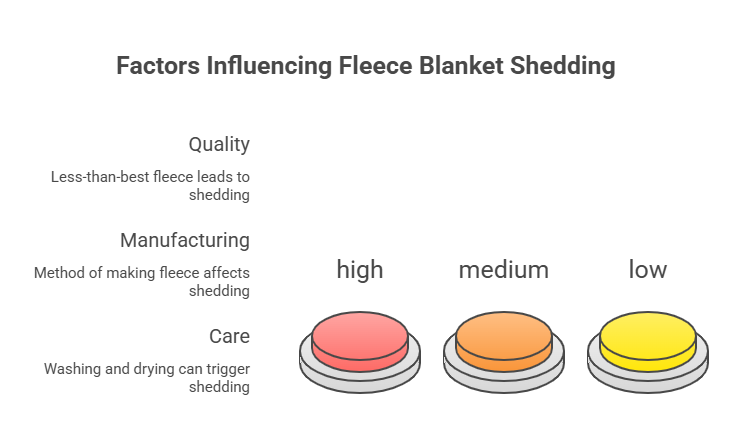
Yes, some fleece blankets developed shedding, mainly due to being broken in or being made of less-than-best quality fleece. But don’t worry because shedding is hardly inevitable, and usually it results from the method of how fleece is made or cared for, rather than the fleece itself.

Let’s walk through this calmly and clearly, so you know what’s normal, what’s not, and what you can actually do about it.

Why Shedding Feels So Annoying (Even When It’s Minor)

All of a sudden, there’s fuzz everywhere. Fuzz on your clothes, and also on the couch (maybe your pet). You know what’s frustrating about this? Residence choice. That is when people ponder whether anything has been done wrong. That is how the query “do fleece blankets shed” is generated so many times.

Shedding is a mess no one likes, but it doesn’t imply that a blanket would be bad or dangerous. Understanding why it takes place can be the big difference.

What “Shedding” Really Means With Fleece

When people say a fleece blanket is shedding, they usually mean one of three things:

  • Loose fibres coming off the surface
  • Lint showing up after washing or drying
  • Small fuzz bits are sticking due to static electricity

True shedding is when fibres detach from the fabric. This is different from pilling (small fabric balls) and different from lint that sticks because of static.

The Biggest Reason Fleece Blankets Shed: Quality

The most important factor behind shedding is fabric quality.

Fleece of low quality has usually been made with shorter fibres that are not anchored with great firmness into the fabric; consequently, when in use, washed or dried, they loosen and fall away. This is the reason why inexpensive fleece blankets are likely to shed more.

High-quality fleece is made from longer fibres and better finishing techniques. These fibres stay in place and are not shed much with time. As for shedding with fleece blankets, the correct answer is somewhat conditional: some do, some do not—and the cause is generally quality.

How Fabric Finishing Affects Shedding

Fleece doesn’t become soft by accident. During manufacturing, the fabric is brushed to lift fibres and then carefully trimmed (or sheared) so those fibres are even and secure.

When this process is rushed or done unevenly, loose fibres remain. Those loose fibres are the ones you later see on your clothes or in the dryer. This is also why some blankets feel incredibly soft in the store but start shedding after just a few uses.

New Blanket vs. Old Blanket: When Shedding Usually Happens

It’s very common for a brand-new fleece blanket to shed lightly during the first wash or two. This is usually leftover surface fibres from production. In most cases, this settles down quickly.

Shedding that continues after many washes is different. That often means the fleece itself is breaking down, which usually points back to lower-quality fabric or harsh laundry habits.

Washing and Drying: A Hidden Trigger

Even good fleece can start shedding if it’s washed the wrong way. Hot water, strong detergents, rough wash cycles, and high dryer heat all stress the fibres. Over time, that stress causes them to loosen.

Okay, so there you have it. You could wonder that, right? Do fleece sheets deposit more after washing? Depending on how gently washed, yes. Cold water and mild detergent can do wonders. Heat properly, and the fibres will naturally stick together better.

Static, Pet Hair, and Dust (Often Mistaken for Shedding)

It could be that some …things are simply static. Fleece gets static easily in dry weather. People find that static attracts hair, dust, and lint; when these show up on the blanket, it gives it a badly put-together appearance, though not as it seems.

This is why fleece blankets seem “worse” in winter. The fabric hasn’t changed—humidity has.

How to Tell If a Fleece Blanket Will Shed Before You Buy It

One test to do while washing may be performed. While wet washing, rub the fabric gently using the palm of your hand for a few seconds. In case some fibres come off fairly easily, or there are fuzzy little balls, this is a sign that this fleece might shed slowly.

Also, check both sides. Some blankets are finished well on only one side, which looks nice in packaging, but sheds later in real use.

Can Shedding Be Reduced or Prevented?

Yes, in many cases. Lower shedding can be achieved by washing the blanket once before use, treating it gently, setting your laundering controls to low and avoiding any harsh conditions. And choosing a better fleece blanket could be more helpful still.

Shedding is not something you just have to accept—it’s something you can mostly avoid with the right choices.

When Shedding Means It’s Time to Replace the Blanket

If, even after clear care, your fleece blanket sheds heavily, begins to appear ragged, or sheds lint, then it is to be thrown away; it is not wastage but instead a reaccumulating of comfort and cleanliness.

Bringing It All Together

Do Fleece Blankets Shed? Indeed, they do, but it is almost always substandard fleece or a product that has faced rough handling when being washed. Again, well-constructed fleece blankets do not shed even the least, and if they are cared for, then they will provide comfort to their users for years. Rather, shedding or non-shedding is a contrast between fleece cloth, based on how fleece is Fleece Made.

Comfort That Lasts (And Why Quality Matters)

When fleece is handled carefully, shedding becomes a minor or non-existent issue. Operating in the fleece market for over twenty years, we consider only top-quality fibres and a very particular finish for an experience of sheer comfort. From throws and baby blankets to picnic blankets and custom embroidered fleece, it is our attention to the minutest detail that renders our blankets soft, clean, and durable.

Fulfilling the demands of corporate concerns, personal festivities, charity affairs, and commercial concerns, the quality assortment of our wholesale fleece blankets amply demonstrates that reliability and shared expectation. The blankets guarantee no unexpected shedding.

Because a fleece blanket should feel cosy, look good, and stay that way.