Is Fleece Blanket Good for Winter?

30 Dec

Once winter arrives, it rules our minds. Warmth prevails over style. A blanket becomes an aesthetic object. On cold nights when the heater is just not warming you up, any blanket would be useful. These images motivate many with their pre-purchase question: Is fleece only good on paper during the winter season, or will it make a genuine difference?

To be frank, really, fleece blankets are supercool for winter, sheer everyday goodness, I would say most comfortably! Let’s understand all of that and forget about fanatical inflations and needless opinionizes.

What a Fleece Blanket Really Is

Fleece blankets are manufactured using synthetic fibres, usually polyester, that are designed to hold warmth well but also for great softness. Fleece must be light and bendable, whereas heavy wool blankets or thick quilts are just the opposite. Fleece snugly wraps around the body; you wrap it around rather than lying on top.

One reason that people lean on fleece in the winter is that it offers a little warmth without making you feel pressured by the weight, which is great when seriously trying to relax, sleep, or move around freely.

Why Fleece Blankets Work Well in Winter

Most of the people are eager to know if fleece blankets are good for winter, as they feel light when touched for the first time. The thing is, fleece is not based on weight to keep you warm; it serves because it merely keeps the warm air near your body. Small fibres make lots of little air pockets that hold warmth, keeping the heat from running away.

The fleece coverlets restart to warm you in no time. You do not have to wait long to feel cosy, which is particularly beneficial on a chilly night. The airy fabric supplies you with breathability, thereby retaining warmth without making you sweat or uncomfortable.

How Fleece Keeps You Warm Without Overheating

One major positive aspect of this fleece is the perfect balance it gives. This will keep you warm but allow the material to breathe, making it an excellent example of being perfect for long, wintery nights: resting or perhaps just lying down on the couch.

Many users have often felt that coverlets start warm, but problems arise when they get too hot. Fleece fabric does not give such problems as it maintains the warmth for an optimal period. This perfect balance has made fleece a widely relied upon choice year after year.

Fleece Compared to Other Winter Blankets

When discussing fleece in comparison to other winter blankets, it tends to dominate as none possess the characteristics fleece blankets have to offer. Wool blankets are known for good insulation, but can be heavy and itchy. Down blankets are rarely matched in warmth but require special care and may not work well in damp conditions.

Indeed, fleece is not the first choice for a harsh environment. However, one can still bank on reliable clothesline warmth in a normal winter. That is where this query comes into consideration: Is a fleece blanket warm enough for winter? Surely, fleece blankets are the most practical choice for most people.

When a Fleece Blanket Is the Right Choice

For winter, a fleece blanket is certainly first on the list among those wanting items which have ease of use, look fantastic, and are comfortable to live with daily. For sleeping, lounging around, travelling, or for little kids or the aged family members, because it touches their skin softly.

Some folks layer a fleece with a blanket on top to stay warm under the coldest conditions. Fleece serves as an inner layer well, too, as it efficiently traps warmth and offers comfort without bulk.

Choosing the Right Fleece Blanket for Winter

The fleece blankets do not feel the same. Thicker fleece contains greater warmth; medium fleece is good for daily use during the wintertime. Size is, of course, critical. A piece too small will not do the job, and one that properly fits the body will make a big difference in comfort.

But when anyone says a piece of fleece is of no use to them, it is usually because of having been given a thin or undersized blanket. This is not an indictment of the efficacy of fleece.

Easy Care Makes Fleece Even Better

Another main reason fleece blankets are a big hit in the winter season is such a hassle-free fabric to maintain. Fleece, however, can mostly be easily machine-washed along with tumble-dry in a jiffy. It is not that delicate to require dry cleaning or extensive care and is, hence, good enough to be used in a busy household as well.

This ease of care adds to the overall value, especially during winter when blankets are used almost daily.

Is Fleece Blanket Good for Winter?

A fleece blanket rates high on the list for being beneficial for wintery temperatures. For starters, this is a pure source of warmth, comfort, suppleness, and ease of use in one beautiful package. In freezing temperatures, they will never overshadow thick blankets, but instead Fleece offers reliable style and comfort for winter homes. Sometimes the best winter solutions are not the fanciest ones, but the ones that quietly do their job every night.

Wholesale fleece blankets have become a major business for the retail sector. Fortunately, peachfur fleece provides one-stop shopping for all your wholesale fleece blankets, making it easy to place large orders. If you have a massive order in mind, we will provide expert help to fill it, substantiating it further with free artwork for all orders.

Do Fleece Blankets Shed?

29 Dec

Yes, some fleece blankets developed shedding, mainly due to being broken in or being made of less-than-best quality fleece. But don’t worry because shedding is hardly inevitable, and usually it results from the method of how fleece is made or cared for, rather than the fleece itself.

Let’s walk through this calmly and clearly, so you know what’s normal, what’s not, and what you can actually do about it.

Why Shedding Feels So Annoying (Even When It’s Minor)

All of a sudden, there’s fuzz everywhere. Fuzz on your clothes, and also on the couch (maybe your pet). You know what’s frustrating about this? Residence choice. That is when people ponder whether anything has been done wrong. That is how the query “do fleece blankets shed” is generated so many times.

Shedding is a mess no one likes, but it doesn’t imply that a blanket would be bad or dangerous. Understanding why it takes place can be the big difference.

What “Shedding” Really Means With Fleece

When people say a fleece blanket is shedding, they usually mean one of three things:

  • Loose fibres coming off the surface
  • Lint showing up after washing or drying
  • Small fuzz bits are sticking due to static electricity

True shedding is when fibres detach from the fabric. This is different from pilling (small fabric balls) and different from lint that sticks because of static.

The Biggest Reason Fleece Blankets Shed: Quality

The most important factor behind shedding is fabric quality.

Fleece of low quality has usually been made with shorter fibres that are not anchored with great firmness into the fabric; consequently, when in use, washed or dried, they loosen and fall away. This is the reason why inexpensive fleece blankets are likely to shed more.

High-quality fleece is made from longer fibres and better finishing techniques. These fibres stay in place and are not shed much with time. As for shedding with fleece blankets, the correct answer is somewhat conditional: some do, some do not—and the cause is generally quality.

How Fabric Finishing Affects Shedding

Fleece doesn’t become soft by accident. During manufacturing, the fabric is brushed to lift fibres and then carefully trimmed (or sheared) so those fibres are even and secure.

When this process is rushed or done unevenly, loose fibres remain. Those loose fibres are the ones you later see on your clothes or in the dryer. This is also why some blankets feel incredibly soft in the store but start shedding after just a few uses.

New Blanket vs. Old Blanket: When Shedding Usually Happens

It’s very common for a brand-new fleece blanket to shed lightly during the first wash or two. This is usually leftover surface fibres from production. In most cases, this settles down quickly.

Shedding that continues after many washes is different. That often means the fleece itself is breaking down, which usually points back to lower-quality fabric or harsh laundry habits.

Washing and Drying: A Hidden Trigger

Even good fleece can start shedding if it’s washed the wrong way. Hot water, strong detergents, rough wash cycles, and high dryer heat all stress the fibres. Over time, that stress causes them to loosen.

Okay, so there you have it. You could wonder that, right? Do fleece sheets deposit more after washing? Depending on how gently washed, yes. Cold water and mild detergent can do wonders. Heat properly, and the fibres will naturally stick together better.

Static, Pet Hair, and Dust (Often Mistaken for Shedding)

It could be that some …things are simply static. Fleece gets static easily in dry weather. People find that static attracts hair, dust, and lint; when these show up on the blanket, it gives it a badly put-together appearance, though not as it seems.

This is why fleece blankets seem “worse” in winter. The fabric hasn’t changed—humidity has.

How to Tell If a Fleece Blanket Will Shed Before You Buy It

One test to do while washing may be performed. While wet washing, rub the fabric gently using the palm of your hand for a few seconds. In case some fibres come off fairly easily, or there are fuzzy little balls, this is a sign that this fleece might shed slowly.

Also, check both sides. Some blankets are finished well on only one side, which looks nice in packaging, but sheds later in real use.

Can Shedding Be Reduced or Prevented?

Yes, in many cases. Lower shedding can be achieved by washing the blanket once before use, treating it gently, setting your laundering controls to low and avoiding any harsh conditions. And choosing a better fleece blanket could be more helpful still.

Shedding is not something you just have to accept—it’s something you can mostly avoid with the right choices.

When Shedding Means It’s Time to Replace the Blanket

If, even after clear care, your fleece blanket sheds heavily, begins to appear ragged, or sheds lint, then it is to be thrown away; it is not wastage but instead a reaccumulating of comfort and cleanliness.

Bringing It All Together

Do Fleece Blankets Shed? Indeed, they do, but it is almost always substandard fleece or a product that has faced rough handling when being washed. Again, well-constructed fleece blankets do not shed even the least, and if they are cared for, then they will provide comfort to their users for years. Rather, shedding or non-shedding is a contrast between fleece cloth, based on how fleece is Fleece Made.

Comfort That Lasts (And Why Quality Matters)

When fleece is handled carefully, shedding becomes a minor or non-existent issue. Operating in the fleece market for over twenty years, we consider only top-quality fibres and a very particular finish for an experience of sheer comfort. From throws and baby blankets to picnic blankets and custom embroidered fleece, it is our attention to the minutest detail that renders our blankets soft, clean, and durable.

Fulfilling the demands of corporate concerns, personal festivities, charity affairs, and commercial concerns, the quality assortment of our wholesale fleece blankets amply demonstrates that reliability and shared expectation. The blankets guarantee no unexpected shedding.

Because a fleece blanket should feel cosy, look good, and stay that way.

What Are Fleece Blankets Made Of?

29 Dec

Perhaps you have once snugly wrapped yourself in a fleece blanket on a chilly night, in which case you should already know that it feels good immediately. One specific thing people seldom get to ponder about is why it feels comforting. This very curiosity is what generally gives rise to just one fundamental but quite persuasive query, “What is the fleece blanket made of?”

This blog is out to answer that question in the simplest ways possible. No heavy code or theoretical jargon. Just answer the question simply so we can get their practical significance in real-life scenarios, and so you can have a few “I see now” moments.

Understanding Fleece Before We Talk About Materials

We should understand what Fleece is. As far as we think, it comes from sheep, fleece wool, as its name suggests, that, despite its name, fleece does not come from sheep. The affection for fleece is discovered through the same factors negating its origins. Keeping warmth, a soft touch, and the ability to trap heat for warmth sum up the case of fleece, but the material itself differs dramatically.

Fleece is an artificial fabric mainly used for imitating wool but is much lighter in weight and reduced in itchiness and care-handling components; therefore, it feels soft and cosy while competing with any available traditional fabric in terms of wicking properties.

The Main Answer: What Are Fleece Blankets Made Of?

Most fleece blankets have a polyester weave as their base; polyester is a synthetic fibre produced from petroleum-based products, though it may sound very industrial, but in reality, this is what makes fleece most admired by the world.

The individual fibres of polyester are incredibly fine. When turned into fabric by the process of brushing, tiny air pockets are thus formed at the surface. These air pockets hold body heat, making the fleece blanket snug and warm almost directly after use. It’s not the thick fleece that makes the fleece warm, but the trapped air!

This is also why fleece blankets are so lightweight. You get warmth without the heavy, suffocating feel that some thick blankets have.

Why Polyester Works So Well for Fleece Blankets

The reasons that make polyester the backbone of fleece blankets are sturdy, meaning that it holds well even after many washings, does not shrink and stretch making sure that your blanket stays the same size and shape over all those uses, and dry very fast-isn’t that just the cherry on the cake, especially if you have seen instances where you attempt to pull a moist blanket?

Polyester fleece is practical too, perhaps easy-going on upkeep. All you need for fleece is no special textiles, only laundry. This makes it suitable for everyday use at home and in dormitories, while even casually travelling or outdoors.

Recycled Polyester: The More Eco-Conscious Option

Many fleece covers today are made from recycled polyethene terephthalate. This fleece comes from beginning as pet or h2o bottles, then is washed in caustic soda, and sunlight dried on fields, using the majority of recycled plastic bottles. Streams of the yarn are quickly made in the same soft fleece as one would guess in virgin polyester.

Comfort remains mostly at a constant level, but the environmental footprint is radically changed. Recycled fleece products make a dent in plastic waste and reduce the need for new raw materials. This is not a bad way for people who want some body heat in the midst of guilt without feeling any added heat.

An interesting real-life example is outdoor throw blankets and easy travel blankets. Many of them do, in fact, quietly consist of recycled polyester without the least hint of it happening to their truly soft textures.

Cotton Blends and Why Pure Cotton Isn’t Enough

Certain fleece blankets that are available contain a blend of cotton since a blend is made up of cotton together with polyester, not just cotton alone. Pure cotton does not retain heat effectively, as it means that heat loss occurs after getting wet, so purely because of its material and its limited softness, cotton by itself is not the best for a fleece.

When polyester blends with cotton, it adds the element of breathability and softness, provided by polyester for warmth and structure. These blankets tend to be slightly less “fluffy” but are wonderful for mild weather or winter use indoors when overheating is a concern.

Bamboo and Hemp: Natural Fibres Enter the Scene

Fleece blankets incorporating bamboo and hemp are essential and popular today. The population now prefers these performance-friendly materials by including some synthetics into the mix.

Bamboo fleece has been noted for being ultra-soft and moisture-wicking in nature, while possessing mild antibacterial properties that minimise odour for a longer duration. In contrast, hemp fleece is really tough and sturdy, and thus also lasts forever and, somewhat comfortably, feels natural once softened with processing.

These materials are still less common than polyester fleece, but they are growing in popularity, especially among eco-focused buyers.

How Fleece Blanket Fabric Is Made (In Simple Terms)

Once the fibres are ready, they are twisted into threads. Instead of weaving, jersey is commonly knitted; this gives the fabric elasticity. Knitting maintains its airiness in the fabric as well, making it lighter and more breathable.

Brushing follows knitted articles, going a step further in value addition. It is where all the magic happens. Thin brushes on the face surface of the fabric smooth against the fibres, yielding this characteristic hairy or fluffy touch. Brushes slightly lift the pile for more softness, more air pockets, and, in conclusion, more warmth.

The fabric finally undergoes a treatment to extend its durability. The heat setting prevents shrinking, and it gets treated with an anti-pilling finish to keep the surface from pilling if pressure is applied due to rough use over time.

Why Material Choice Matters More Than You Think

Not all fleece blankets look the same because not all fleece is created in a similar way. The fibre type, brushing process, and finish treatments can impact the warmth, softness, and life of a fleece blanket.

If ever any of you thought why a fleece blanket would last forever while another would start losing nubbiness after just a few washes, the group of materials would answer it all almost every time.

Caring for Fleece Based on What It’s Made Of

Fleece blankets are generally easy to care for, but material still matters. That being said, washing fleece in cold water will prevent firmness from developing. Fabric softeners may seem helpful, but they, in fact, discharge a coating on the fibres that works against the fleece in trapping warmth over time.

Air drying or using low heat is the safest way to keep fleece blankets looking and feeling good for years.

Clearing a Few Common Myths About Fleece

Many people consider fleece to be warm because it is thick. In reality, the warmth in fleece comes from the air that is trapped. Another common misconception is that fleece belongs to the natural fibres like wool, whereas in reality, most fleece is synthetic. Some have the belief that fleece is bad for the environment, but this is not true anymore because of the recycled and plant-based choices.

Understanding these details helps you make better choices instead of relying on assumptions.

A Warm Closing: Knowledge Meets Quality

Now that you know the materials used in making fleece blankets, you can’t help but come to appreciate the feeling of quality fleece. Material really does make a difference. So, too, does how it was made, and we can assure you that experience does matter, too.

We have long been venturing into the production of top-line fleece products for over 21 years. For us, fleece is not merely a fabric, but rather our area of focus; something we brandish with pride and insight. Such fleece products range from classic 70″ x 54″ blanket throws to baby blankets, fleece blankets wholesale, picnic blankets, and our all-in-one in-flight travel system, the inimitable Travel Billow.

We are more than happy to help you in your search for that perfect fleece blanket right for your specific wholesale needs, whenever you want customised quality and a real customer service friend in the world.

How Much Fabric for a Fleece Blanket?

29 Dec

There’s a unique kind of thrill in planning a fleece blanket. You envision cosy evenings, with the finished blanket resting on the couch in a neat pile or maybe as a gift for a beloved one. But then comes the stalling moment for many staring at a myriad of fabric choices: how much fabric for a fleece blanket do you actually need?

It simply is a very simple matter, but one that begets a lot of uncertainty, more so if you are doing it for the very first time. This gets cleared in a simple, friendly manner with this guide. There’ll be a little quiz: Not very complicated math. Direct explanations to ease you and grant you the knowledge about how to feel secure about a purchase.

Why Fabric Amount Matters More Than You Think

Fleece is forgiving, soft, and beginner-friendly, but fabric quantity is the one thing you can’t really “fix later.” Too little fabric leads to a blanket that feels awkwardly short. Too much fabric often means unnecessary expense or trimming regret. The good news is that fleece fabric works in predictable ways, which makes planning much easier once you understand a few basics.

The key thing to remember is that fleece usually comes in wide rolls. That width already takes care of most blanket widths, so the amount of fabric you need is mostly about length.

Understanding Fleece Fabric Width

The width of most fleece material runs between 54 and 60 inches, which is just the right width for infant blankets, throws, and grown-ups’ blankets, all of which can be done in a single cloth-width without any need to have the fabric sewn together. So when you hear people asking, “How much fabric to make a fleece blanket?” they are considering ideas on the number of yards for the length of fabric required.

This is why fleece is so popular. It quietly removes one major headache from the process.

Fabric Amount for Different Blanket Sizes

A whole yard of fleece is a comfortable amount for baby and toddler blankets. It’s compact enough for on-the-go strollers or car seats. Just a shade bigger and never out of place with a wide application, really, the extra half yard seems to make the blanket more fun and functional without towing a considerably bulky weight.

A delightful size for children is about one and a half yards of fleece, offering enough room to curl up, drag the blanket from room to room as they please, or use it on a bed without appearing oversized.

Adult throw blankets are where most people pause and hesitate. In most cases, two yards of fleece creates a comfortable, well-proportioned throw. It’s long enough to cover legs and torso during couch time without constantly needing adjustment. If the blanket is for someone taller or if you simply love extra coverage, two and a half yards feels luxuriously cosy.

Larger blankets meant for full-body coverage or taller adults benefit from extra length. In those cases, adding more fabric makes a noticeable difference in comfort. Most people who go bigger never regret it, but many who go smaller wish they hadn’t.

One Layer or Two? How That Changes Everything

The demand for fabric is essentially halved in the case of a single-tied fleece blanket, rather than being quite ample for a two-person or rather shared tie blanket making entailing raw materials (fabric) for two layers.

This is where planning really matters. If you want a double-layer adult throw and you choose two yards, you’ll need two yards of each fleece piece. The warmth and weight of double-layer fleece are wonderful, but the fabric requirement doubles instantly.

Why You Should Always Leave a Little Extra Room

Even though fleece doesn’t fray, it still needs trimming, squaring, and finishing. Tied edges, rounded corners, or simply straightening the fabric all reduce the final size slightly. This is why experienced crafters almost always buy a little more than the bare minimum.

The extra margin is there to turn a nagging task into a tolerable and enjoyable one and to give you scope in case you decide to risk a tad bit more fringe, softened corners, or greater drape in the end.

Fabric Choice Can Change How Big a Blanket Feels

Not all fleece is created equal. Some fleece that is thicker tends to feel warmer, but might drape a little shorter. Thinner fleece moves more easily and may often seem larger when it is actually the same size. Anti-pill fleece that is treated to hold its shape with good usage and regular washing makes a good choice for fleece blankets.

Choosing quality fleece means the blanket keeps its size, softness, and appearance long after it’s finished.

Custom Sizes Without the Headache

Try making a blanket with the intention of it fitting a particular bed or person. The easiest way to figure it out is to know how long to buy fabric for in advance, while rounding up. Due to fleece’s forgiving nature, a tad extra fabric is just better than too little.

You don’t need perfect measurements to succeed. You just need thoughtful planning and a bit of breathing room.

A Thoughtful Ending: Comfort Without Guesswork

After learning how much fabric fleece blankets require, the process becomes quite enjoyable. After all, fleece is for warmth, and not to bring anxiety, so the quantity of fabric should be enough to suit the purpose of the blanket.

For those who do not wish to bother with the guesswork, professionally-made fleece blankets provide a constant relief to this malaise. With over twenty years of experience with exclusivity for fleece, we focus on giving out size, forever softness, and reliable quality. From throws and baby blankets to picnic blankets and customisations with embroidery, fleece is what we are good at.

If you’re looking to fulfil further-reaching needs—if you’re with an entity, charity, or charitable organisation, or into retail, taking a good look at wholesale fleece blanket in bulk quantity possibilities for combining quality with price makes broad sense. After all, a fleece blanket’s key job has always been to do one thing and not deviate from it: make you feel at home.

Are Fleece Blankets Toxic?

29 Dec

One of the most asked follow-up questions after using a cosy fleece blanket and savouring that soft and comfy feeling is, “Wait… are fleece blankets toxic?” That thought springs up more frequently these days, particularly because people have taken time to learn what touches their skin, what their children use, and what materials sit around in their homes.

But don’t worry! The topic does not have fear or panic, but is very self-explanatory. So let us talk about this very gently and honestly so that at the end of the day, you can actually decide on your own.

What People Usually Mean When They Ask “Are Fleece Blankets Toxic?”

Most people don’t mean toxic in the sense of poison. They usually mean something more practical:

  • Can fleece irritate skin?
  • Can it cause allergies?
  • Is it safe for babies or people with breathing issues?
  • Are there chemicals involved that I should worry about?

These are definitely good questions, but the real question here, too, is that fleece blankets are not poisonous in the usual sense whatsoever; they, however, may not be suitable for some situations.

What Fleece Blankets Are Made Of

A great option would be the polyester fleece blankets because polyester has a natural resistance to moisture, yet it does indeed manage to give off a sort of wool-like softness. A common choice among the bedding industry, the blanket is lightweight owing to its nature.

Just because it’s synthetic doesn’t automatically mean it’s unhealthful, as several everyday items, from sportswear to upholstery, impart the same fibres without harm. Fleece sometimes exerts different properties contingent on their quality, maintenance, and users.

Can Fleece Blankets Cause Skin Irritation?

This is one of the most common concerns behind the question of whether fleece blankets are toxic.

Use of fleece blankets for maintaining body heat may be enjoyable for many, but not for all. After all, trapped body heat can cause discomfort, irritations, and itching, and this can particularly aggravate skin problems in those with sensitive, eczematous, or winter dry xerotic skin. This does not mean that blankets should be identified as toxic; rather, a warmer ability is not the best thing you would want for your skin.

A poor-quality fleece can shed particles of lint while probably becoming coarse over many washings, thereby causing irritation for the very sensitive skin. A superior fabric will keep its finer-grain softness and smoothness as it wears.

Fleece Blankets and Allergies: Is There a Risk?

Fleece typically does not bring about genuine allergic reactions the way that certain natural fibres or chemicals could, happening in response to friction, heat and dryness with very susceptible skins and an existing allergy.

Most of the time, a wash one time will tend to reduce surface chemicals or materials used in the production process and break down a tiny bit of leftover fibres, making a difference in everyone’s comfort.

Are Fleece Blankets Safe for Babies and Children?

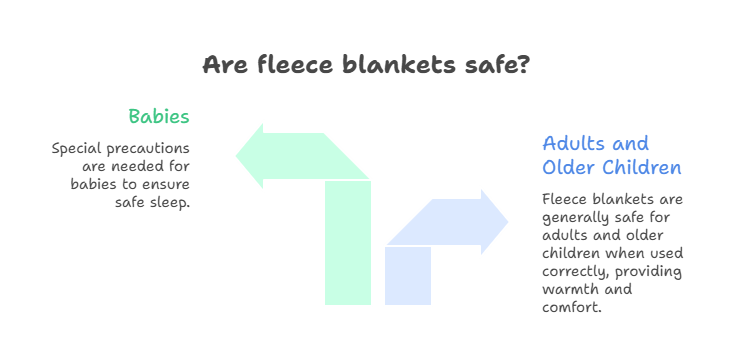
Here is where more conscious effort is required. Newborns and very young babies are quite fragile, possessing sensitive respiratory systems and delicate skin. Some fleece types, especially the cheap grade fluff or shedding ones, may liberate loose fibres that are not safe for babies to be around- a health hazard posing a threat to breathing.

Fleece blankets are usually quite safe and pretty well worn by healthy, older children. The choice of installation matters equally; it is essential that the fleece is of good quality and that it is kept clean, well looked after, and appropriate for all ages. So now, when parents say, ‘Hey, are fleece jogging blankets poisonous to children?’ it is better to ask which kind of fleece and how safely it might be used.

Respiratory Sensitivity and Fleece Use

There are times when there may be discomfort experienced by people with asthma or chronic respiratory conditions from shedding fibres. Poorly made fleece sheds very tiny fibres on the ceiling. This can happen when fleece is new or when it has been worn enough.

Once again, it is not toxicity but irritation. Properly washing wool while avoiding very hairy and shedding types of wool, and utilising wool in well-ventilated spaces, greatly diminishes this concern.

What About Chemicals and Dyes in Fleece?

Another reason why people are pressing about fleece blankets being harmful is youthful worry about the dyes and finishing treatments. Like all textiles, fleeces can be dyed and then treated during manufacturing, with the inferior types exhibiting less agreeable processes while the better qualities would be seen abiding by strict quality standards.

A simple rule helps here: wash before use and choose quality over price. Washing removes surface residues, and higher-quality fleece is far less likely to cause discomfort.

Static, Shedding, and Winter Discomfort

Static electricity and lint shedding are often blamed on fleece being “bad,” but these are comfort issues—not health dangers. Dry winter air increases static, and cheaper fleece sheds more. Using proper laundry care and choosing well-finished fleece usually solves these problems without giving up warmth.

When Might Fleece Not Be the Best Choice?

There are a few situations where fleece may not be ideal:

  • Newborn babies with very sensitive airways
  • People with severe respiratory conditions
  • Individuals with known reactions to synthetic fabrics

However, for the vast majority of people, fleece will remain the safe, snuggly choice, while for some running the gauntlet, cotton or bamboo could feel better.

So, Are Fleece Blankets Toxic? The Clear Answer

Fleece blankets are never poisonous per se. The fears mostly arise from a sensitive or genuine discussion of the quality in use and care provided, rather than any possibility of real danger. In other words, a very comfortable and warm fleece can definitely be acquired and then put to good use in almost every household in this world.

Comfort You Can Feel Good About

Understanding the truth behind our fleece blankets’ toxicity helps you make calm, confident decisions instead of worrying unnecessarily. Quality matters, care matters, and experience matters, too.

For those organisations, events, charities, or shops that need viable warmth at a large level, our wholesale fleece blankets in bulk make a great combination where, with all juice and no froth, quality, consistency, and price scream: one blankie needs to do well by making one feel securely wrapped, relaxed, and right at home.