Tag Archives: fleece blankets bulk

Where Are Fleece Blankets Made?

12 Jan

So many of the simple comforts of everyday life that we take for granted are supplied by blankets. One may need them while watching TV, or to snuggle with on a lazy afternoon or chilly night: they supply a great contentment. But have you ever given a second’s thought to how they are created or come to be lying on your bed?

Let’s draw back the covers gently and recall a memory behind these warm essentials – sans factory phrases, sans jargon, minus tough terms or verbiage-just the simple, honest truth.

The more careful people become about the sum of their purchases, the more likely are they to begin questioning product origin. Knowing the nation where the fleece blanket was made can actually clue one into its grade, price, and how long it may hang around for. And with regard to this, it is always splendid to jive with more information regarding those things that keep us warm. The reward can be far gratifying, particularly on those days when the chill just won’t leave our company.
What Is Fleece and Why It’s Made Around the World

Fleece is a synthetic fabric made predominantly from polyester. It is sought after because of how spotlessly soft- and warm to the touch yet lightweight and low-maintenance it is. Production happens virtually in any part of the united world of textile-making since it is not about one single fiber like cotton.

This is why the answer to where are fleece blankets made is not limited to one country. Instead, it’s a global effort.

A Global View of Fleece Blanket Manufacturing

Countries around the globe manufacture fleece blankets like North America, Asia, and similar textile-focused regions. Some places like Asia are busy in mass production to serve the global demand, while other places do not make big orders but concentrate on quality work.

Different regions play different roles, but they all contribute to the blankets we use every day.

India: A Major Hub for Fleece Blanket Production

India is among the largest producers of fleece blankets in the world because it had a long history with textiles and various manufacturing centers devoted to blankets. The fleece blankets from India have indeed traveled a distance, because they made their appearance in many foreign markets.

Some cities, however, have an overview on the world’s fleece blanket manufacturing industry, where skilled labor meets the modernization of machinery, thus guaranteeing consistent production, wide selection of products, and competitive pricing, making this one of the starting points of such production.

United States: Quality-Focused Manufacturing

American fleece blankets are produced in a way that focuses on local workforce, quality control, and top-class finishing. Although the scales covered might seem insignificant when compared to the mass production going on in bigger global hubs, it does attract a patron-type of buyer to blanket made maintaining the utmost attention to detail and consistency.

Hence, a fleece blanket is made, bringing part of the story as to where fleece blankets are made into light—most of these, particularly for the mass markets, or in special orders, still demand grade and volume feedback.

Other Regions Involved in Making Fleece Blankets

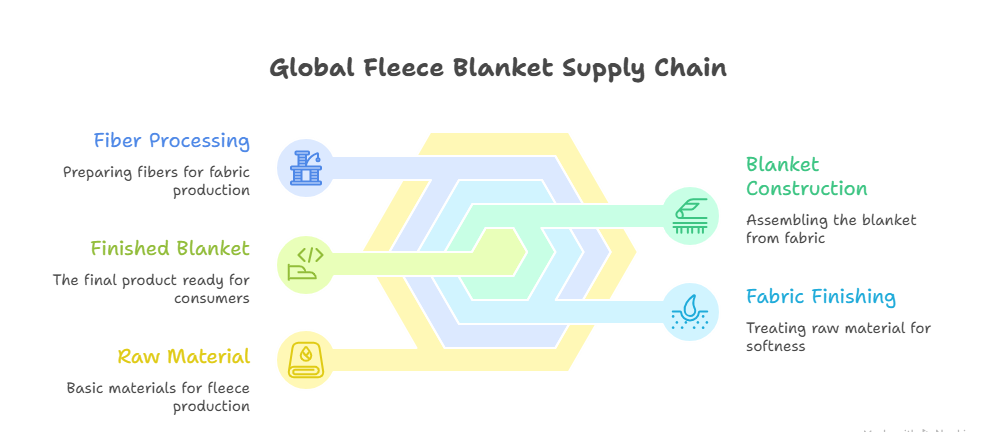
Apart from India and the US, several countries manufacture fleece blankets. Different countries participate in the production of fleece fabric, fiber processing, or blanket completion. In some cases, the service of finishing the raw material in one country and construction of the blanket in another can be contemplated.

It’s truly a global supply chain—your blanket may have traveled more than you have.

How Fleece Blankets Are Made

The process starts with the production of synthetic fibers, which are then spun into yarn. This yarn is knitted into fleece fabric dyeing, printing if needed, and cutting to blanket sizes. Finally, the edges are edge-finished and the blanket is ready for use.

No knitting needles or grandma-level patience required—machines do most of the work here.

Does Where a Fleece Blanket Is Made Affect Quality?

Maybe. There are certainly many people that stand behind the quality just because the blanket was made in the USA. The point is, it is more about the fleece that goes into it, the processing of it, and how the blanket is finished. Depending on the above criteria, a good fleece blanket can come from any area, producing the best soft durability and life span rather than just any area. Substantially good substandard fleece can protect and make quite a customer sad regardless of the origin of the blanket.

That’s why understanding where are fleece blankets made is helpful, but knowing how they’re made matters just as much.

Why Knowing the Origin Helps Buyers

Knowing where the fleece blankets are manufactured will help us in pricing, availability, and expectation of quality. This is for people purchasing in quantities for events, organizations, or any other use. With information, people are equipped to make better choices—such as bringing themselves coziness on chilly nights.

It is a fact of life that one would find fleece blankets made anywhere in the world. Obviously, its maximum production comes from India, amongst others like the United States and some smaller textile producing countries. However, without all of them, there can be no soft fleece blankets for use in daily life.

Final Thoughts: Comfort Has a Backstory

A fleece blanket may seem simple, but there’s a global journey behind it. Understanding where it comes from adds value to something we already love. After all, warmth feels even better when paired with a little knowledge.

We specialized in wholesale fleece blankets for comfort, durability, and everyday use. Our fleece throw products have been carefully made with utmost focus on quality, ideally for bulk purchases at highly competitive prices. If you are looking for dependable fleece throws at the best wholesale values, feel free to reach out for the various options available.

Does Fleece Blanket Keep You Warm?

12 Jan

When there is time to face a change of weather, most of us get a blanket and no one thinks about it twice. But after they shiver and wonder quietly about it, everyone would start questioning: so, does a fleece blanket truly keep one warm, or does it only look snug?

Let’s talk about it in a simple, honest, and no-science-degree-required way.

You get out of your blankets, then sit there rubbing your palms together patiently for another moment of warmth to come when weathers grow unbearable. Do we not sometimes use the fleece blankets, cuddly and soft as they are, to merely act as the real thing for this scenario: to offer some kind of unbreakable bond with the winter’s chill?

Short answer: yes. Long answer: keep reading, it’s worth it.

What Is a Fleece Blanket, really?

Fleece is usually made from polyester, a synthetic fiber that really has a soft, wool-like appearance. However, it does not itch or weigh much and does not need a huge amount of rinsing, unlike wool. Fleece blankets are in use at a number of locations. These uses include layering over the bed, across the sofa, slid into that luggage passed down the conveyer belt in the held carriage.

They are lightweight, fluffy, and easy-to-use, instead of squeezing you with some suffocating heavy blanket. What happens, consequently, with fleece: it just hugs you nearly standing up.

How Does a Fleece Blanket Keep You Warm?

Here’s the simple explanation: fleece traps your body heat.

If you are thinking, does fleece blanket keep you warm, the answer will be an absolute yes. Fleece is great at holding on to the heat you already generate in your body.

Hence, if one were to have doubt on “Do fleece blankets keep you warm?” then his answer for this assertion would definitely be “yes.” That’s why these blankets are particularly good at hanging onto the heat your body produces.

Warm Without the Weight (Yes, That’s a Thing)

One of the good qualities about fleece is that it doesn’t need to weigh much in order to be warm. Traditional blankets focus on weight, whereas fleece focuses on insulating.

This makes fleece blankets great for:

  • Sleeping comfortably without feeling trapped
  • Lounging on the couch for hours
  • Kids, seniors, and anyone who dislikes heavy bedding

Warmth without weight is kind of fleece’s superpower.

Breathable Comfort: Warm but Not Sticky

Ever felt warm but uncomfortable at the same time? That’s usually because moisture gets trapped.

A fleece blanket is excellent for transferring moisture away from your body; a scenario where you stay dry and warm; generally speaking, this makes it exceptionally useful if sleeping warm is a common occurrence or you have the habit of using blankets for long hours. Fleece provides warmth without making one sticky.

Are All Fleece Blankets Equally Warm?

Not exactly.

Some are lightweight, some are thicker and fuzzier in fleece blankets. The sherpa-style fleece is warmer in comparison to the standard variety and ideal for winter, while lighter ones are good for cooler weather.

Yes, fleece blankets do keep you warm. The success of this warmth, however, does depend somewhat on the type of fleece, likely more for micro fleece than for traditional fleece.

Can a Fleece Blanket Ever Be Too Warm?

Surprisingly, yes.

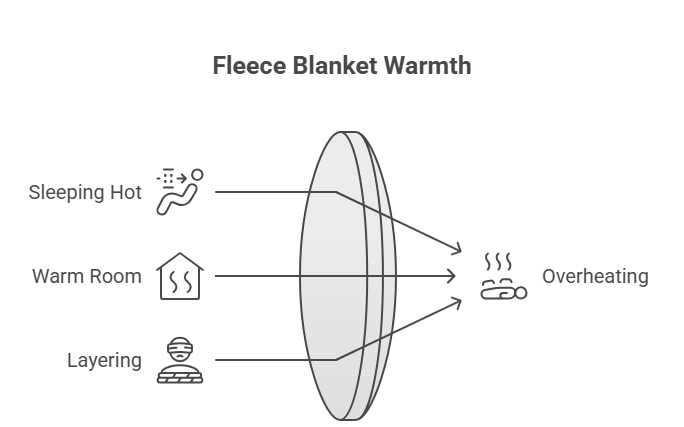
Because fleece traps heat so well, it can feel too warm if:

  • You sleep hot
  • The room temperature is already warm
  • You layer it with too many blankets

Yes! The particularly great convenience fleece provides are its layer-friendliness. Wear it on its own for cool nights or use it in conjunction with other bedding for real cold.

Using Fleece Blankets, the Smart Way

Fleece blankets are flexible. You can:

  • Use them alone during mild winters
  • Layer them under or over another blanket for extra warmth
  • Keep one handy for travel, naps, or movie nights

They adapt to your comfort level, which makes them practical for everyday use.

So, Does Fleece Blanket Keep You Warm?

Yes, it absolutely does.

It’s a pretty blanket; the fleece is warm with trapping heat, breathable with comfort, and zero bulk on top of the body. Though not exactly meant to trap warmth in harsh outdoor cold conditions but at warm living room lounging, on a nap or travelling around and about—it works perfectly fine.

And it does all this while being soft, easy to care for, and friendly to just about everyone.

Final Thoughts: Warmth That Feels Effortless

It’s more than simply layer upon layer being a bit warm, isn’t it? Sometimes, being actually warm means simply choosing the right fabric. In the field of warmth, coziness, and straightforwardness, fleece blankets always score highest. If being cozy were a personality, fleece would be calm, reliable, and always just there.

We specialize in delivering premium fleece products meant for well-being and warmth every day. Our wholesale fleece blankets place their emphasis on softness, endurance, and non-pilling performance, which makes them perfect for the house, events, and organizations. Seeing the manufacture of fleece become our forte from an extended time, we are clear that certain blankets indeed change the warmth radiant.

Do Fleece Blankets Pill?

7 Jan

If you are one of the fleece blanket lovers, then, for sure, you are not alone. They are a great source of warmth without being overly warm, extremely soft to the skin, and suitable for lazy evenings or cold mornings. Nevertheless, at one time or another, many users will see the emergence of small fuzzy balls on the blanket’s top layer and will start to wonder: Do fleece blankets pill?

This inquiry is very often raised, and it is a completely normal event. The good part is that pilling does not mean that your covering has undergone a serious quality change, is no longer useful, or is of low standard. It is simply a trait of some materials, and once you are aware of the causes, it gets easier to manage and even partially get rid of the problem.

Do Fleece Blankets Pill?

Of course, the fleece blankets pill, especially when they are used and washed very often. Pilling is a surface phenomenon that takes place when the fibres that have come loose get caught in each other because of rubbing. But it doesn’t mean the blanket has lost the heat it provides, comfort, or usefulness. Good caring and some easy habits will, to a large extent, decrease, eliminate, and slow down pilling.

What Pilling Really Is (and What It Isn’t)

Pilling refers to the process of creating small balls of fiber on the outer layer of a fabric. These small clusters are the result of unfastened fibers that are released and entwined. The reason they can feel rough and appear messy over time is that they are still adhered to the fabric.

Pilling is not damages to fabrics. It does not imply that the fleece blanket is getting torn from inside. Usually, the layer that is affected by pilling is only the outer one while the blanket beneath it is still as warm and comfortable as before.

Why Do Fleece Blankets Pill in the First Place?

To understand whether fleece blankets pill, it helps to look at how fleece is made.

Fleece is made to be super soft and fluffy. The fluffiness is due to the very fibres that are brushed and raised above the surface of the material. This not only gives the fabric that nice, soft and cozy feel but also results in the presence of more loose fibres on the surface.

Here are the most common reasons pilling happens:

Friction from everyday use

When a blanket rubs against skin, clothing, furniture, or even itself, fibres loosen and tangle together.

Washing and drying

Aggressive wash cycles, high heat, and overcrowded machines increase friction, which speeds up pilling.

New fabric shedding

New fleece often has extra surface fibres that haven’t settled yet. This is why some blankets pill more during the first few months.

Does Pilling Mean the Blanket Is Low Quality?

Not at all.

The most common misconceptions that are about pilling. Pilling encroaches on the most luxurious materials, like wool and cashmere. Pilling is not a manufacturing defect but rather due to the movement of fibers.

So while pilling can happen to any fleece, quality does play a role in how much and how quickly it appears.

Everyday Habits That Can Increase Pilling

Often, pilling isn’t caused by one big mistake—it’s the result of small habits adding up over time. These include:

  • Washing fleece too often
  • Using hot water or high dryer heat
  • Overloading the washing machine
  • Washing fleece with rough items like denim or towels

The good news is that once you’re aware of these habits, they’re easy to adjust.

How to Reduce Pilling Before It Starts

If you’re wondering how to prevent fleece blanket pill situations in the future, these simple steps really help:

  • Wash fleece only when necessary
  • Turn the blanket inside out before washing
  • Use a gentle cycle with cold water
  • Choose mild detergents
  • Avoid fabric softeners that coat fibres
  • Air dry when possible or use the lowest heat setting

These small changes protect the fibres and keep the surface smoother for longer.

How to Remove Pills from a Fleece Blanket

If pilling has already appeared, don’t worry. It’s very manageable.

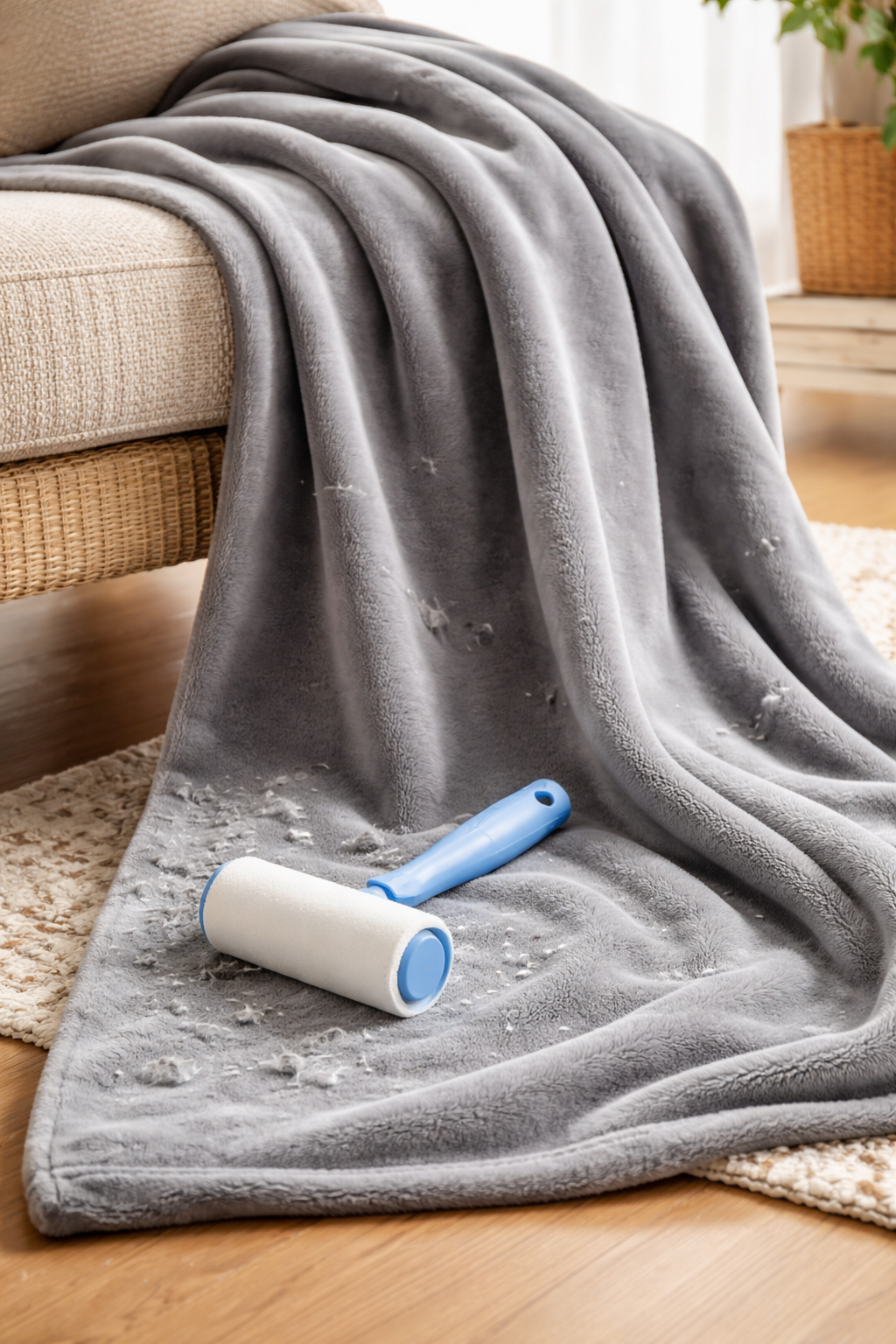
Fabric shavers are one of the safest and easiest tools. Use light pressure and let the device do the work.

Lint rollers help with minor surface fuzz and loose pills.

Soft fabric brushes or sweater combs can gently lift pills without damaging the fleece.

It is preferable to consistently take out the pills instead of waiting until they accumulate on the fabric. The blanket is always best and feels so much better when it is treated with gentle and consistent care. In truth, no material is totally immune to pilling. But still, the process of pilling can be noticeably slowed down and managed.

Consider fleece care as a maintenance procedure instead of a preventive action. If the blanket is taken good care of, it will still be soft, warm, and comfy for a number of years, but there will be some pilling through that time.

Final Thoughts: Pilling Doesn’t Take Away the Comfort

Blankets of fleece, they do have a possibility of pilling? Yes, they might, but pilling is a property of the material, not a flaw. It will not affect the blanket’s thermal insulation, softness, and convenience. If you take good care of it with proper washing, and maintenance is done at times, your fleece blanket can still be the warm friend you love.

No, comfort is actually a state of mind rather than an achieved perfection. It means the person can have a good, warm, cosy, and easy time, and fleece can still be credited for that beautifully.

Our business offers wholesale fleece blankets that are comfortable, durable, and long-lasting. We are also sure to apply the softening process effectively in such a way that the fleece easily resists pilling and lasts long with everyday use, and proper care. Going through the quality of materials and the construction of the products carefully, we provide customers with fleeces that remain warm and reliable for a long time.

Do Fleece Blankets Have Microplastics?

7 Jan

Fleece blankets are associated with comfort, warmth, and that nice feeling we have when covered during winter. But since the environment and the materials being used daily are the concern of many people, a question that is very carefully thought out has been coming up very often: Do fleece blankets have microplastics in them?

We must say it’s a very good question, in fact, and the response should not be a source of confusion or fear at all. By simply bringing in some light, the whole picture becomes so much simpler when it is about what fleece is and how it can be included in the lifestyle of a person who is more aware of their choices.

Do Fleece Blankets Have Microplastics?

Fleece blankets are often simply put together with synthetic fibres, and therefore, they are very much plastic-based. A new fleece blanket, however, does not contain any microplastics at all upon its release, but with time and the wear and tear of fibres through washing and drying, the release of microplastics will take place as a result of the breaking down process.

Yes, indeed, the question of whether fleece blankets contain microplastics is a legitimate one, and the reply depends on the manufacturing process of the fabric as well as the care given to it.

Why Are People Asking This Question Now?

For a long period, the term plastic was virtually limited to referring to bottles, bags, and packing materials only. But now it is absolutely clear that plastic is present in every nook and corner of the textile industry. With the increase in awareness of the issue, consumers are certainly scrutinising more of the daily items like beddings, clothes, and home textiles that are used and consumed.

This isn’t about fear or blame. It’s about understanding materials better so we can make more informed and balanced choices.

What Fleece Fabric Is Actually Made Of

Fleece is usually produced with synthetic fibres like polyester. The production begins with the plastic… which is first transformed into soft, flexible threads. The key element in fleece is the brushing process that gives it that soft and warm texture for which fleece is recognised.

Since fleece has a different texture and appearance from plastic, it is quite natural to forget that it is derived from plastic-based materials. The confusion about whether fleece blankets contain microplastics starts from this point.

Are Microplastics Already Inside the Blanket?

This is an important distinction.

A fresh fleece blanket has not yet accumulated any free-floating microplastics that are lying inside it. The fibres remain intact and stable. Later, microplastics are formed when tiny pieces of these fibres detach due to friction, wear, or washing.

Although fleece is made from plastic, it is not the case that microplastics appear all at once; they are formed slowly over time. Consequently, the usage and maintenance of a blanket have a significant impact on the entire process.

How Microplastics Are Released Over Time

Every time a fleece blanket is used, folded, washed, and dried, there occurs a very gradual weakening of the fibres due to the small amount of friction. The processes of drying and washing are the major contributors to the breakdown of fibres.

Certain fibres can go through the water system, while some might evaporate into the air during the drying process. This slow process is the reason why fleece is often included in the discussions about microplastics, despite it being a very fashionable and practical material.

Where Do These Microplastics Go?

Once released, microplastics can move beyond the home. In water, they may pass through filtration systems and reach natural environments. In the air, they can settle as dust.

It is not assuming that a single fleece blanket is dangerous by itself. On the contrary, it indicates that the small, regular choices, when combined, have a large impact. Fleece blankets are safe and soft enough for daily use. There is no point in stopping their use and questioning their warmth.

Awareness is the major factor. People are not forced to come up with drastic solutions to their problems if they know whether fleece blankets contain microplastics or not. A blanket that is used for a longer time, is cared for gently, and whose replacement is held back, can even be termed as a responsible approach.

Small Habits That Can Make a Difference

Mindful care can reduce the overall impact of fleece blankets:

  • Washing only when needed
  • Using gentle wash settings
  • Choosing air drying when possible
  • Keeping blankets in good condition for longer use

These are not rules, just helpful habits that support longer fabric life and reduced fibre breakdown.

Fleece has not lost its popularity because it is effective. It gives heat without making the wearer feel heavy, it is adaptable, and it is simple to take care of. The consciousness of materials, on the other hand, is steadily rising, and the innovation of fabrics is never-ending.

Understanding what fleece is made of allows people to enjoy it responsibly, without guilt or confusion.

Final Thoughts: Comfort and Understanding Can Coexist

So, do fleece blankets have microplastics?

Fleece is produced with plastic-based fibers and these fibres can eventually degrade into microplastics. Nevertheless, using it mindfully and giving proper care, fleece can still stay a very soft and useful piece of clothing in daily life.

Knowledge isn’t meant to take comfort away—it’s meant to help us use it more wisely.

We make it a point to produce only the best fleece products that are durable, comfy and for long-term use. Our expertise in providing wholesale fleece blankets has taught us that not only do the high-quality fleece blankets tend to last longer, but they also perform better if they are taken care of properly. Through focusing on quality and good manufacturing practices, we are enabling consumers to enjoy the plush feel and the great performance of their fleece over time.

Do Fleece Blankets Shed Microplastics?

7 Jan

Fleece blankets have never failed to be one of the top picks, and this is totally understandable. They are soft, light, and fluffy, protect the skin, washing is not a problem at all, and are fit for any occasion, from binge-watching to winter travelling. But now that the issue of sustainability is more and more frequently discussed, the question that has been occupying many people’s minds is: Do fleece blankets shed microplastics?

No doubt that this concern is widespread among a large number of people; however, on the bright side, it is a query whose answer will not weigh upon you. Just a bit of understanding and some thoughtful daily habits, and you will be making use of your fleece blanket in complete cognizance of its influence. Let’s take a look at the subject matter in a very casual and direct manner.

What Are Microplastics in Simple Terms?

Microplastics are essentially extremely small plastic pieces that are mostly not seen by our naked eyes. When we refer to textiles, these microparticles are usually present in the form of fine fibres that get detached from the synthetic materials during the usage of the clothes, their washing, or their drying.

Microfibers that cannot be seen by the naked eye are actually so small that they can go through the water purification systems. Gradually, they can mix with the rivers and oceans and ultimately reach the food chain. This is exactly the reason why the average consumer is becoming more and more interested in the common fabrics and their contributions to the microplastic issue.

What Is Fleece Actually Made From?

To understand whether fleece blankets shed microplastics, it helps to know what fleece is made of.

Generally, fleece blankets are produced using synthetic fibres, mainly polyester. Plastics are the base of these fibres, and they are processed in such a way that the resulting product has the soft and fuzzy surface that is admired globally. The brushing and finishing that cause fleece to feel soft and comforting also make the surface a little more likely to release tiny fibres, particularly when the blanket is new.

This does not mean fleece is poorly made or unsafe. It simply means it behaves differently from tightly woven fabrics.

So, Do Fleece Blankets Shed Microplastics?

The short and honest answer is yes, fleece blankets can shed microplastics, mainly during washing and drying.

The shedding mostly happens when:

  • The blanket is washed for the first few times
  • Hot water or high dryer heat is used
  • There is a lot of friction inside the washing machine

That said, shedding does not happen constantly or uncontrollably. With the right care, the amount released can be significantly reduced.

Why Does Fleece Shed Microplastics?

Fleece shedding comes down to three main factors:

1. Synthetic fibres

Because fleece is plastic-based, the fibres can break into smaller pieces under stress.

2. Fabric structure

The soft, fuzzy surface that feels so good also means loose fibres are closer to the surface and more likely to release.

3. Washing and drying motion

Agitation, spinning, and heat create friction, which is the biggest trigger for fibre release.

Think of it as a “breaking-in” phase for your blanket. The most shedding usually happens early on, then slows down over time.

Where Do These Microplastics Go?

Once released, microfibers travel with wastewater. Some are captured during treatment, but many are small enough to escape. Over time, they can enter oceans and be consumed by marine life.

After that, they could transfer through the food chain. This is why the issue of microplastics released by fleece blankets matters not only to the maintenance of the fabric but also to the whole environmental situation, which is by far larger.

Should This Stop You From Using Fleece Blankets?

Not at all.

Blankets made out of fleece still have various advantages, are comfortable, and are still the most preferred option for several good reasons. It is not intended to wipe fleece off the map completely, but rather to cut off its use and thus its consuming habits.

Being an informed person will help you not to compromise on comfort or choice. Sustainability does not result from perfection but from the dynamics of evolving with tiny steps.

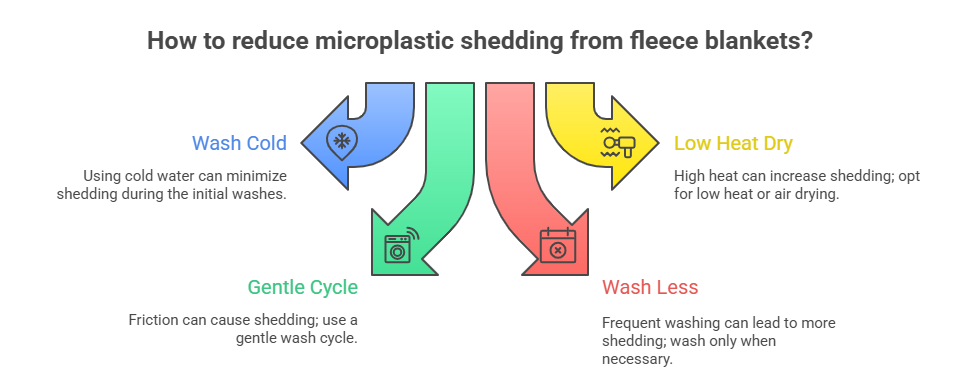
Easy Ways to Reduce Microplastic Shedding at Home

Here are some simple, realistic steps that make a real difference:

Wash less often

Fleece does not need frequent washing. If it is not dirty, it is okay to skip a wash.

Spot clean when possible.

Small spills or marks can often be cleaned without washing the entire blanket.

Use cold water

Cold water causes less fibre breakage than hot water.

Avoid high-heat drying.

Air drying is gentler and helps preserve the fabric. If using a dryer, choose low heat.

Wash full loads

A fuller machine reduces friction compared to washing a single item.

Use microfiber-catching solutions

Special laundry bags or filters can help trap fibres before they reach wastewater.

None of these steps requires big lifestyle changes. Small habits, done consistently, add up.

Are All Fleece Blankets the Same?

Not really.

The fleece of a higher quality is usually tightly woven and long-lasting; it is commonly the case that less shedding will occur during its lifetime. Good quality fleece is also soft for a longer period of time and has a greater resistance to forming pills, which indicates the presence of loose fibres.

The selection of quality is not only a matter of comfort. It is also about durability and responsible use. A blanket that lasts longer is not required to be replaced as frequently, which is ultimately a victory for both the customer and nature.

Comfort and Conscious Choices Can Go Together

When people ask whether fleece blankets shed microplastics, they are usually not looking for guilt. They are looking for clarity.

The truth is actually quite simple: fleece blankets do release microplastics; however, if they are mindfully taken care of, washed less, and quality products are chosen, the impact will be very low. The nice thing about being more responsible is that you do not have to lose warmth, softness or convenience.

Enjoy your fleece. Just care for it a little more thoughtfully.

Our main focus is on high-end fleece items, and selling wholesale fleece blankets altogether is one of our options, which are durable, comfortable, and meant for a long period of use. After working for more than twenty years in this field, we only deal with the best fleece, which does not pill and looks great even after a long time. A well-made fleece product with good care is still a warm and functional choice for today’s living.