Tag Archives: fleece blankets bulk

Is Fleece Blankets Warm?

5 Jan

When it’s cold, the fleece blanket’s inevitable question has slowly emerged; the follow-up thought or search involves our apprehension: How does a fleece blanket fare in winter? Fleece is available for purchase in many guises- from your couch to your bed to your gym bag- but still, people are not sure just how much warmth it really offers.

So, let me put it all together simply and directly for you to decide whether a fleece blanket is right for you.

Why Warmth Matters When Choosing a Blanket

The primary function of blankets is to provide warmth and comfort. In the winter, this warmth is also a necessity. Nobody wishes to have layers of something heavy and stiff around them. This is why many people consider wearing fleece and wonder if fleece blankets are warm without being bulky.

What Fleece Blankets Are Made Of

Fleece has always been made by weaving virgin polyester fibres and then brushed to produce a smooth and fuzzy top. This is why fleece has a warm and cosy feel. Fleece is warm and lightweight, too; fleece fabrics trap the body heat close to the body whenever warmth is desired. Since everyone loves to feel it working with the double properties-softness and warmth-combined together.

Are Fleece Blankets Warm Enough for Cold Weather?

The simple answer is yes—are fleece blankets warm enough for most winter situations? Absolutely.

Fleece blankets keep you warm, though they offer decent warmth for time indoors, mild to fairly cold winter temperatures, and daily comfortable usage. One should not think of using one of them in cold weather, as heavy blankets work best in that case.

Many people find fleece perfect for sleeping, relaxing on the couch, or adding an extra layer on colder nights.

How Fleece Blankets Hold in Heat

The warmth of fleece comes from its structure. The tiny fibres create small air pockets throughout the fabric. These air pockets trap your body heat and prevent it from escaping too quickly.

The insulation is intelligently adapted to regulate trapping of warmth in a comforting way without making the blanket feel stuffy or heavy.

Fleece is favoured by many because it enhances warmth when working without the usual weight. Few regular blankets are seen as being restrictive or heavy after rolling them up, particularly when moving. However, fleece offers warmth with no impediment-building or heaviness as it is. Associated strategically placed if you figure the layering up for some extra warmth but with less bulk.

Breathability and Temperature Balance

Some people may ask whether or not a fleece blanket is warm, simply because he or she is scared of overheating. The answer is yes. Good quality fleece is a great combination of warmth and breathability.

From absorbing moisture away from the body, fleece helps keep the body comfortable while absorbing liquids that weep from the body. So fleece is really good for hanging around or even sleeping.

Fleece Blankets Compared to Other Winter Blankets

In general, wool blankets have a proper insulation level but may feel heavy and be itchy for some people. Down blankets are very warm but can be costly, and their maintenance would have to be special.

Fleece is also in the average range. It will keep you warm passably well for the price; washing it is no big deal, and it’s perfectly comfortable. This is the more “responsible” reason why fleece is the choice of most people.

When a Fleece Blanket Is the Best Choice

Fleece blankets come in quite handy when it comes to episodes of watching TV, afternoon naps, road trips, camping, and picnicking with a little chill in the air. These blankets are easy to carry, store and keep clean. Considering how they are often designed to help with winter, they can be just as great in the milder climates.

Choosing the Right Fleece Blanket for Maximum Warmth

Not all the woollen hair feels like the other. Depending on thickness, size, and quality, how they insulate varies. The higher the fleece, the more insulation provided, but a medium-weight fleece is what we usually require for regular use. Size matters too. If a blanket cradles you entirely, it will keep you warmer than a small one.

Easy Care and Long-Term Warmth

When properly cleaned, they remain soft and hot for many years. Furthermore, fleece has an incredible way of keeping pace with wear and tear as opposed to some materials that may lose their glow with every wash and wear, thus rendering a perfect pick for anybody each year.

Are Fleece Blankets Warm Enough for You?

So, is a fleece blanket warm? For most of the people, a yes would be the response. It provides a certain amount of warmth while being calm, convenient, and free from the tension of traditional winter blankets. Fleeces should be considered in your comfort quotient if cuddling into the comfort of cosy warmth during daily life is the way you prefer.

High-quality fleece products from us have been created to grant warmth, comfort, and good value. Our wholesale fleece blanket collection has been put together to provide cost efficiency along with the perfect blending of softness and efficacy. Such blankets are the most suitable choice to snuggle inside all winter long.

Are Fleece Blankets Safe for Babies?

5 Jan

One must recognize how critical it is for guardians, especially parents, to take care of their children. As far as the anxious remarks of the mothers are concerned, anything can be supposed to be a danger to the child. Anything can be a threat to the child in the eyes of the distressed mothers. Especially this winter, with gradually increasing cold, the vanishing heat in the sheltered room. Everyone’s impulsive nature wants to cover the baby with a warm, plush, pretty little blanket. So, an entailed question shows its face still: Are fleece blankets safe for our babies?

Fleece makes for a cozy, warm, and soft touch, making it as natural a selection as a mother can get to safeguard her baby. However, baby safety necessarily uses different markers than does adult comfort. So, let’s explore this conversation through gentle explanations with full clarity and honesty on either side so that you may make the best decision for your child.

Why Parents Ask This Question So Often

Babies can’t quite tell us when they are too hot or uncomfortable to breathe. Parents gird themselves up against the cold, but also worry about overheating and safe sleep. With the variety of conflicting online advice, feeling perplexed is just a perceived blessing.

The aim behind the creation of this guide is too straightforward. We want to help you understand when fleece can indeed help you, and when it should be shunned, and also how to use it safely.

Understanding What Fleece Really Is

Fleece is used to trap warmth. It can also be made of synthetic fibres with its surface brushed to a soft, fluffy finish. Consequenty fleece blankets are comforting on the skin and keep a person warm without weight.

This very warmth is what facilitates the wide use of fleece in jackets, throws, and blankets. But warmth is not a safeguard for the babies.

Why Baby Safety Is Different from Adult Comfort

Adults regulate body temperature easily. Babies do not. Their bodies heat up faster, and they cannot move a blanket away from their face if they feel uncomfortable.

Breathability and air flow are more important for a baby than the harsh comfort of a blanket. A baby can get overheated from the material trapping too much warm air, especially during sleep, so this may or may not be safe or appropriate for the baby.

Are Fleece Blankets Safe for Babies Under One Year?

Do not use fleece blankets for deep, unsupervised sleep on babies under a year, especially newborns. The reason is not fleece, which is a rather good fabric, but that loose blanket items in general are unsafe for an infant.

Fleece does not breathe as well as lighter, airy fabrics. A scenario in which a child gets covered and does not get enough breath creates a brief contradiction. Also, overheating is one of the leading convictions related to an unsafe sleep environment.

For crib sleep, pediatric safety guidelines strongly suggest avoiding all loose blankets, including fleece.

When Fleece Can Be Used Safely Around Babies

This is where context matters. Fleece is not forbidden in all situations.

A baby can sleep safely under a fleece blanket when he or she takes his or her naps. While lying on the tummy, when a baby sleeps there blissfully on the couch, cuddles recreate a unique bond, and casual playtime is a considerable amount of fun in itself, with one of the family’s natural fleece blankets laid across them for warmth and the feel-good factor for the baby.

Fleece is most commonly used during stroller rides, outings or car rides on colder days. Look after and supervise your baby while doing the latter, watching closely for any alteration in temperature.

Supervision changes everything.

What Changes After Baby Turns One Year

Once your baby is over twelve months old, blankets can slowly be introduced. At this stage, babies have better movement control and can adjust themselves more easily.

Select those that can be quite light and are used properly. The blanket should drop up to the chin, the room should be a bit cooler and perhaps not so blowy, which means it’s perfectly safe to use a fleece blanket for children, so long as they are the right age and in the presence of a responsible adult.

Fleece vs Other Baby Blanket Fabrics

Cotton and muslin are more likely to be preferred breathable fabrics over fleece by most parents and are especially enjoyed for sleep in warmer climates.

Fleece is irresistible, sought after for its cuddly softness and warmth even when densely cold. It is the issue of the appropriateness of the right type of covering material for the right time, not just sticking with one forever.

How to Choose a Safer Fleece Blanket for Babies

Quality fleece is a good decision, so take it lightly, not too thick or heavy. Ensure that the fabric is thin and half-hearted yet not easy to abrade or overly large. And, you should monitor your baby’s neck or back to ensure that he/she is not overheating. Warm is a good sign. A sweaty baby is a problem.

A common error is to assume that soft without any context is always safe. Another is using too many blankets. Sometimes, adults use adult-sized blankets for infants; this magnifies the risk. There is safety in simplicity, in most cases.

Final Thoughts for Parents

So, are fleece blankets safe for babies? The honest answer is yes and no.

When used thoughtfully, fleece can still be part of the comforting routine babies have every day. The duration for supervised use, travel, and older babies is fine. However, it is not advisable for unsupervised sleeping of under one-year-old infants. Parenting is about choices, not fear. Trust your gut and stay informed as you decide what is acceptable for your baby’s age and surroundings.

We specialize in high-quality fleece products designed with comfort and care in mind. As a trusted provider of wholesale fleece blanket solutions, we focus on durability, softness, and responsible use so families can enjoy fleece the right way.

Are Fleece Blankets Soft?

5 Jan

There is always something profoundly comforting about wrapping that blanket around yourself the moment it touches your skin. Cold winter nights or quiet evenings on the couch do tend to highlight softness as the initial point to win hearts. This question is inevitable and is already often asked by potential buyers even before taking a step to select one: Are fleece blankets really soft, or is that only marketing hype?

Let’s break it down in a simplistic, honest way and elucidate upon how fleece, what it actually feels like, and the reasons for so many people making it their choice.

Why Blanket Softness Matters More Than We Think

Luxury, provoking softness, landing on the body is a sumptuous treatment. Rough or heavy-weave fabrics lie heavily on the skin and start to irritate. A soft blanket is different. Its pull is more towards embracing warmth and coziness and that lazy-to-move harmony we love in ourselves.

This is where fleece has quietly built its reputation.

What Makes a Blanket Feel Soft on the Skin

“Softness is born of a mix of factors, including types of fibres, but also their treatment on the loom. A blanket becomes soft with smooth fibres that have all the little rough notches on them eliminated somewhere along the way, brushed rebelliously into line, and made flexible enough so they can move with you instead of sitting awkwardly on top of you.”

Weight also plays a role. Heavier does not always mean softer. In fact, lighter fabrics often feel gentler, especially for everyday use.

So, Are Fleece Blankets Soft? The Simple Answer

Yes, are fleece blankets soft is a question with a very straightforward answer: they absolutely are.

Fleece for its soft feel and smooth surface. It was created to be delicate on the skin, so it is bearable, especially for sensitive skin, and no rough, scratchy blanket; fleece blankets feel warm, safe, and comfortable.

Why Fleece Feels Gentle and Cosy

Fleece is another term set aside for synthetic fibres, which undergo a meticulous manufacturing process, an essential part of which is creating a brushed surface. This ends up with tiny air pockets that compact in the wrong way to ensconce warmth. The presence of these air boosts the warmth and the delight one senses when touching.

Yet another reason why fleece feels so yummy is that it stretches-its feel being that it drapes naturally over your body instead of piling, thereby following its flow. Consequently, there is no stiffness when moving your body; just experience the gentle relief.

Let’s face it: A fleece blanket is almost illegally soft, even when you are halfway between sleep and waking up. And that, my friend, is high praise for a blankie.

Fleece vs Other Soft Blanket Fabrics

There are many fabrics known for softness, and each has its place.

Cashmere is very softly luxurious, but typically accompanied by high cost, and requires special care. Cotton is absolutely lightweight and breathable; it doesn’t offer as much plush feel and warmth. Silk is superlative and smooth, of course, though it wouldn’t be practical in everyday use. Wool makes one warm, though heavy on one’s arms or irritating to some.

The fleece blankets work just like a smart medium. It provides softness, warmth, easy care, and will not reject exceptional care or a resulting premium. In short, they are easy to manage and easy to love.

Is Fleece Soft for Everyone? Skin, Kids, and Daily Use

One of the greatest pluses of fleece is how congenial it is for daily life. It’s very easy on the skin, rendering it an acceptable option for children, adults and even those who are mild in their sensitivities. As fleece is a synthetic, it doesn’t typically cause the same responses that natural fibres have.

It is also a popular choice for homes where blankets are used often, washed frequently, and shared by the whole family.

Does Fleece Stay Soft Over Time?

It sounds reasonable. After a few washes, a blanket reaches a climax of delight and then settles into disappointment. High-quality fleece is unique in preserving its soft texture, especially when taken good care of. Washing in cold water helps deter high heat, and this way, the fibres shall stay unbroken, warm, and snug.

Good fleece resists pilling better than many people expect, which means it continues to feel soft even after repeated use.

When a Fleece Blanket Makes the Most Sense

Comforters are imperfect without any fleece blankets, as they are good for lounging, sleeping, travelling, or layering on cold nights. A fleece fabric is light to the touch, warm to the touch, and quick to feel comfortable when used daily. You will see there is no more inviting a feeling than that of a blanket simply wrapped around your shoulders.

Are fleece blankets soft in the ways that really matter? Yes, and not merely on the skin. They deliver a soft texture, lightweight warmth, and day-to-day practicality all under one comfortable account. Fleece does not necessarily try to boast with luxury labels but very calmly goes, giving lots of pleasure comfortably and neatly.

Sometimes the best blankets are the ones that simply make you feel at home.

About Us

For over 21 years, Wholesale Fleece Blankets and Apparel has been a panacea for the best first-quality fleece products that are created for comfort, durability, and everyday use. With our best efforts and devotion, we have made a significant name in the sector and are an exclusive supplier of anything involved with fleece. Fleece products belong to the softest, warmest, and most long-lasting categories in the industries in which we work.

If dependable quality, fair prices and trustworthy service are all that you want, then why would you ever go for something but wholesale fleece blankets that have been good in looking after the comfy and the bulk persons and for the purpose of bulk supply?

Where to Buy Fleece to Make Blankets

30 Dec

If you intend to create a blanket, one query that constantly arises at the very beginning is: where to purchase fleece for blanket-making. It seems straightforward, yet when you are searching, you will realise that there are different qualities of fleece. Some fleece feels nice in the shop; however, after one washing, it loses softness. Conversely, another fleece appears to be thick on the web, but when it comes, they are thin and disappointing.

This blog post has been composed to explain to the readers fleece’s origin, the market, and the right option based on their needs. At the end of this post, you will know how to locate the fleece for making blankets precisely without spending extra money or time.

What Makes Fleece Good for Making Blankets?

Fleece is the most excellent material for blankets mainly because of its friendly touch, mixed with all the other features like warmth, lightness, and easy maintenance. A soft fleece blanket’s feature is that it holds on to heat but is not heavy and still feels nice after going through several washes. Typically, the fleece employed in blankets is made out of polyester, though there is also a type of fleece made from cotton.

In the process of selecting fleece not only for a blanket but also among the qualities of softness and durability, the priority would be fancy patterns last. If the fleece pills, sheds, or ruffles, then the blanket will surely not be comfortable to use. Hence, it is equally important to know places where one can buy fleece for making blankets, as well as to pick the colour or design.

Buying Fleece from Local Fabric Stores

Local fabric stores are often the first place people go. The biggest advantage is that you can touch the fleece before buying it. You can feel how soft it is and see how thick it looks.

Fabric stores usually sell fleece by the meter and its grade can be pretty diverse. Fleece that is not meant for bedding but rather for creating or wearing is just one of the categories. This type of fleece might seem to be very lightweight and might not be durable enough to withstand many washes. Consequently, the prices are usually higher, especially if you need a lot of it.

If one is doing small, personal projects, fabric stores are good but they are not the most recommended spots to purchase fleece for making blankets if one’s priority is lasting quality.

Buying Fleece from Craft and Hobby Stores

Craft shops are very much in demand as they are easily accessible and frequently showcase vibrant designs. Newcomers mostly choose fleece from these sellers for their initial throws.

The drawback is that fleece from the craft store is very often of a lightweight nature and seasonal. It may be soft to the touch first, but it can soon get pilled or have its plush feel lost. Normally, this fleece is made for quick projects instead of blankets for daily-use.

In case you desire a blanket that will serve you for years and not just for a few months, then craft shops would not be a good choice for buying fleece for making blankets.

Buying Fleece Online

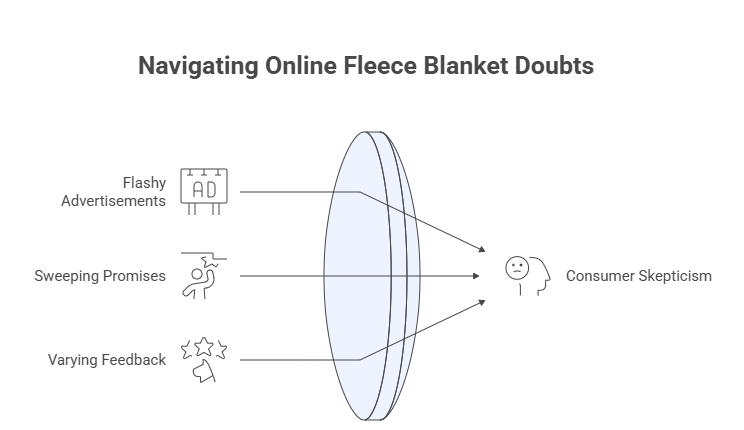
Even though e-commerce provides you with an extensive range of products, it is still a gamble. Most of the e-commerce retailers are using adjectives like “fleece-feel” or “super soft” without giving a proper definition of what exactly the buyer is getting.

When purchasing fleece on the internet, it is necessary to search for particulars such as weight, material composition, and feedback. It’s difficult to decide on the use of fleece as a blanket without those particulars. Pictures have the strength to deceive, and sending back the fabric might cause trouble.

Online retailers may be beneficial if the leasing company is candid and reliable. If not, it may be an irritating process to decide on the right place to buy fleece for the manufacture of blankets.

Buying Fleece by the Yard vs Buying Finished Fleece Blankets

Fleece fabric is a material that some people purchase and then sew blankets by themselves. Others, however, go for the finished fleece blankets, especially when they need many blankets or are looking for quality that is consistent.

Buying fleece per yard is a rational decision if you are fond of sewing and making only one or two blankets. But in case you are producing blankets for functions, charity, gift, or sale then buying fleece blankets would be a faster and cheaper option. Additionally, concerns about cutting, stitching, and uneven results would be removed.

Why Wholesale Suppliers Are the Best Choice

Wholesale suppliers not only consider the fleece’s look but its quality as well. The fleece sold in bulk is typically of a thicker nature, treated in a way that it does not pill, and is made to withstand strong use and multiple laundering.

Buying wholesale is ideal if you need fleece for:

  • Bulk blanket orders
  • Charitable donations
  • Corporate gifts
  • Events and promotions

The purchase of wholesale fleece gives the benefit of better consistency and value, which is the main reason for the professional’s choice of this option whenever they want to buy fleece for the production of blankets.

What to Look for When Buying Fleece for Blankets

The best fleece is soft to the touch but not so light as to be flimsy. It must possess the characteristics of a quality fleece, meaning it should be thick, soft and have a plush surface. Non-pilling fleece is especially important as it makes blankets look old very quickly because of pilling.

Weight is important too. A heavier fleece usually indicates higher warmth, while a lighter fleece is ideal for moderate climates. Be sure to spot transparent material and care instruction information.

If a seller avoids these details, that’s a sign to keep looking.

About Us

We at PeachFur Fleece only deal with fleece products and have been doing that for more than two decades now.  In case you want to buy wholesale fleece blankets, we provide bulk purchase options that guarantee the same quality, attractive pricing, and softness that lasts for a long time—thereby establishing us as a reliable source for those who are not sure where to buy fleece to make blankets the correct way.

The right fleece is the decisive factor in the appearance, touch, and durability of a blanket. There are many stores selling fleece, but not every type of fleece is appropriate for blankets. Knowing the right place to get fleece for blankets prevents you from being let down and makes sure that your final blanket is really loved by people as a pleasant thing to use.

Good fleece doesn’t just look soft—it stays soft. And that’s always worth it.

How to Tell If a Blanket Is Fleece

30 Dec

Selecting a blanket ought to be an easy process. You feel it, you love it, and you carry it home. But the moment all the products in the store are literally named “fleece,” the situation becomes very muddled in no time at all. Some blankets are authentically fleece, whereas there are others that just use the term and leave you with dissatisfaction after the first wash.

This guide will help you how to tell if a blanket is fleece through an authenticity test that you can do at home without any difficult knowledge. No more worries about being deceived by the soft and warm blankets that only look like fleece; you’ll be able to tell the difference between them and the real ones with the help of this manual.

What Fleece Really

Fleece is a fabric that is intended to provide warmth without the burden of heavy fabric. It was invented as a less thick, softer substitute for wool, particularly for those who desired heat without the discomfort of itching or sensitivity to wool.

Polyester is the main source of fabric used to make fleece blankets, but there are still cotton fleeces and their mixtures. The uniqueness of fleece does not only come from the material but rather from the finishing treatment of the fabric. Tiny fibres are raised by brush work, giving an extremely soft and fuzzy surface which is capable of holding heat through trapping air. The air that has been trapped is the main reason for the fleece’s warmth.

If a blanket is warm only because it’s thick and heavy, that’s not fleece. Real fleece works smarter, not harder.

Feel the Blanket First

The simplest method for identifying a fleece blanket is to check its surface. True fleece provides a comfortable, fluffy, and silky feeling that is more or less immediate. The hand could easily pass over it, and it would give a warm impression without being heavy or hard.

If a blanket has a slick, flat, or strangely smooth feel—similar to a raincoat that has been to finishing school—it is probably not fleece. The genuine fleece blanket, however, has a somewhat “alive” touch to it, just like a soft fuzz that reacts when your hand moves.

If it feels warm right away without being heavy, you’re on the right track.

Look for the “Nap” or Fuzzy Surface

Now take a close look at the blanket. Fleece has a characteristic called a nap, which refers to a soft surface covering that is made up of tiny individual raised fibres. Some fleece blankets are fuzzy on both sides, while others have one side smooth and the other side brushed.

If an area looks even and interlaced, similar to a bedsheet or a fine knitted sweater, it is probably not fleece. Natural fleece lets you see and feel its softness even from a distance. It should be visually inviting—like a couch that indirectly speaks, “Come napping here.”

Check the Weight-to-Warmth Balance

It is a usual misunderstanding that heavier blankets are the only ones that can be warm. The case is entirely different from fleece. Among its most important features is that it is weightless and at the same time, it gives out superb heat.

A strong fleece indicator is if you uncover a blanket and it feels surprisingly light for how warm it looks. If it feels bulky and heavy just to do its job, it is definitely another fabric in a fleece costume.

Read the Label (Yes, Really)

Having labels is sometimes quite boring, but they are reliable—usually. Authentic fleece blanket made of materials like polyester, cotton fleece, or a cotton-polyester blend will often be labeled in this manner. Also, polar fleece, microfleece, and sherpa fleece may be mentioned among other terms.

Watch out for obscure terms that do not mention fibre content or just use expressions like “ultra-soft fleece feel.” Such expressions are frequently marketing codes for “not really fleece at all.”

Reading the label is a key step in understanding how to tell if a blanket is fleece, especially when shopping online.

Know the Common Types of Fleece

Different types of fleece can be different in terms of feel, which is perfectly acceptable. Among all kinds, polar fleece is the classic one—gentle, warm, and frequently employed. Microfleece is lighter, softer, and very comfortable too. Sherpa fleece comes with a fluffy side resembling wool and a smooth backing, while coral fleece gives a dense, velvety, and almost plush-toy soft feeling.

If a blanket of fleece or having either of these conditions, there is a chance for it to be a genuine one.

Watch for Quality Clues

Genuine fleece can take one wash and remain intact. The thick, quality fleece bears the pilling very slowly, which means it won’t have those fabric balls that everyone hates very soon. Besides, it shouldn’t get rid of its fibres to the extent of being soft only for the first night of use.

Pay attention to the edges too. A quality fleece blanket is usually made with strong and neat stitching. On the contrary, loose or uneven hems are a common practice among manufacturers that cut costs during production.

Try a Simple At-Home Test

If you have the blanket, washing it would probably be a good idea as it can reveal a lot. Authentic fleece dries fast, does not crease and most of the time, comes out of the dryer ready to be used. It may acquire a slight static charge, which is normal for polyester fleece.

If a blanket becomes rough, lumpy, or disappointingly flat after washing, it is likely not true fleece to begin with.

About Us

At PeachFur Fleece, our only concern is fleece—nothing more. Our more than 21 years of providing first-class, non-pilling goods experience allows us to assist customers and organizations in finding reliable fleece blankets wholesale by taking away the uncertainty involved. If you purchase fleece from professionals, you will not have to question its authenticity; you will be able to perceive the difference right away.

How to tell if a blanket is fleece does not require professional skill, just basic understanding. The use of your hands, sight and a fast label inspection can prevent you from purchasing a blanket that seems comfortable but isn’t really.