Tag Archives: fleece blankets wholesale

Are Fleece Blankets Breathable?

27 Jan

Surely, fleece blankets are breathable, and no denying it. But they seem to trap heat well when small amounts of air pass through them. That is why it is wrong to conclude that fleece blankets are entirely air-tight, through which the overly breathable material can be slung. When properly used, fleece is cosy and comfortable, and yet when the blanket is misused (such as by being kept close to the face for long periods), this results in discomfort rather than any appropriate danger most of the time in an adult.
Why This Question Comes Up So Often

Questions like “Are Fleece Blankets Breathable?”  arise because fleece blankets have an overly snug feel to them. When you wrap one around you, it feels like holding warmth within your own little haven, thus an entrance to thoughts about airflow. Parents worry about kids, professional caregivers worry about seniors, and even on occasion, grown-ups awakened in their rather unusual warm or dry state after pulling the fleece way up while sprawling breathlessly into sleep.

It’s a fair question, and one that deserves a clear, calm explanation instead of fear-based answers.

What “Breathable” Really Means When It Comes to Fleece

Breathability in fabric is certainly about the air passage through the fibres of that cloth and not a grand flow, as could be envisaged by an open window or a loose cotton sheet. Fleecy blankets exemplify cold-weather efficiency by trapping the warm air with the fibres.

So naturally, the question arises of whether or not a fleece blanket is breathable or made for tightness–a question guided by that notion: a few can hold back the aerosol a little pre-recognised secondary particle, while sufficient warmth is shielded. That is how comfort is brought into the body; however, it is equally important to remember the possibilities of the blanket pressing against the throat or mouth.

How Fleece Blankets Handle Air, Heat, and Moisture

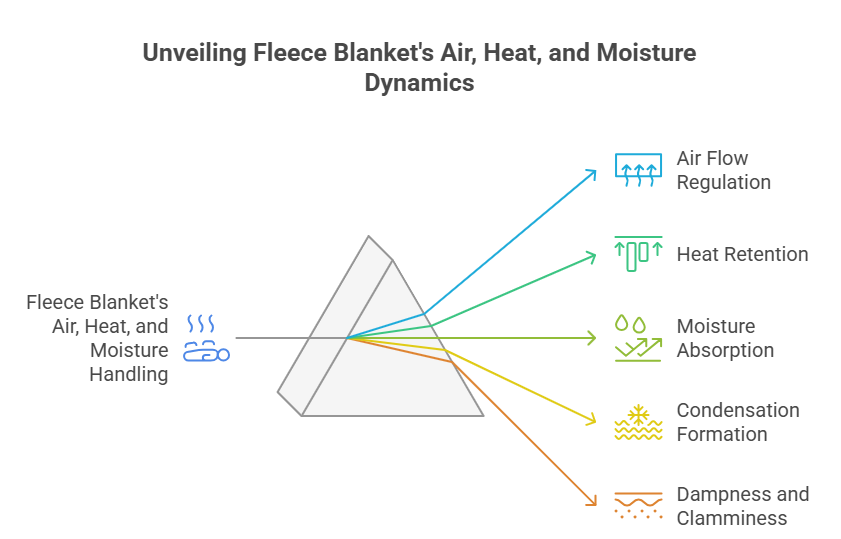
Wool fibres have the nifty knack for creating tiny pockets that capture warm air and regulate air flow. Now, keeping one warm indeed is very important, whilst simply exhaling the woollen blanket directly might actually result in condensation. Over time, it could make the fabric feel almost/ slightly wet or clammy.

Many people have been through this without knowing what caused it. They all wake up feeling hot. Something started feeling damp and cold on the border of the fleece blanket. They might have thought about changes in room temperatures overnight. In reality, it’s just the moisture from their breath, all sucked up by the fleece.

Why Covering the Head with a Fleece Blanket Feels Comforting

A person throws back a cover to hide under it, a habit initiated in childhood, as it signifies a small, cosy, and super safe area, plus avoids light, hence decreasing noise pollution and catching the warmth. Sometimes they do it through their adult years and tend to do so more when it gets cooler at night.

There’s also a psychological comfort involved. The enclosed space feels calming, almost like creating a small personal cocoon. The problem isn’t the instinct—it’s when the habit continues for long periods without enough airflow.

What Happens When You Breathe Under a Fleece Blanket for Too Long

At this moment, each time you draw air back with the sensory wool missing, it shifts the exhaust back, and the space becomes much smaller. Withdrawal of CO2 enhances even more in the atmosphere, sucking in more oxygen into the greatly oxygen-deprived body, thus disturbing the natural equilibrium between oxygen and carbon dioxide.

There are symptoms related to awakening: headache, being thirsty with a headache, etc. These symptoms may be minimal in healthy adults, but still negatively impact performance. The body of a sleeping person may actually move around during sleep; hence, it is quite common for such an individual to wake up and find themselves in the front position without remembering having rolled over.

How Fleece Blanket Breathability Affects Sleep Quality

A good night’s sleep hinges on proper airflow and temperature regulation. The body naturally reduces temperature during deep sleep, but heat can mess this process up when trapped around the head. Fleece blankets are wonderful, and too good to be true when used properly.

When airflow has been restricted, sleep tends to become lighter with some brief awakenings from the brain in an obvious attempt to re-establish its equilibrium. Hence, even after thinking all through that they had been sleeping for hours, people wake up looking rigid and compelled by sleep.

Special Safety Considerations for Different Age Groups

Most adults who are healthy only feel mildly uncomfortable, whereas specific groups need special care. Infants may also be at risk of suffocating or overheating by having their faces covered by fleece blankets or any other material. The elderly are also more prone to oxygen desaturation in sleep, and those with breathing problems must not have their faces fully covered.

Fleeces are to be wrapped around the body – leaving hands and legs open – without covering contact areas like the head or face.

Polyester Fleece vs Natural Fibre Fleece: Does It Matter?

All fleece is not created equal, and the feel depends on which material goes into its making. Generally manufactured from synthetic fibres intended to maximise warmth and durability, fleece treats those long winter evenings with its warmth, but allows humidity to settle on its surface more than natural fibres.

It does not make a blanket unsafe; it simply requires that the blanket be used wisely. Breathability is determined not only by the making of the blanket but also by how it is used.

How to Use Fleece Blankets the Right Way

The proper way to use the fleece blanket is everything! Sleeping with the blanket below the shoulders ensures warmth without obstructing breath. Either by putting the fleece over the body, or leaving it off the head, the cryogen has the option of the best it could have!

Many users may find out that by using fleece differently, they can sleep better during the winter and also feel refreshed in the morning, without losing any of the warm sensations that the fleece gives off.

It’s quite surprising how efficiently your body signals the need for it to be adjusted. Waking up to a dry throat that hasn’t yet felt an overabundance of temperature is often an indication of airflow restriction while sleeping. This does not mean that a blanket is bad for a fleece, but it could use a minor adjustment.

Are Fleece Blankets Breathable Enough for Everyday Use?

So, are fleece blankets breathable for daily usage? Absolutely! When used correctly. Fleece blankets are intended to hold in body warmth with provision for some airflow and require the face to be uncovered. Properly maintained, fleece will give a cozy comfortability without hindering of being able to breathe or sleep.

Thoughtfully Made Fleece for Everyday Comfort

At PeachFur Fleece, a registered trademark and division of HighMark Outdoor, we understand that comfort is about balance. With more than 11 years of experience supplying fleece products to ski resorts, retailers, institutions, and organisations, we design fleece blankets that provide warmth without unnecessary heaviness.

PeachFur Fleece provides breathable warmth, durability, and usability for those customers wanting top-of-the-line fleece blankets wholesale, and the answer to the question of “Are fleece blankets breathable?” lies not so much in the fabric but in our intention; every product we develop encourages breathing.
How Many Yards of Fleece for a Throw Blanket?

27 Jan

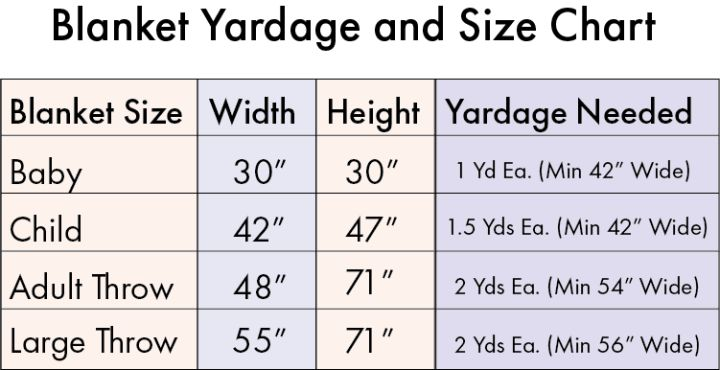
If you make the purchase for fleece for a throw blanket, your answer to the question “How many yards of fleece for a throw blanket should I buy?” is going to be this: Most throw blankets require 1.5 to 2 yards of fleece per side. So, for smaller or kid-sized throw blankets, 1.5 yards is enough. As for the bigger adult throws, a far better look is achieved with 2 yards. If in the case that it is a tie blanket, you are advised to get two yards on each side.

That’s the simple answer. Now let’s walk through the “why,” so you can feel confident before you buy or cut any fabric.

Why Yardage Feels Confusing with Fleece Blankets

Fabric yardage can feel oddly confusing at first, especially with fleece. You buy it by length, but it already comes quite wide. Many people assume they need to measure both width and length, which leads to overthinking and second-guessing at the fabric table.

Almost everyone who has made a fleece blanket has had that moment of holding scissors and thinking, “I really hope I measured this right.” The good news is that fleece is actually one of the most forgiving fabrics to work with once you understand how it’s sold.

What a Throw Blanket Is Really Meant to Do

A throw blanket is not supposed to cover the whole bed, yet it cannot be very small in size. A good throw blanket should blanket a seated person on a couch or a napping person, or should be cosy for a person with a novel or a film. The throw blanket should not be any more of an object requiring constant foot-tugging to stay warm, though.

This purpose matters because throw blankets live in that sweet middle space. They are larger than decorative accents but smaller than full bedding, which is why getting the yardage right makes such a noticeable difference in how the blanket feels once finished.

How Fabric Width Solves Half the Problem

That’s one of the neatest things about sewing with fleece – The realisation that most fleece comes already large enough to make a throw blanket. Standard fleece is generally around 54-60 inches wide, which is perfect for your blanket width.

It means that you rarely have to worry about the width at all. Instead, your main consideration is the length of the blanket, all of which is where yardage comes in. This makes everything much simpler for those people who understand it.

Yardage Based on How the Blanket Will Be Used

The number of yards you need depends less on exact measurements and more on who the blanket is for and how it will be used.

A small blanket may be used by a child, or maybe it is used as a runner or light throw. With a fleece of just 1.5 yards, the throw is of such length as to maximise comfort without appearing oversized.

A throw blanket meant for adults almost always benefits from 2 yards of fleece. That extra length allows the blanket to drape better and cover the legs fully, which matters more than people expect once they actually start using it.

If you have ever used a throw that almost covers you—but not quite—you already understand why those extra inches matter.

Why Two Yards Often Feels “Just Right”

Many experienced makers default to 2 yards for throw blankets, and there’s a good reason for that. Two yards give the blanket a relaxed, cosy feel without turning it into something bulky or awkward.

The size alone will work for a big range of people and functions, just long enough for the taller adults, wide enough to fit a couch, and still very comfy. If in doubt or possible gifting of a blanket, best go for 2 yards to avoid erring on the side of caution and resultant looks of disappointment.

The Double-Layer Question: When Yardage Doubles

Single layer, therefore, is simple and lightweight threads, whereas double layer or even tie blankets are preferred by many others due to the extra warmth and drape. Making a double-layer throw means creating two blankets that become as one.

This means each side will have the same amount of fleece in front and back, be in need of acquiring a span for one side, and two yards on the other. Many people, however, often overlook this, especially when they are caught in the whirl of a hurried shopping trip or are making more than one blanket.

Fringe, Edges, and the Inches You Don’t See Coming

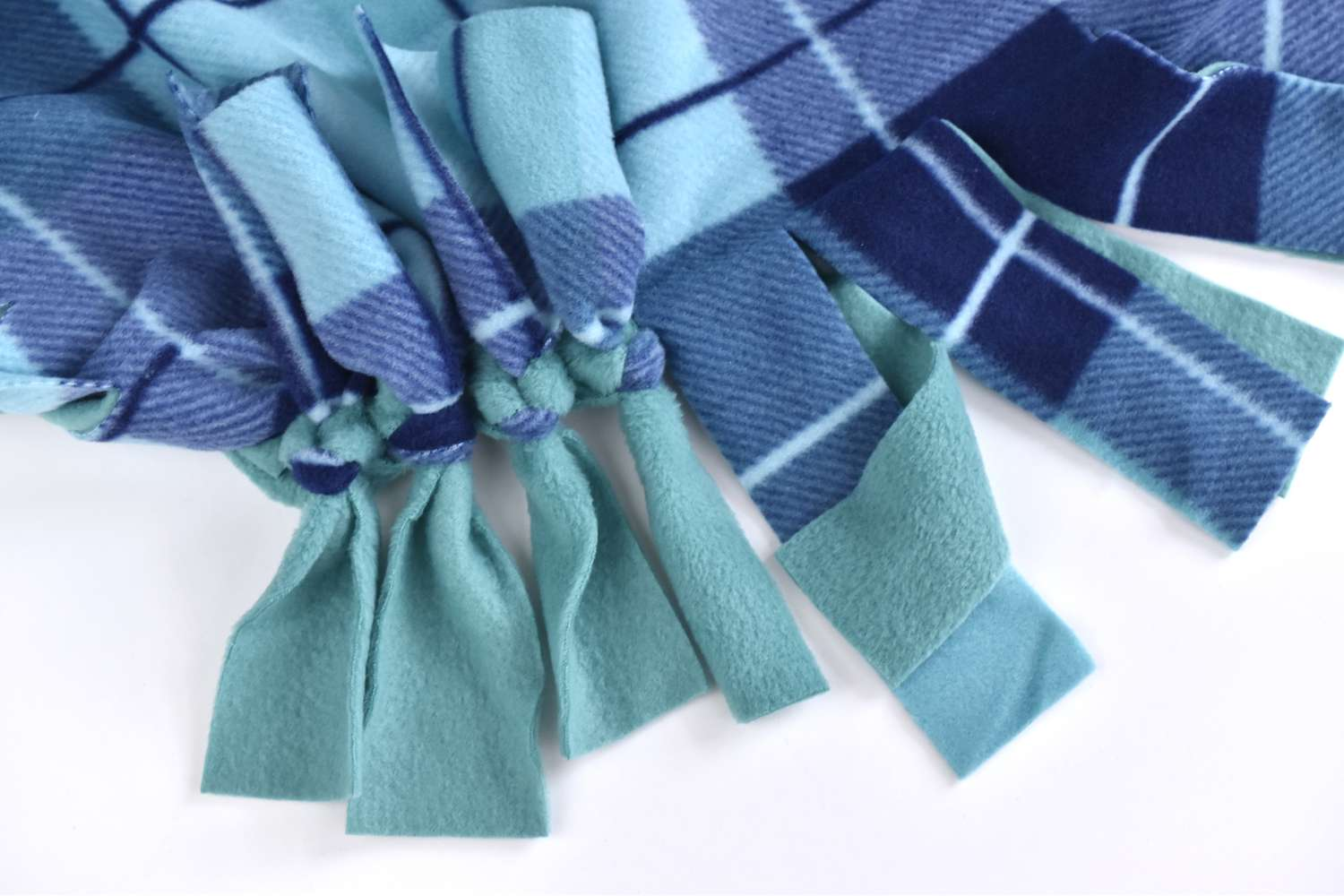
When you’re making a tie blanket, keep in mind that by cutting a fringe about the edges, you will take away from the overall size of the blanket. These knots can look rather inconsequential; when bound together, they rob that blanket of somewhere to the tune of a good few inches from both the length and width.

For this reason, many blanket-makers opt to buy just a bit extra in fleece instead of trying to aim for the precise amount. A little bit more can, in fact, make a lot of changes; loosely woven fleece is always better than fleece to the edge.

Choosing the Right Fleece Before Measuring

Most fleece does not act the same once it has been cut off the sheep. Good quality fleece does not change shape, it cuts cleanly, and remains soft with age. A lower quality of fleece may emit fluff, stretch out unevenly, or lose its softness once it has been washed.

Good-quality and resistant fleece is more predictable yards-wise, and equally regarded for better use once the blanket is done. With the fabric behaving just the way you want it to, a sense of confidence sneaks up on one’s measurements.

A Simple Way to Decide Without Overthinking

If you want an easy decision-making approach, ask yourself three questions. Who is the blanket for? Where will it be used? Do you want it to feel compact or generously cosy?

For a child or lighter use, 1.5 yards gets a lot done. For adults or gifts where comfort is a top concern, people go to 2 yards more often. Mind you, the rule works only if all other variables remain fixed.

Common Yardage Regrets (And How to Avoid Them)

One of the most common regrets comes when you make a tiny cut in the fabric, then later wish you a little bit of extra fabric on the edge. The other is to forget to account for fringe, or trimming on the border. These are easy to avoid if you plan well and always allocate extra fabric on the border.

A blanket that is a bit loose-fitting is actually more comfortable to wrap oneself in than a blanket that falls short of covering the user completely.

From One Blanket to Many: Thinking Beyond a Single Project

When people learn that they need six yards of fleece for a throw blanket, they start thinking beyond just one blanket. This brings up projects of all sizes for holiday gift needs, as group projects, family events, etc., when the quality of the fabric, availability, and consistency in sizing become as important as the yardage itself.

That’s where working with a reliable source makes a difference. At PeachFur Fleece, a division of HighMark Outdoor, we support individuals and organisations looking for dependable fleece blanket wholesale options. Whether you are planning multiple throw blankets for gifts, events, or retail needs, having consistent fleece width, quality, and durability helps every blanket turn out just right.

Understanding yardage is the first step. Choosing the right fleece is what turns that knowledge into comfort that lasts.

How Much Fleece for a Knot Blanket?

27 Jan

How Much Fleece for a Knot Blanket is a simple question; the answer is that two equal pieces of fleece are needed, and the rest depends on the end-user of the blanket. For babies, the top and bottom require at most one yard of fleece, while children are well served by roughly a yard and a half of fleece for each side. Lastly, for teens or adults, even 2 yards of fleece for each side gives the most comfortable and usable blanket.

That’s the ‘short answer,’ but why do you think these numbers will work for you so that major uncertainty is kept away from one’s mind while starting?

What Makes a Knot Blanket Different from Other Fleece Blankets

A tie blanket, known as a no-sew fleece blanket, is a blanket in which two pieces of fleece are tied together along the edges in place of being sewn together. As such, there are knotted blankets that benefit greatly by employing simple knots rather than a really intricate crochet stitch for total beginners, as a kid’s keepsake, a craft project, or to snuggle with the whole family.

It is something first-timers often fail to take into account-the fact that the knots themselves affect the amount of material that they will be using. They do more than just keep the fringe attached; they tear up fabric in the excess around all four sides, which means the finished blanket will never be as long as the two pieces it was cut from originally.

This is why knotted blankets need a bit more planning than they appear to at first glance.

Why Knot Blankets Always Use Two Pieces of Fleece

Every knotted blanket uses two layers of fleece. One layer becomes the front of the blanket, and the other becomes the back. Both pieces must be the same size so the knots line up evenly all the way around.

It makes fleece double listed with “per piece” persisting. Two yards is two yards: one set of two is for one side, and the other yard belongs to the other. That might be difficult to recall when you are attempting to do quick mental math on the fly whilst standing in a fluorescent facility.

Understanding Fleece Width Before Measuring Length

An advantage of fleece is that the material is wide for it. It is common for fleece to come in a width that is nearly the complete length of a blanket, which is approximately 54 to 60 inches. This mostly makes it unnecessary for you to concern yourself with the width while designing a knitted blanket.

That is entirely your decision regarding the length you want your blanket to turn out to be. Therefore, it would include many yards or a simple width of fleece.

Once people understand this, the whole process suddenly feels much less intimidating.

How Blanket Size Changes How Much Fleece You Need

The amount of fleece you need depends mostly on who will be using the blanket.

Infants often use knot blankets in precisely guided situations like tummy time, perhaps a stroller ride, or for cuddling, so that one yard doesn’t get to be overly heavy when they’re covering them and makes for such feasibility.

Handmade knitted blankets will be maintained in a standard size so that the child can continue to use them as a cygrowing slightly; therefore, a fleece 1.5 meters (approx.) long would be recommended for reading, couch picnics, and sometimes rolling up for sleepovers, while he would outgrow it not too soon in two months or so.

For teens and adults, comfort expectations are higher. A blanket that doesn’t quite reach your feet tends to get abandoned on the couch. This is why two yards of fleece per piece is the most popular choice for adult knot blankets. It creates a finished blanket that actually feels cosy instead of “almost big enough.”

The Hidden Fabric Loss Caused by Knots and Fringe

One of the most important concepts to grasp in connection with tied quilts is that users will always lose fabric around the edges. Cutting away the corners for squares (some folks go for circles) as you fringe the materials all around will diminish the yardage by several inches both ways.

This is why starting with the bare minimum amount of fleece can lead to disappointment. The blanket may look fine on the table, but feel smaller once it’s actually in use. Most experienced makers learn this lesson once and then never forget it.

Why Starting with a Little Extra Fleece Is a Smart Move

A small amount of extra yarn is a good idea because it gives you leeway. It helps your finished project by letting you even out those edgings, quarter some pigtail strands to match lengthwise, or cover some small mistakes in your measurements without worry. In essence, people rarely regret having a little extra yarn, but often regret cutting it too close.

Before buying fleece, it helps to pause and answer three simple questions. Who is the blanket for? Where will it be used? Do you want it to feel compact or generously cosy?

When you answer those honestly, the yardage usually becomes obvious. Babies need less, children need room to grow, and adults almost always appreciate extra length. This mindset is far more helpful than memorising numbers alone.

From One Knot Blanket to Many

Most people get hooked on making just one tied blanket. And then they find themselves wrapping up more. As time goes by, they become holiday gifts, school projects, charitable donations, or even the outputs of small businesses. At this point, consistency is as important as ingenuity.

This is where sourcing reliable fleece becomes important. At PeachFur Fleece, a division of HighMark Outdoor, we understand how fleece behaves when it’s cut, tied, washed, and used repeatedly. For individuals and organisations looking to make multiple blankets, working with dependable fleece blanket wholesale options helps ensure consistent sizing, quality, and comfort across every project.

If one wants to know just how much fleece for a knot blanket, they first need to know much more than this. Having good-quality fleece converts this information into a lasting blanket that feels good and gets used again.

How Much Fleece Is Used for a Baby Blanket?

21 Jan

You will frequently need a yard on each side if you are going to make clothing, a little over a yard and a half for a baby blanket, one with fleece on both sides, i.e., fleece on the top layer and fleece on the bottom layer. In two layers, this measure should be fine for a blanket in baby blanket size, nice and warm—maybe 30 x 30 inches—with a tolerable amount of fabric remaining for ties, edging, or simply as a good, safe margin.

Why This Question Comes Up So Often

Blankets may seem simple. Two nice layers are sewn or tied, so why would this be difficult? But how much for children’s fleece? This question is never far from the lips of parents or crafters, even as far as small-scale producers of blankets are concerned. The reason is simple: not all baby blankets are made alike.

A few are lightweight stroller throws, some are thicker nap time favorites, some are no-sew fringe blankets, whereas others are carefully sewn and edge-finished. Every choice changes how much fleece goes into it ever so slightly.

What Is Considered a Standard Baby Fleece Blanket?

Most baby fleece blankets fall into a comfortable middle ground:

  • Finished size: roughly 30 × 30 inches (sometimes a bit larger)
  • Purpose: naps, stroller rides, tummy time, or gifting
  • Material: soft, breathable fleece that keeps babies warm without feeling heavy

Everyone loves fleece chiefly because it is highly skin-compatible, very easy to wash and dry, and quite warm for its weight—a thrilling find for any parent staying up nights.

Breaking Down the Fleece Yardage (Without the Math Headache)

Let’s get practical.

For a standard baby fleece blanket, most makers use:

  • 1 yard of fleece per layer for a basic size
  • 1.5 yards per layer if a little extra coverage or drape is desired

Fleece fabric usually has widths of 58 to 60 inches; therefore, a yard gives one more than ample width for a square baby blanket for the whole yard. The extra length could then be applied by squaring the edges and finishing them.

This means:

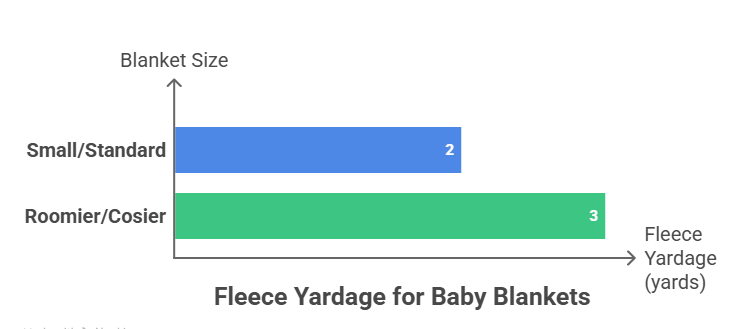
  • Small or standard baby blanket: about 2 yards total
  • Roomier or cosier version: closer to 3 yards total

That’s the real-world answer to how much fleece for baby blanket sizing—simple, flexible, and forgiving.

No-Sew vs Sewn: Why the Method Changes the Amount

Here’s where many first-time blanket makers get surprised.

No-sew tie blankets use small cuts around the edges to create fringe, which is then tied together. Those fringes look adorable—but they also consume fabric. After trimming corners and tying knots, the finished blanket can shrink by several inches.

There is always extra fleece that is thrown away in tie blankets that is used up in sewing blankets; hence, sewn blankets require comparatively less fleece. The second advantage to sewn blankets has to do with fringe: since the sides may have been sealed by sewing, the size will be kept as near as possible on a consistent basis.

It’s a bit like hemming pants: the fabric doesn’t disappear, but it definitely goes somewhere.

The Small Details That Quietly Matter

There are a lot of things that do not come to mind when computing the amount of fleece needed for a baby blanket project, one of which is the preparation work that goes into the making of any blanket. The selvedges need to be trimmed, the fabric must be squared so it hangs straight without twisting, and at times, the corners are cut to prevent bulky, awkward edges.

Though each of these steps appears so minor standing alone, it’s surprising to realise that collectively they portray how limited fleece can be seen to quickly assume a vindictive imperfection’s fate. So, most experienced and, therefore, professional practitioners would be more careful when incorporating leeway with some extra fleece.

Why Quantity Affects Comfort More Than You’d Think

Quality material goes beyond size and deals with feel instead. Fewer number of fleece fabric easily makes for stiff and edge-happy blankets. Plenty of fleece will wrap itself around an awkwardly sized edge of the blanket, hanging just as it should. Also, it becomes necessary for the blanket to hold in that plushness of the material after a few washes and to withstand the test of time.

That’s why professionally made baby blankets tend to feel more balanced. The fleece quantity is planned, not guessed.

DIY Projects vs Professionally Made Baby Blankets

When making a blanket at home, extra fleece provides flexibility. In professional production, however, experience plays a big role. Manufacturers know exactly how much fleece is needed to:

  • Maintain consistent sizing
  • Reduce waste
  • Preserve softness and durability batch after batch

That balance between efficiency and comfort comes from working with fleece day in and day out.

While this blog focuses on how much fleece for baby blanket sizing, quality is just as important as quantity. Breathable, hypoallergenic fleece that holds up to repeated washing will always outperform cheaper alternatives—no matter how much fabric is used.

Final Thoughts: Simple Numbers, Thoughtful Comfort

At its heart, understanding how much fleece for baby blanket projects requires is about clarity, not complexity. Whether you’re crafting one by hand or choosing a ready-made option, knowing the basics helps you appreciate what goes into that soft, cosy square your baby snuggles every day.

And if you’re looking for baby fleece blankets at wholesale prices made with carefully measured, high-quality fleece—without overpaying—this is exactly where experienced wholesale providers can help. At PeachFur Fleece, we focus on producing baby fleece blankets with the right balance of material, comfort, and value, making it easier for retailers and organisations to offer warmth that truly feels good, at the best possible wholesale rates.

How Warm Are Fleece Blankets?

21 Jan

Fleece blankets are much warmer than they look. Lightweight, they seem flaccid when you handle them, but designed to trap body heat efficiently, they become much warmer than most regular blankets found at home.

Most of you, when you carry a fleece blanket, think, “This feels too light to keep me warm.” It is quite natural for the weight to be associated with warmth. It is why most doubt the capacity of fleece blankets to keep them warm. It does not feel as if the fleece material should keep one warm. On the other hand, once you realise how warm are fleece blankets, it all comes together.

Let’s talk about it in a relaxed, everyday way.

Why fleece feels light but still keeps you warm

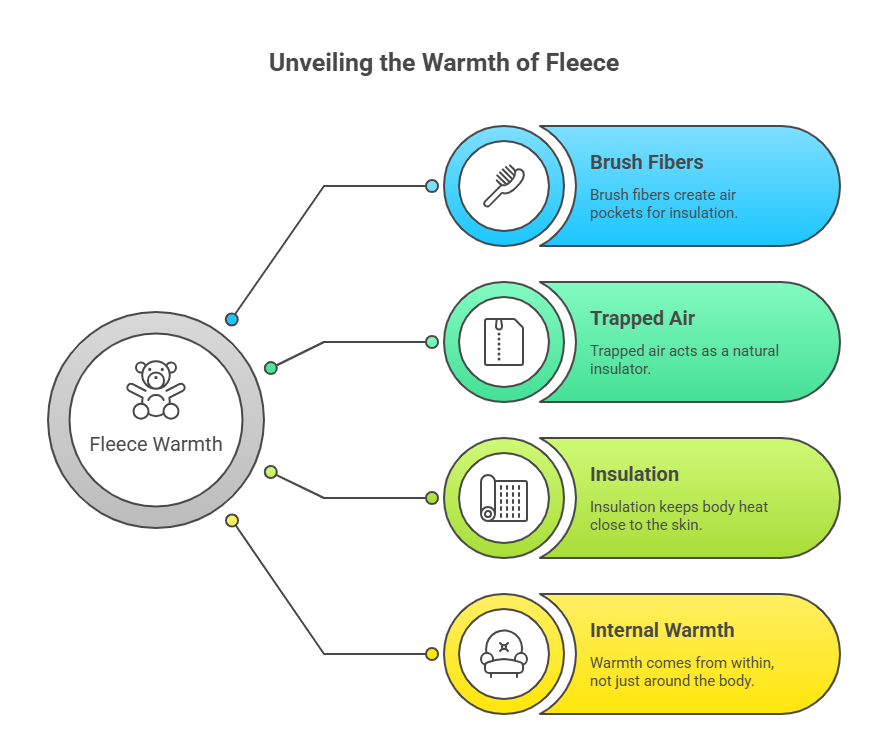
It is not weight that generally creates warmth but insulation. The less the weight of the sweatshirt, the better the thermal property by which a sweater made with a fine filament allows the air pocket to be created between its insulation. When heated by your own body heat, such air pockets do not allow it to escape into the air; but, instead, keep it close to you.

That is why a fleece blanket will become warm within a matter of a few minutes after wrapping it around you; you are not heating the fabric up. Instead, the fabric assists your body and traps in body heat. Indeed, that may be another reason for the popularity of fleece as a material in cold-weather clothing.

What makes fleece warmer than a normal blanket

A normal blanket, usually made up of some plain cotton blanket, would lie flat, letting the heat flow through it, while those made of fleece have a lot more brush fibres above the main structure, thereby keeping some air beneath that. That trapped air acts as insulation, so fleece feels warmer than any regular kind of blanket.

Hopefully, on questioning concerning the warmth of fleece fabric as compared to other fabrics, the answer is straightforward; the warmth appears to come from within rather than around the body at that time.

Warmth without the heavy feeling

People love fleece mainly because fleece warms without holding the bulk. A heavy blanket sometimes makes one feel claustrophobic, particularly in a living room, or gives one a struggle in straightforward sleeping. Fleece offers a cozy heat and a sense of reprieve from being overburdened.

Therefore, fleece blankets are particularly nice for casual wear for everyday use – whether for viewing TV, reading, taking a nap in the afternoon, or as an extra layer in bed while sleeping at night.

Breathable, so you don’t feel stuffy.

The soft texture of fleece is also due to its ability to breathe. While it retains body heat effectively, it also allows the elimination of vaporised moisture. It keeps that frozen and sweaty sensation at bay, sometimes caused by other covers.

This balance is what makes fleece suitable for long use. You stay warm, but not uncomfortably hot.

Not all fleece blankets feel the same.

One should recognise that there are different types of warmth in fleece. There are fleece blankets that are densely woven: very appropriate for cold climates, and then, on the other hand, there are those that are very lightweight and can be adjusted to a step-perfect lukewarm weather. Light while at the tower in winter, fleece would be the answer to showers, night outs, but where would the warm weather suit the thicker route?

This is why some people love fleece year-round—it adapts easily depending on how and where you use it.

When fleece is perfect—and when you may need more

Fleece blankets are very handy for the harsh cold of winter, those crisp nights, as additional warmth folded onto a bed while sleeping. They also make great use in travel situations and for days of mild winter when something light can be good yet unwieldy enough.

In exceedingly cold conditions, fleece is more of a layer than a sole warmth, and combining it with another layer truly adds insulation without any loss of comfort.

Quality plays a big role in warmth.

A high-quality fleece blanket will be warmer and more durable than a cheap blanket. The thickness of the material, the soft touch and the quality of the fibre all contribute to the heat retention of a blanket. Good quality fleece makes sure the harder the better, the pouches of air that insulate it remain that way over time.

This is one of those cases where you can actually feel the difference with regular use.

Bringing it all together

How warm are fleece blankets? Warm enough for everyday comfort, winter evenings, and cosy nights indoors, they are lightweight and softer. Their warmth comes from smart fabric design rather than their loft, which is a reason of them being in such big demand in so many homes.

Our wholesale fleece blankets are designed in the way intended to give warmth and keep their comfort without the bulk because of their breathability and durability, giving ultimate cosiness in various lot-size purchases for the homes, retailers, or for places where cosy comfort will be appreciated.

Fleece blankets are not just warm; they are thoughtfully and advisably warm. By the time you enjoy such a convenience, you see why fleece is ubiquitous when cold weather hits.